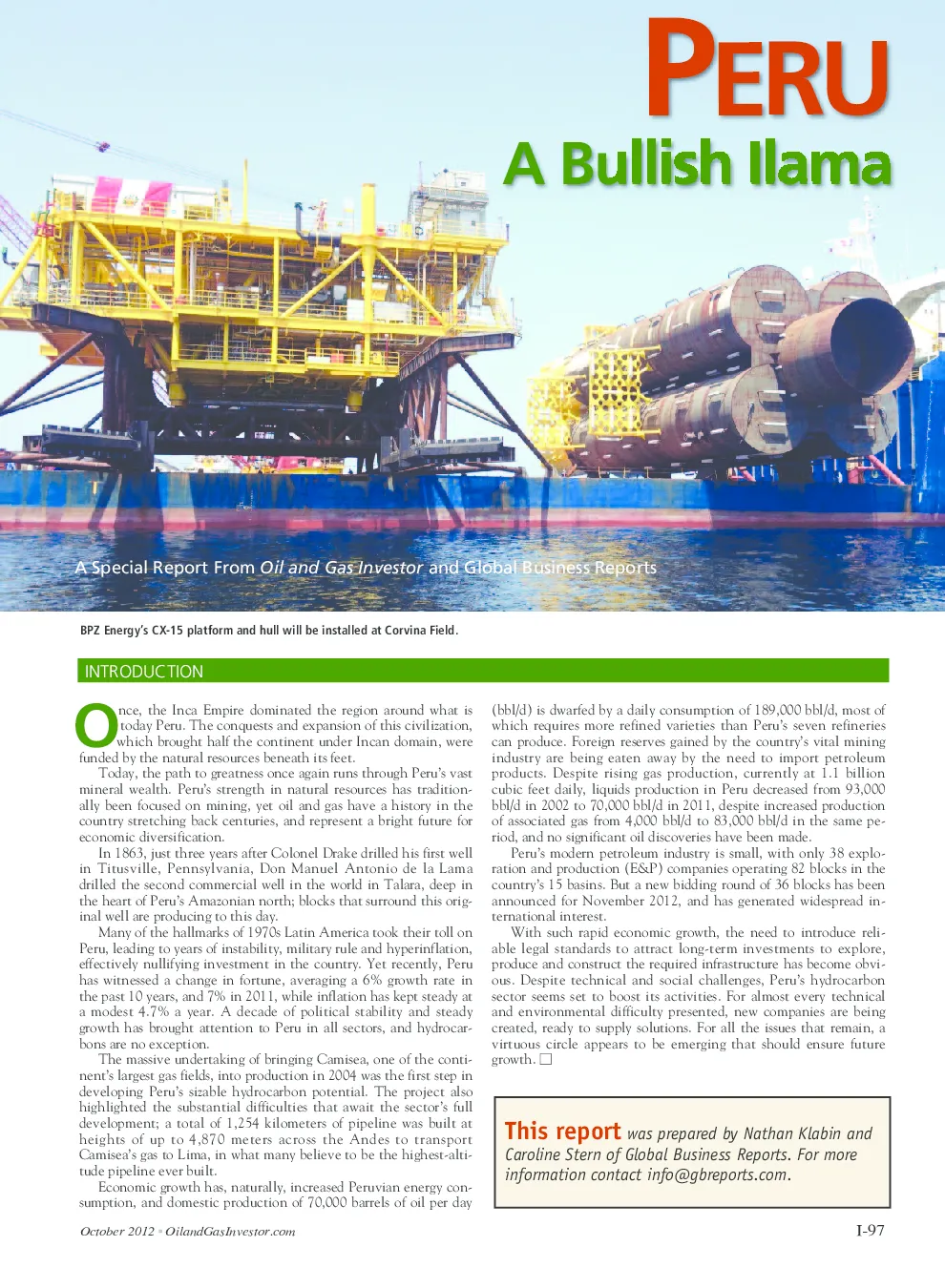
Peru's oil and gas sector is experiencing a resurgence, driven by its vast hydrocarbon reserves and a more stable political climate. The Camisea gas fields, discovered in the Ucayali Basin, have been a cornerstone of this growth, with the TgP pipeline delivering gas to Lima since 2004. This has fostered a "gas culture," with significant adoption of natural gas vehicles and infrastructure development.
Despite this success, Peru's oil production has been declining, with exploration activities lagging due to historical underinvestment and bureaucratic hurdles. However, recent years have seen a renewed interest in the sector, with the government encouraging both domestic and international investment. The Southern Pipeline project, aimed at bringing gas to the less industrialized southern regions, represents a major opportunity for diversification and economic growth.
Challenges remain, particularly social and environmental concerns. Protests in the mining sector have raised fears of spillover into the oil and gas industry, leading to the implementation of a "Prior Consultation" law. Additionally, logistical difficulties and a lack of skilled labor are driving up costs. However, the government's commitment to improving the legal framework and attracting investment remains strong.
Peru's oil and gas potential is vast, with estimates suggesting significant unexplored reserves. The country's strategic location and growing demand for energy make it an attractive prospect for investors. While challenges persist, the future looks promising for Peru's oil and gas sector, with potential to become a leading producer in the region.