您的浏览器禁用了JavaScript(一种计算机语言,用以实现您与网页的交互),请解除该禁用,或者联系我们。 [世界银行]:Improving Solid Waste and Plastics Management in Lagos State - 发现报告

Improving Solid Waste and Plastics Management in Lagos State

综合 2024-11-07 世界银行 邵泽
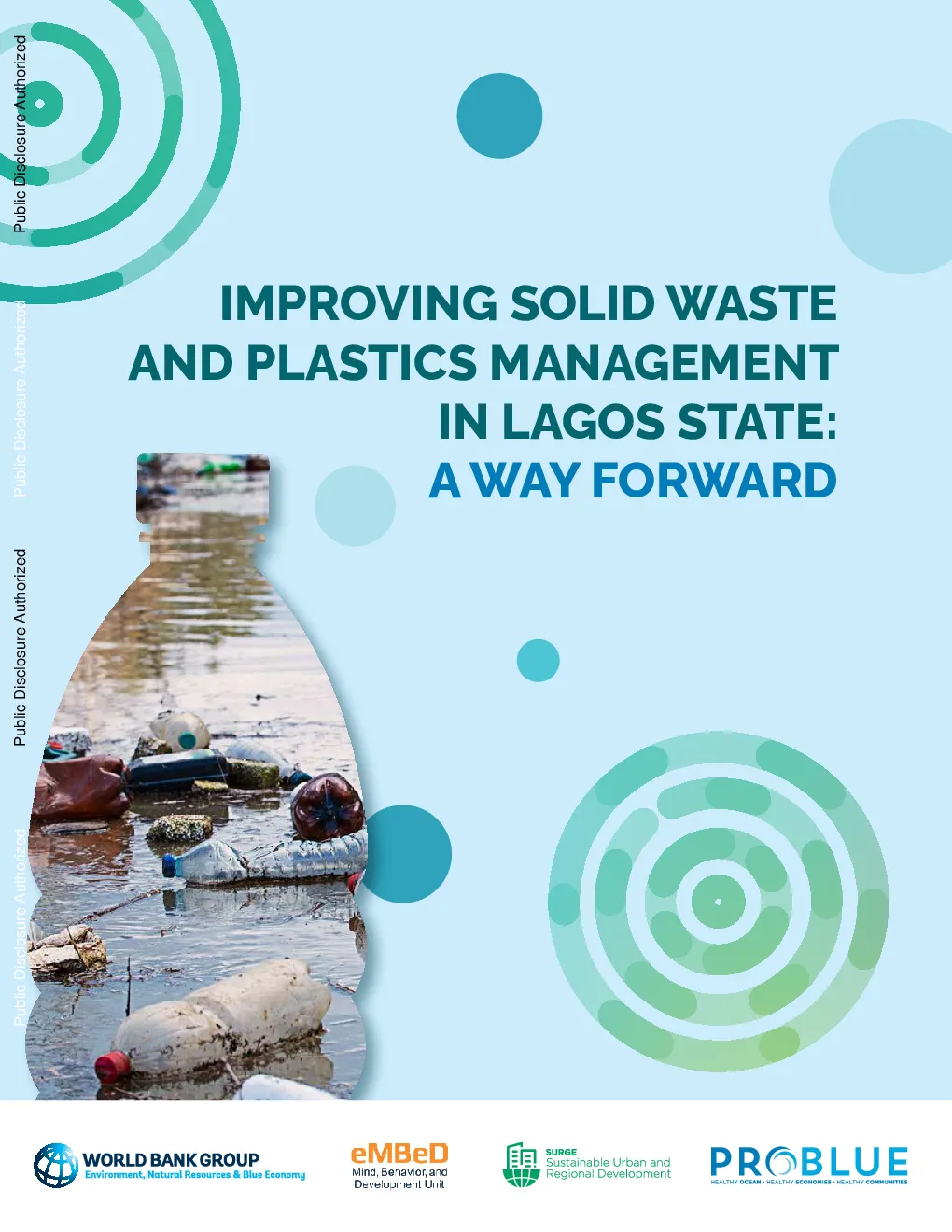
报告封面

IMPROVING SOLID WASTEAND PLASTICS MANAGEMENTIN LAGOS STATE:A WAY FORWARD June 2024 ABOUT THIS SERIES Africa is the second-largest contributor to global ocean plastic pollution, accountingfor 7.8 percent of annual plastic inputs from rivers, following Asia.Projectionssuggest that Africa may become the primary source of mismanaged plastic wasteglobally by 2060, surpassing Asia. The objective of this study is to support Nigeria, particularly Lagos State, whichpollutionby promoting sustainable plastic management.The study targetsvarious stakeholders, including government and private sector actors. It aligns withnational and regional strategies, including NigeriaʼsNational Policy on Solid WasteManagementandLagos State Development Plan 2052broader Blue Economy by creating economic opportunities, improving environmentalsustainability, and supporting job creation in waste management. The following seriesof publications, aimed at enhancing the knowledge of stakeholders in the region, is acore aspect of this study. The reports, including this one, are: 1.Improving Solid Waste and Plastics Management in Lagos State:A WayForward (This report)2.Improving Solid Waste and Plastics Management in Lagos State:An Analysis ofthe Solid Waste Sector (Internal report)3.Improving Solid Waste and Plastics Management in Lagos State:An InstitutionalAnalysis (Internal report)4.Improving Solid Waste and Plastics Management in Lagos State:GuidanceDocument on Implementing Extended Producer Responsibility for PlasticPackaging5.Barriers and Solutions for Sustainable Household Waste Management inLagos, Nigeria6.Improving Solid Waste and Plastics Management in Lagos State:An EconomicAnalysis (Internal report)7.Improving Solid Waste and Plastics Management in Lagos State:Assessing AirPollution and Greenhouse Gas Emissions (Internal report)8.Improving Solid Waste and Plastics Management in Lagos State:AssessingPlastic Waste from Healthcare Facilities (Internal report)9.Improving Solid Waste and Plastics Management in Lagos State:WasteCharacterization Study at Olusosun Dumpsite in Lagos (Internal report)10.Improving Solid Waste and Plastics Management in Lagos State:Creating aPlastics Recycling Market (Internal report). These reports are targeted at various departments and agenciesrelated to environment and waste management within the LagosState Government as well as federal ministries in the Governmentof Nigeria, responsible for environment, health, industry, trade,and investment.Recycling value chain players, including informalcollectors,recyclers,and plastics manufacturers and relatedstakeholders working on marine plastic pollution in the region will alsobenefit from this report. This project aligns with the Blue Economy approach by addressingsolid waste management and marine plastic pollution, which canhave significant economic, social, and environmental costs.It createsopportunities for new value chains, private sector involvement, jobcreation, and the restoration of coastal and marine ecosystems, allcontributing to the growth of the Blue Economy. Thestudy also aligns with Nigeria’s Country PartnershipFramework (CPF) 2020-2024, focusing on fostering jobs, economictransformation, and sustainable business growth.It also aligns withthe government’s national policies on solid waste and plastic wastemanagement, as well as Lagos State’s development plans related tosustainable environment and job creation in waste management. © 2024 International Bank for Reconstruction and Development / The World Bank1818 H Street NWWashington DC 20433Telephone: 202-473-1000Internet: www.worldbank.org This work is a product of the staff of The World Bank with external contributions. The findings,interpretations, and conclusions expressed in this work do not necessarily reflect the viewsof The World Bank, its Board of Executive Directors, or the governments they represent. The World Bank does not guarantee the accuracy, completeness, or currency of the dataincluded in this work and does not assume responsibility for any errors, omissions, ordiscrepancies in the information, or liability with respect to the use of or failure to usethe information, methods, processes, or conclusions set forth. The boundaries, colors,denominations, and other information shown on any map in this work do not imply anyjudgment on the part of The World Bank concerning the legal status of any territory orthe endorsement or acceptance of such boundaries. Nothing herein shall constitute or beconstrued or considered to be a limitation upon or waiver of the privileges and immunitiesof The World Bank, all of which are specifically reserved. Rights and Permissions The material in this work is subject to copyright. Because The World Bank encouragesdissemination of its knowledge, this work may be reproduced, in whole or in part, fornoncommercial purposes as long as full attribution to this work is given. Any queries on rights and licenses, including subsidiary rights, should be add