您的浏览器禁用了JavaScript(一种计算机语言,用以实现您与网页的交互),请解除该禁用,或者联系我们。[世界银行]:2023年电力部门的碳定价和向净零碳发展过渡的设计报告 - 发现报告

2023年电力部门的碳定价和向净零碳发展过渡的设计报告

AI智能总结
查看更多
2023年电力部门的碳定价和向净零碳发展过渡的设计报告

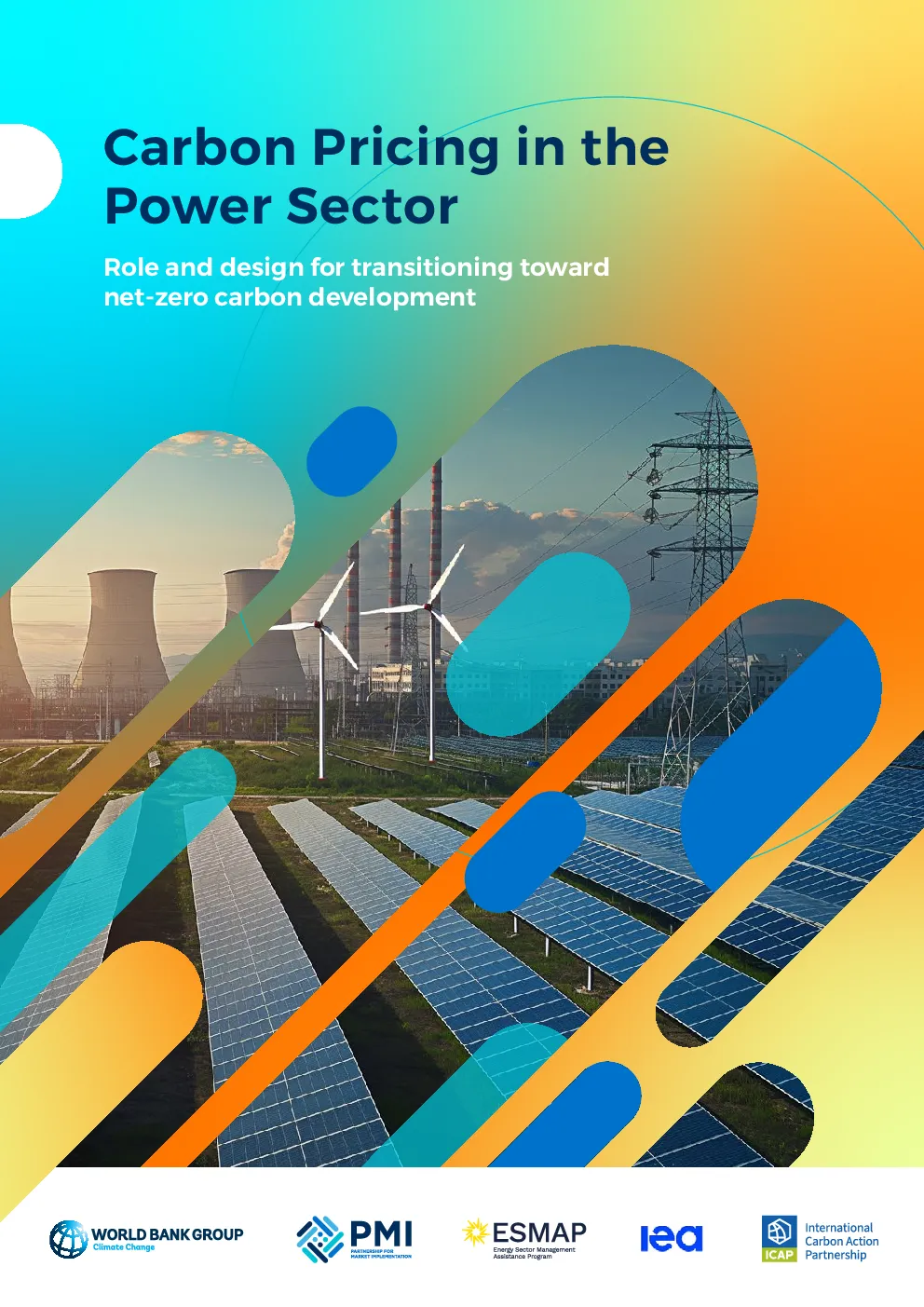
Role and design for transitioning towardnet-zero carbon development Carbon Pricing in the Power Sector © 2024 The World Bank Group 1818 H Street NW, Washington, DC 20433 Telephone: 202-473-1000; Internet:www.worldbank.org The findings, interpretations, and conclusions expressed in this work do not necessarily reflect the viewsof The World Bank, its Board of Executive Directors, or the governments they represent, or those of theIEA’s individual member countries or funders. The World Bank, ICAP and the IEA do not guarantee the accuracy, completeness, or currency of the dataincluded in this work and do not assume responsibility for any errors, omissions, or discrepancies in theinformation or liability with respect to the use of or failure to use the information, methods, processes,or conclusions set forth. The boundaries, colors, denominations, and other information shown on anymap in this work do not imply any judgment on the part of The World Bank, ICAP or the IEA concerningthe legal status of any territory or the endorsement or acceptance of such boundaries. The contents of this work are intended for general informational purposes only and are not intendedto constitute legal, securities, or investment advice, an opinion regarding the appropriateness of anyinvestment, or a solicitation of any type. Some of the organizations of The World Bank Group or theiraffiliates may have an investment in, provide other advice or services to, or otherwise have a financialinterest in, certain of the companies and parties named herein. Nothing herein shall constitute or be construed or considered to be a limitation upon or waiver ofthe privileges and immunities of any of the organizations of The World Bank Group, all of which arespecifically reserved. RIGHTS AND PERMISSIONS The material in this work is subject to copyright. Because The World Bank Group encourages disseminationof its knowledge, this work may be reproduced, in whole or in part, for noncommercial purposes as longas full attribution to this work is given and all further permissions that may be required for such use (asnoted herein) are acquired. The World Bank Group does not warrant that the content contained in thiswork will not infringe on the rights of third parties and accepts no responsibility or liability in this regard. All queries on rights and licenses should be addressed to World Bank Publications, The World BankGroup, 1818 H Street NW, Washington, DC 20433, USA; e-mail:pubrights@worldbank.org. Foreword Electricity is the lifeline for a modern economy.At the same time, the power sector is the world’smainsource of greenhouse gas emissions.Limiting the worst effects of a changing climaterequires that the supply of clean electricity growsrapidly. This presents challenges as the powersectoris technologically complex and requirescostly infrastructure development. The sector isalso highly regulated and dependent on domesticnaturalresources and fluctuating internationalcommodity markets. our research establishes that the carbon pricinginstrument must be carefully positioned at theright regulation point in the power sector’s valuechain—rather than merely adding a burden for thesector.Getting it right can influence everythingfrompower generation options to investmentdecisions and customers’ behaviors. Carbon pricing, which generated a record $104billionworldwide in 2023 alone,can providegovernments with new income sources. Severaldeveloping countries, such as China, Colombia,andSouth Africa,are in the early stages ofmanaging distributional impacts on the poorestwhilefacilitating the adaptation of energy-intensive industries. The report builds on theseearly experiences. For policymakers, carbon pricing stands out asone of the most potent tools available to reduceemissions in the power sector. The EU and theUKare prime examples of how carbon taxesand cap-and-trade systems can help significantlyadvance the decarbonization of the power sector.However, the path to implementing carbon pricingin low- and middle-income countries is fraughtwith challenges, including financing obstacles, theurgent need to boost supply, and social prioritiesdifferent from those of more advanced economieswith more carbon pricing experience. Predictable carbon pricing can help attract privatesectorinvestment in cleaner technologies.Incapital-intensive sectors like the power sector, bothinvestors and policymakers need long-term plansfor decarbonization based on clear and crediblecommunication on carbon price evolution. This report, jointly developed between the WorldBank, the International Energy Agency (IEA) andtheInternational Carbon Action Partnership(ICAP), delves deep into the power sector valuechain dynamics, demonstrating how well-designedcarbon pricing instruments can be instrumentalinhelping low-and middle-income countriesreachtheir decarbonization goals.Focusingonhow decisions are made in diverse powersectormodels in several developing countries, Thisreport is a