Marine Biobased Building Materials
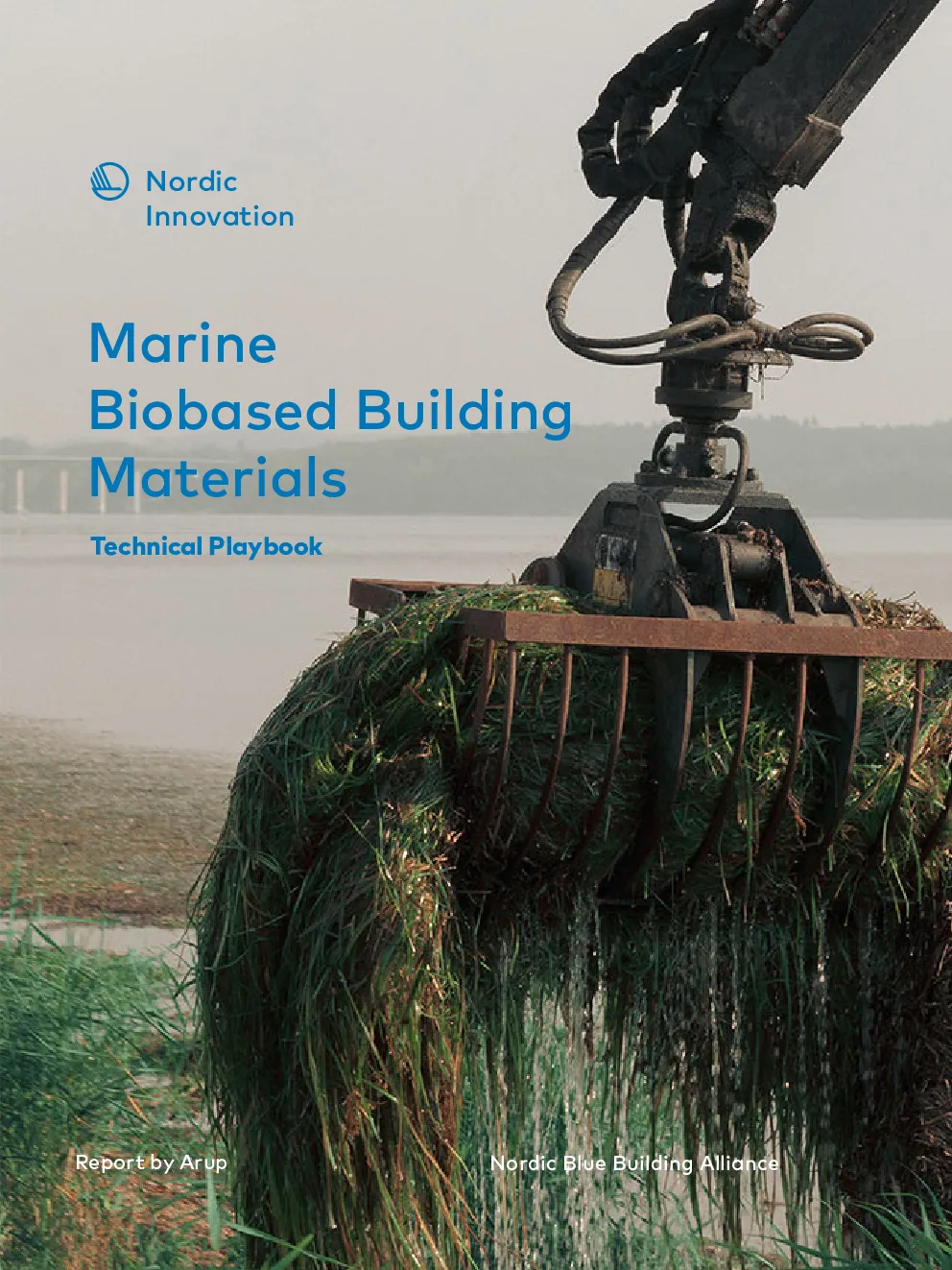
Technical Playbook Acknowledgements We would like to express our sincere appreciation toall respondents from research, public authorities andcompanies who have provided input to this report. Disclaimer Disclaimer: This report is part of the Nordic Innovationprogram; Sustainable Construction. Arup and the BlueBuilding Alliance are responsible for all its content. The front cover is showing harvest of eelgrass from theshore of Møn and the image was kindly provided by TobiasØhrstrøm, © Søuld Technical Playbook – Marine Biobased Building Material© Nordic Innovation, December 2024 About Nordic Innovation Nordic Innovation is an organisation under the NordicCouncil of Ministers. Nordic Innovation aims to makethe Nordics a pioneering region for sustainable growthand works to promote entrepreneurship, innovation, andcompetitiveness in Nordic business. Preface The programme supports the greentransition of the Nordic constructionsector by creating and sharing newknowledge, initiating debates in the sector,creating networks, workshops and bestpractice cases, and facilitating Nordicharmonisation of regulation for buildings’climate impact.Nordic Innovation has partly funded the The Nordic Prime Ministers’vision for the Nordiccooperation is that theregion is to become the mostintegrated and sustainableregion by 2030. work leading to this report with the aim ofexploring the possibilities for a larger useof marine biobased building materials andhope to inspire the Nordic constructionsector to become greener. The Nordic Ministers for Industry andInnovation have launched eight programswhich are to contribute to realizing thisvision. Nordic Innovation is responsible forcarrying out the programs and one of theprograms is the Sustainable Constructionprogram. Nordic Innovation has enteredinto a partnership with the Nordic BlueBuilding Alliance, led by Arup, to create thisreport. Oslo, January 2024 Svein BergManaging Director, Nordic Innovation The report is a part of the NordicSustainable Construction programmewhich contributes to the Nordic Vision2030 by supporting the Nordics inbecoming the leading region in sustainableand competitive construction and housingwith minimised environmental and climateimpact. Nordic Blue BuildingAlliance An overview of partners Design og Arkitektur NorgeKelpinorNordic InnovationNorwegian Seaweed AssociationNTNUSnøhetta Bioregion InstituteChalmersMounidNCCNordic ConcreteNordic SeafarmSwedish Industrial Design FoundationUniversity of GävleWhite Architects The Nordic Blue Building AllianceThe Nordic Blue Building Alliance was established as the foundation for thisproject. The partners in the Allianceare representatives from the full lifecycle of marine biobased buildingmaterials including stakeholdersacross the supply chain in the Nordicsof the cultivating and harvesting ofmarine biomass to create products forthe built environment. Table of Contents Executive Summary Glossary 1. Introduction1.1 Background and Aims1.2 Scope and Limitations1.3 Methodology 2. Marine-based Biomaterials within the Nordic Built Environment 3. Regulations 4. The Technical Playbook – How to Use it4.1 Marine Resources4.2 Marine Based Biomaterials 5. Marine Resources 5.1 Seashells5.2 Algae and Seaweed – Macro and Micro Algae5.3 Chitosan and Chitin5.4 Seagrass and Eelgrass5.5 Reed 6. Marine biomaterial products 6.1 Søuld: Acoustic Mats and Boards Made from Eelgrass6.2 Møn Tang: Insulation and roofing material from eelgrass6.3 Thatched Roofs from Reed6.4 Interesting Times Gang: Bioplastic from Sugar Kelp and Oyster Shells6.5 ReefCircular: Bioconcrete Made from Waste Oyster Shells6.6 Mounid: Microalgae-based Ink for Textile Dyeing6.7 DanShells: Mussel Shells 7. Recommendations and Opportunities Glossary A1-A3 (LCA)The “product stage” of acomponent’s life cycle. A1 refers to rawmaterial extraction and processing andprocessing of secondary material input(e.g., recycling processes). A2 refers totransport to the manufacturer. A3 refers tomanufacturing.1 Biogenic Carbonis carbon that issequestered from the atmosphere duringgrowth of biomass and may be releasedback to the atmosphere later due tocombustion of the biomass ordecomposition (same as sequesteredCO2).7 Biomaterialsare materials that have non-specific biological association and is allencompassing (includes natural materialse.g., wood through to bio synthetics). Allbiomaterials are bio-based and aregenerally used to describe an end-product,a finished material in the builtenvironment.8 Aquacultureis the controlled cultivation(“farming”) of aquatic organisms.Examples of marine aquacultureproduction include oysters, clams, mussels,shrimp, fish, and algae. Binderis a substance that causes two ormore other materials to bond together orblend. Biotechnologyinvolves using livingorganisms, cells, and biological systems todevelop products and applications thatbenefit various industries. It mergesbiology, chemistry, and technology forpurposes like