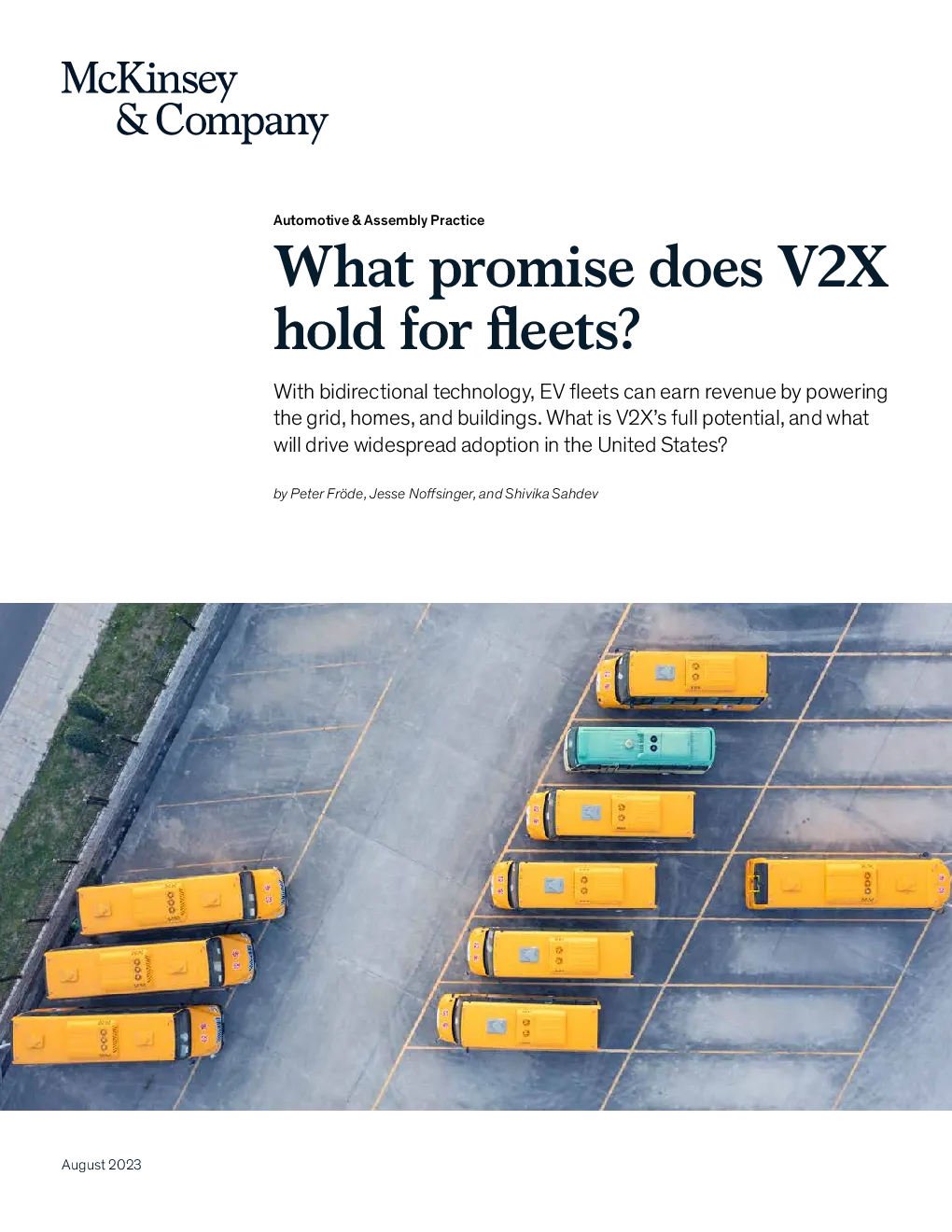
The Promise of V2X for Fleets
Introduction:
Automotive & Assembly Practice explores the transformative potential of Vehicle-to-X (V2X) technology in enhancing fleet operations, particularly focusing on the integration of electric vehicles (EVs) into the grid. As EV fleets grow in size, they offer unique capabilities that can address grid challenges and create new revenue streams.
Key Findings:
1. EV Batteries as Grid Assets:
- Demand Management: EV batteries can help manage grid demands, especially during peak hours, by providing backup capacity and reducing peak loads.
- Rate Optimization: They can optimize utility bills for buildings by buffering energy demand, leveraging time-of-use energy pricing.
2. Revenue Generation Opportunities:
- Backup Capacity Programs: EVs can store energy for release during peak demand periods, offering revenue through demand response and capacity fixed programs.
- Rate Optimization Programs: Through energy arbitrage, EVs can buy and sell energy at optimal times, reducing utility bills.
- Ancillary Services: Participation in frequency regulation and reserve capacity programs can provide additional revenue through ad hoc payments for balancing grid supply and demand.
3. Estimated Revenue Potential:
- A comprehensive analysis reveals that HDTs, MDTs, and school buses in Southern California Edison's territory can earn $7,000 to $12,000 annually per vehicle through various V2X use cases, leveraging large battery capacities and DC fast-charging infrastructure.
4. Key Insights:
- Geographical Variability: The potential revenue varies significantly based on the region served by the utility or independent service operator (ISO).
- Fleet Archetype Impact: Different fleet types and operational patterns influence the efficiency and revenue potential of V2X initiatives.
- Market Readiness: School bus fleets lead in V2X implementation, showcasing successful pilots across states like California and Massachusetts.
- Comprehensive Considerations: Success in V2X requires strategic planning, considering program availability, market rates, fleet size, and operational characteristics.
Conclusion:
V2X holds significant promise for fleets by leveraging EV batteries to address grid challenges, generate new revenue streams, and optimize operational costs. Understanding regional variations, fleet-specific strategies, and market readiness is crucial for maximizing the benefits of V2X technology.