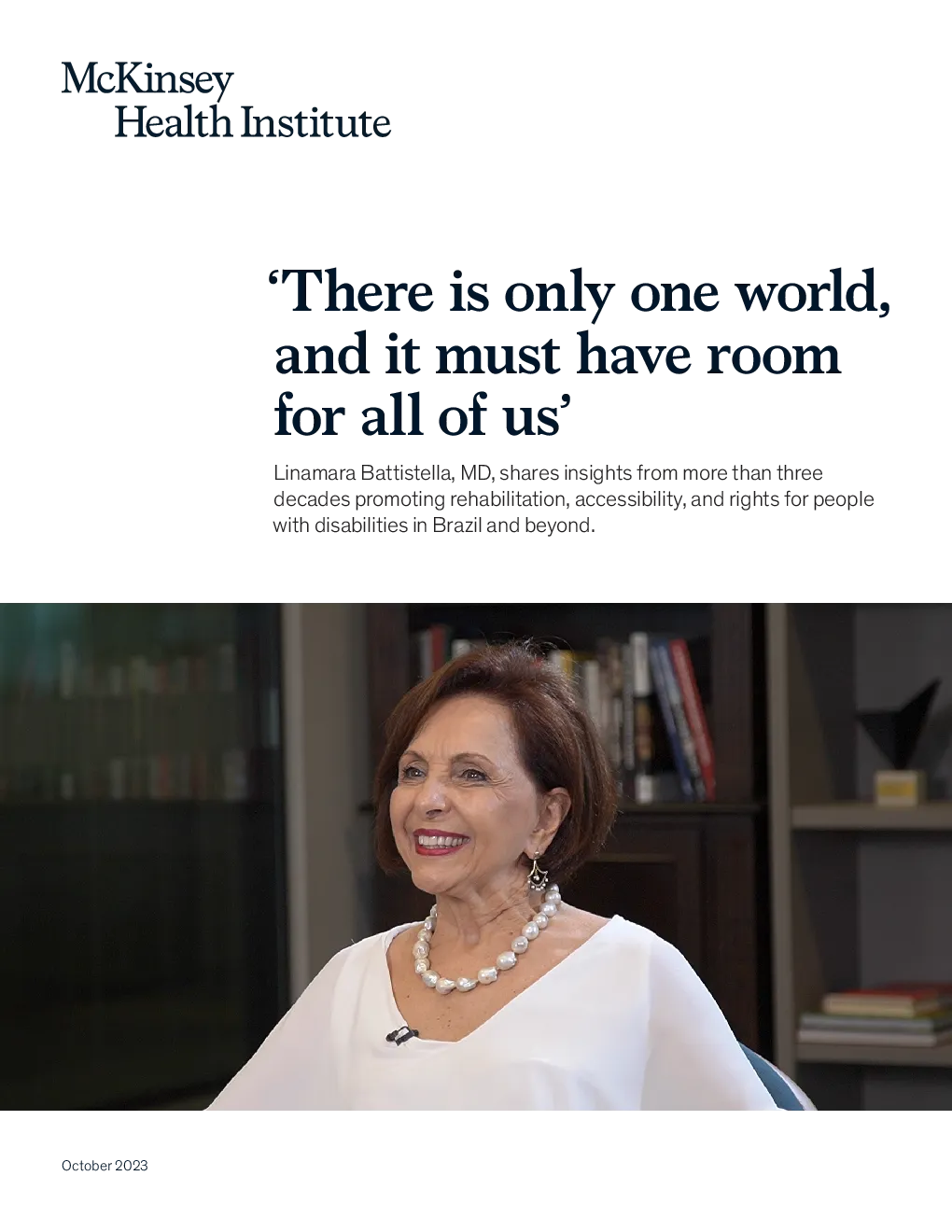
Linamara Battistella, a professor of physical medicine and rehabilitation/physiatrics at the University of São Paulo School of Medicine, has dedicated her career to advocating for the rights, accessibility, and rehabilitation of individuals with disabilities. Her journey began when she herself played the role of a child with disabilities during her early years as an actress, which inspired her choice to specialize in rehabilitation after observing her disabled peers during her university studies. She acknowledges the influence of her professors, many of whom were physiatrists, in shaping her career path.
Battistella's expertise extends to understanding the broad spectrum of disabilities, including visual impairments, hearing impairments, physical disabilities, and intellectual disabilities. She emphasizes the importance of recognizing and addressing the multifaceted nature of disabilities, noting that while conditions vary widely, the healthcare needs and investment requirements differ significantly between temporary and permanent disabilities.
Accessibility is a central theme in Battistella's discussions, particularly in the context of creating a more inclusive world. She outlines seven key dimensions of accessibility: mindset, physical and architectural access, environmental access, instrumental access, communication access, and digital access. Mindset is identified as the most crucial factor, advocating for a universal acceptance of the right to goods and services for all, regardless of disability status. Battistella highlights the legal frameworks in Brazil that mandate physical, architectural, and environmental accessibility, but stresses the importance of mindset changes to ensure practical implementation.
In the realm of digital accessibility, Battistella argues that the digital world can bridge gaps and foster inclusivity, offering opportunities for connection and reducing inequality. She suggests measuring site accessibility and enforcing legislation to ensure digital platforms are accessible, which can enhance the health and well-being of individuals with disabilities by promoting equal rights and opportunities.
The McKinsey Health Institute's focus on health beyond physical aspects aligns with Battistella's advocacy for social health. She underscores the importance of belonging as a fundamental aspect of happiness and social health, highlighting the role of legal instruments in motivating businesses to embrace accessibility measures.
Battistella's work as a coordinator of the World Health Organization's accessibility guidelines group reflects her commitment to global standards for disability inclusion. She stresses the necessity of legal frameworks that support the development of accessibility, emphasizing the importance of societal regulation and awareness of disabilities. The COVID-19 pandemic has highlighted the potential of digital transformation and proximity, demonstrating how remote services and digital health can improve accessibility, despite the challenges it presents.
Battistella's perspective on the pandemic's impact on accessibility underscores the paradigm shift towards leveraging digital technologies to overcome physical barriers. She encourages the utilization of the digital world to achieve objectives previously unattainable through traditional methods.
Overall, Battistella's work demonstrates a holistic approach to disability inclusion, emphasizing the importance of legal frameworks, societal mindset shifts, and technological advancements in creating a more equitable and accessible world.