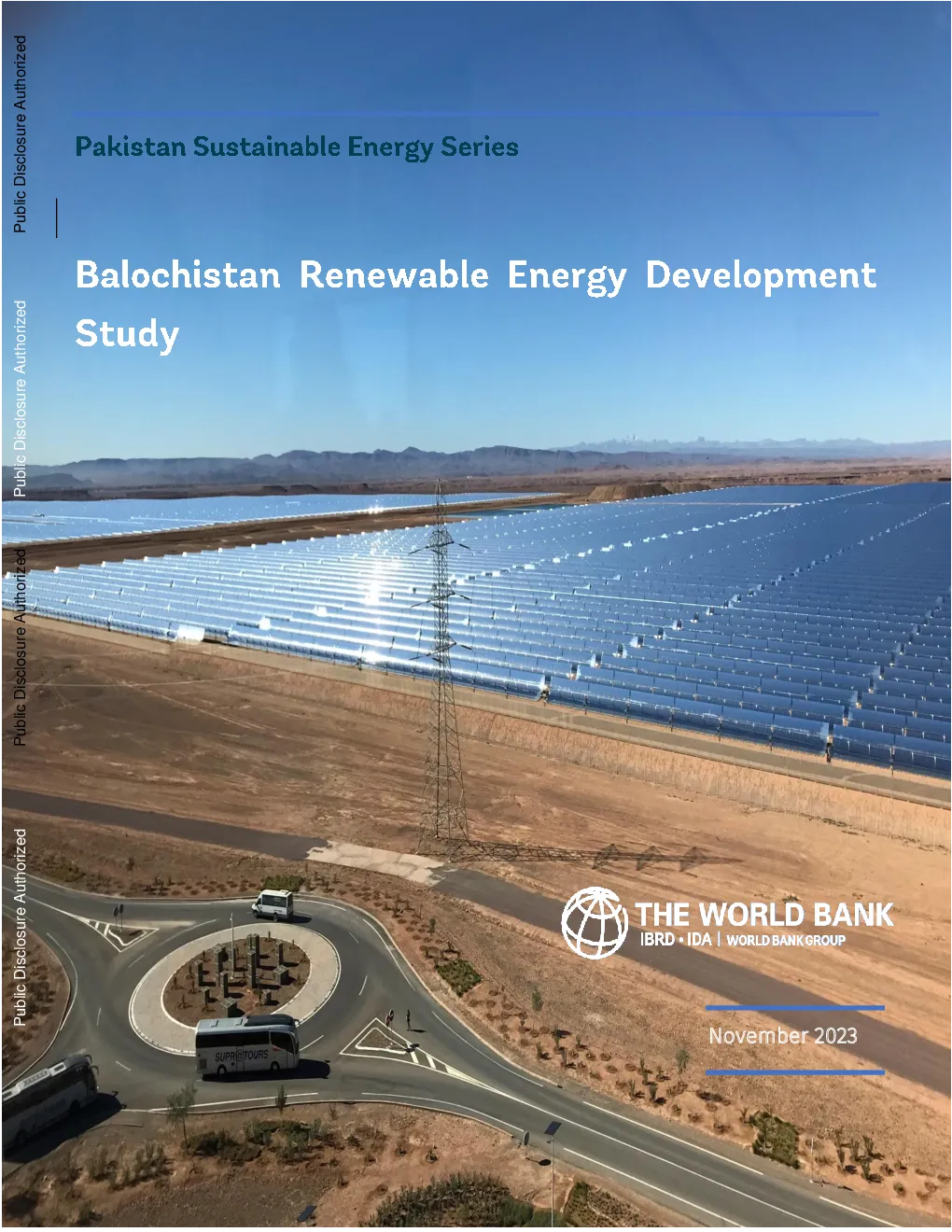
Balochistan Renewable Energy Development Study
Executive Summary
This comprehensive study, commissioned by the World Bank (WB) and in close collaboration with the Private Power & Infrastructure Board (PPIB), explores the renewable energy landscape in Balochistan, Pakistan, aiming to enhance the region's energy security and sustainability. The research incorporates insights from various experts, including specialists from the WB, consultants, and representatives from national and international organizations.
Main Findings
The study highlights several key areas:
- Policy and Regulatory Environment: The current policy framework in Pakistan and Balochistan is conducive to renewable energy adoption, with a focus on fostering private investment and promoting grid integration.
- Resource Assessment: Balochistan boasts significant potential for solar photovoltaic and wind energy generation, with additional opportunities in hybrid and concentrated solar power technologies.
- Electricity Demand and Grid Analysis: The study forecasts a growing demand for electricity in Balochistan, driven by industrial growth and population expansion. It also evaluates the existing grid infrastructure, identifying bottlenecks and opportunities for enhancement.
- Short-term Options: Until 2028, the study outlines feasible short-term options to increase renewable energy capacity, focusing on technology readiness, financial viability, and integration into the existing grid system.
Policy Recommendations and Proposed Next Steps
The report recommends:
- Enhancing Policy Framework: Strengthening regulatory mechanisms to facilitate faster deployment of renewable energy projects.
- Investment in Infrastructure: Prioritizing grid modernization and expansion to accommodate increased renewable energy production.
- Promoting Private Investment: Encouraging public-private partnerships to leverage private sector expertise and capital for renewable energy projects.
- Technological Innovation: Supporting research and development in emerging renewable technologies to improve efficiency and cost-effectiveness.
- Market Liberalization: Implementing policies that encourage competition and innovation in the energy sector.
The next steps proposed include detailed action plans for each recommendation, engaging stakeholders across government, industry, and civil society, and monitoring progress through regular assessments and updates.
Conclusion
The Balochistan Renewable Energy Development Study underscores the pivotal role of renewable energy in addressing Balochistan's energy challenges. By leveraging the region's natural resources and fostering a supportive policy environment, there is significant potential to enhance energy security, promote economic growth, and contribute to broader sustainability goals. The recommendations aim to catalyze these changes, positioning Balochistan as a leader in renewable energy adoption within Pakistan.