猜你想问
这份研报主要讲了什么内容?
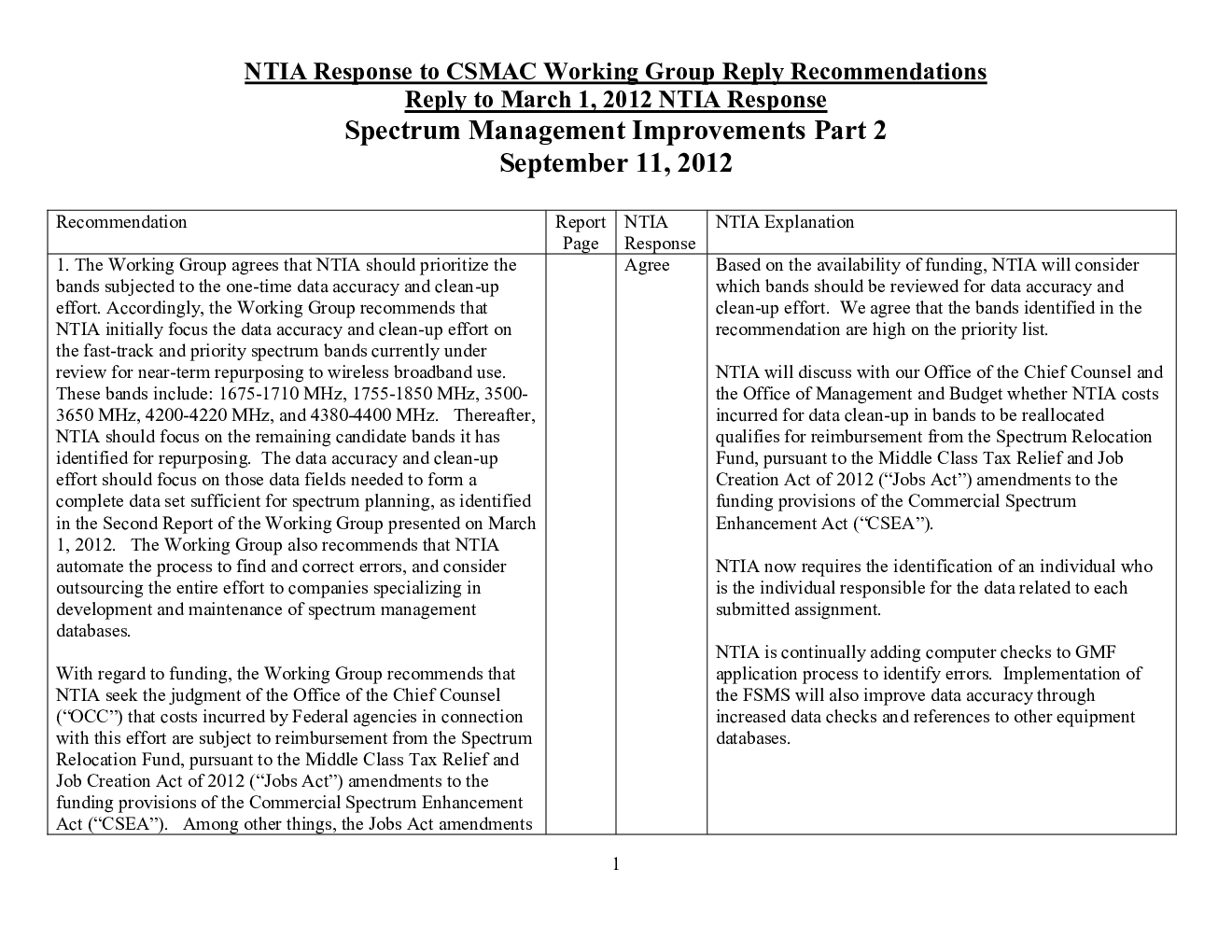
本报告聚焦于CSMAC工作组对NTIA的回应,核心围绕NTIA对2012年3月1日建议的反馈,涉及频谱数据清理优先级、资金预算解决方案及频率分配费调整等关键议题。报告详细解析了NTIA如何优先处理1675-1710 MHz等关键频段的数据清理,并探讨通过SRF基金报销的可能性。同时,报告还分析了NTIA借鉴FCC流程更新数据库的举措,以及调整频率分配费以覆盖维护成本的立法需求。
无线宽带频谱分配行业发展趋势如何?
无线宽带频谱分配正迈向更精细化的管理阶段。随着5G及未来6G技术的发展,对高频段如毫米波的需求日益增长,1675-1710 MHz等频段成为重新分配热点。NTIA的回应显示,数据准确性是频谱有效利用的前提,通过建立许可和运营验证流程,可确保数据库实时更新。此外,频率分配费调整将直接影响运营商投资积极性,未来可能呈现向高频段、大带宽倾斜的趋势,但需关注SRF基金等资金支持力度。
报告重点分析了哪些方向?
报告重点分析了NTIA在频谱数据清理、资金预算及频率分配费三个维度的应对策略。在数据清理方面,NTIA明确优先级,计划通过法律修正案争取SRF基金支持;在资金预算方面,NTIA提出替代方案,借鉴FCC流程强化许可管理,并已实施五年审查机制;在频率分配费方面,NTIA将评估新收费机制,以覆盖GMF和FSMS维护成本,但需国会立法支持。这些举措旨在提升频谱资源利用效率。
当前无线通信市场现状如何?
当前无线通信市场正经历频谱资源再分配的关键时期,高频段频谱成为竞争焦点。NTIA的回应反映出市场对数据准确性及资金支持的迫切需求,尤其是1675-1710 MHz等频段的数据清理直接影响未来5G部署。同时,频率分配费调整成为行业关注的焦点,合理的费率结构是激励运营商投资的关键。SRF基金等政策工具的落地情况,将直接影响频谱重新分配的进程。
本报告存在哪些风险提示?
本报告需关注NTIA政策执行的风险。首先,SRF基金报销的可行性存在不确定性,若资金不足,频谱重新分配可能受阻。其次,频率分配费调整需国会立法支持,政策推进存在变数。此外,NTIA借鉴FCC流程的成效尚未明确,数据清理和数据库更新仍面临挑战。最后,联邦机构系统变更报告的落地效果,也需持续跟踪验证。这些因素可能影响频谱资源优化配置的进程。