您的浏览器禁用了JavaScript(一种计算机语言,用以实现您与网页的交互),请解除该禁用,或者联系我们。 [世界银行]:老挝人民民主共和国学习区:以人为本的服务提供方式 - 发现报告

老挝人民民主共和国学习区:以人为本的服务提供方式

文化传媒 2026-06-15 世界银行 Yàng
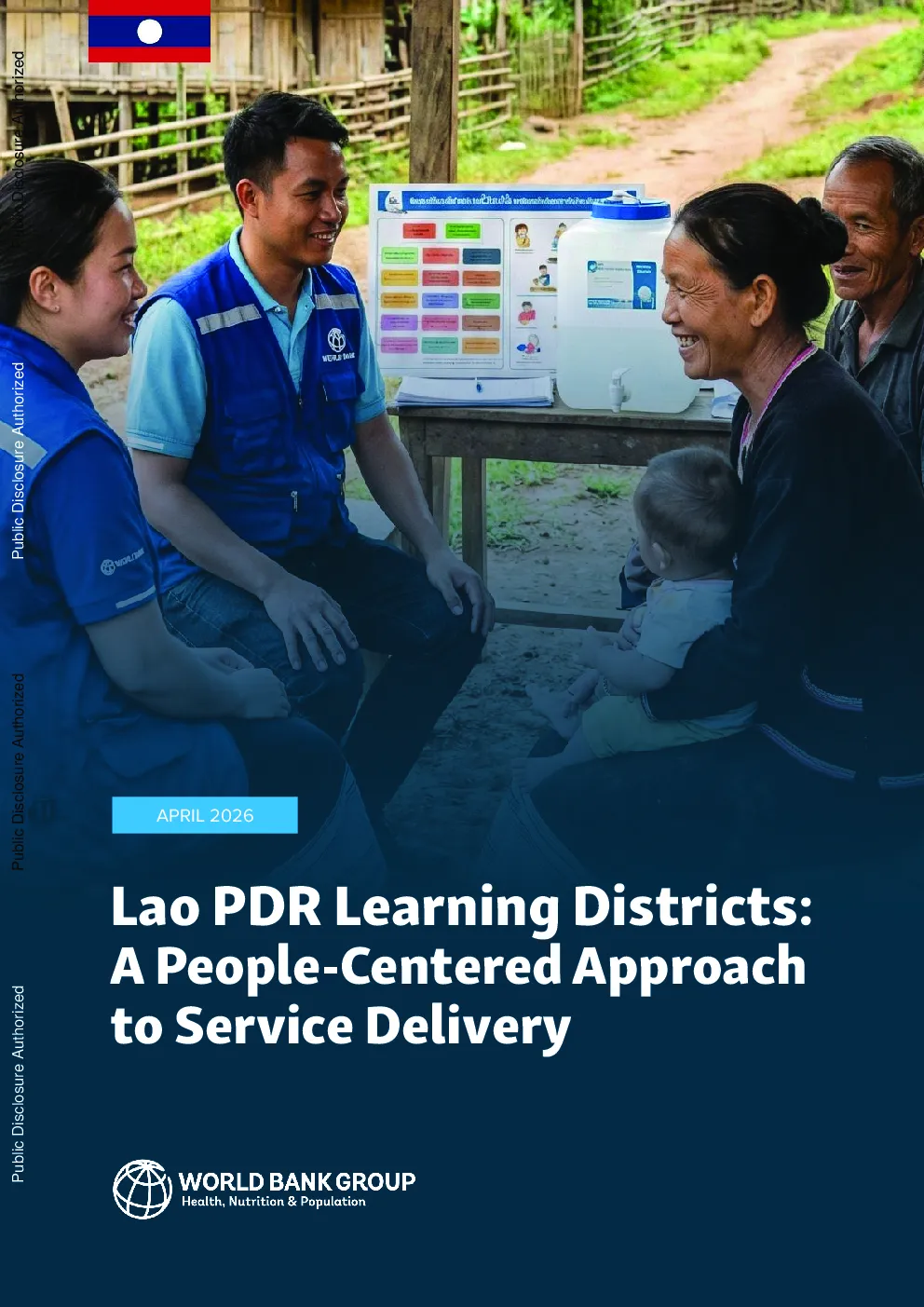
报告封面

Lao PDR Learning Districts:A People-Centered ApproachPublic Disclosure Authorized CONTENTS Executive SummaryKey InsightsIdeated SolutionsLessons Learned Background Discover Phase Define PhaseEmerging Themes Highlighting the Intersecting Barriers toand Opportunities for Essential Health Service Delivery & AccessExhibit 1. Example persona of an Adolescent MomExhibit 2. Systems wide view of key factorsi. Structural Challenges in Outreach and Community Health Programsii. Outreach Challenges to Hyper-Traditional Communitiesiii. Health Center Readiness Challenges Ideate PhaseDesign Challenges and Co-created Solutions from the Ideation WorkshopExhibit 6. Illustrative example of Challenges and SolutionsExhibit 7. Illustrative example of Challenges and SolutionsExhibit 8. Illustrative example of Core CharacteristicsExamples of the Ideated Solutions Putting the Evidence to WorkFrom Ideation to ImpactExhibit 9. Illustrative examples of how findings from theLearning Districts research were translated into revisions to theIntegrated Outreach guidelinesMoving Forward Appendices EXECUTIVE SUMMARY In Lao PDR, primary health care (PHC) is the main pathway toward universal healthcoverage (UHC).Despite progress in maternal and child health, major gaps persist fornon-Lao Tai ethnic groups in remote areas, including challenges in accessing maternalcare, nutrition services, and safe WASH practices. With support from the World Bank, theGovernment of Lao PDR has launched the Health and Nutrition Service Access II (HANSAII) Project to strengthen the quality and equity of PHC, particularly for underservedcommunities. Central to the project, the government has prioritized integrating essentialhealth services—antenatal and postnatal care, immunization, nutrition support, WASH, This report summarizes qualitative research conducted in two districts of Lao PDRto better understand the needs, beliefs, and barriers experienced by select non-LaoTai groups(and the community actors who influence them) to improve access to and Addressing this challenge called for approaches that could unpack its inherentcomplexity and point toward practical, implementable solutions fit for purposeand context.Human-centered design (HCD) and systems thinking were employed tohelp translate the lived realities of communities and providers into actionable designquestions. Together, these approaches emphasize stakeholder ownership, iterativeproblem-solving, and a deep understanding of the lived experiences of caregivers,providers, and community stakeholders. By translating insights into actionable “HowMight We” design questions, the team co-created solutions with the Ministry of The applied HCD and systems thinking lens surfaced deeply dependent, multisectoralchallenges across nutrition and the environment, social protection, cultural norms andmore.It identified key areas requiring concerted intervention, including cultural barriersto the adoption of desired health and nutrition behaviors among the most traditional Key Insights Structuralbarriers significantly constrain the effectiveness of outreach andcommunity health programs, spanning governance, infrastructure, social conditions,and human resources.Inconsistent funding and weak coordination—across healthcenters, village leaders, and social protection programs—undermine reliable outreachdelivery and lead to missed opportunities for integrated services such as immunization,nutrition,and antenatal care.Village Health Volunteers are essential but faceinadequate compensation, delayed payments, limited training, and broken equipment,reducing motivation and data reliability. Infrastructure challenges, including language Health system interventions are often not tailored to the most traditional andhard-to-reachcommunities,where deeply rooted beliefs,taboos,and familyhierarchiesstrongly shape health-seeking behavior.Early marriage and teenpregnancy, combined with economic constraints, social isolation, and reliance on familydecision-makers, limit young mothers’ ability to follow recommended antenatal care,nutrition, breastfeeding, and immunization practices. In some ethnic groups, beliefs that Health center readiness challenges limit the ability to deliver consistent, quality careand undermine trust in the health system.Many facilities lack essential diagnostics,equipment, and skilled personnel needed to manage routine and high-risk pregnancies,childbirth, and postnatal complications, restricting access for families unable to reachdistricthospitals.Frequent shortages of essential medicines—including vaccines,contraceptives, and antenatal supplies—force patients to seek costly alternatives or Ideated Solutions Through the co-creation process, the team (Ministry of Health, World Bank, andcommunity stakeholders) developed a set of people-centered solutionsto addressbarriers related to structural outreach constraints, hyper-traditional communities, andhealth center readiness. For example, to address structu