您的浏览器禁用了JavaScript(一种计算机语言,用以实现您与网页的交互),请解除该禁用,或者联系我们。 [-]:企业AI实战手册:51个成功部署案例的经验教训 - 发现报告

企业AI实战手册:51个成功部署案例的经验教训

信息技术 2026-06-02 - - 张曼迪
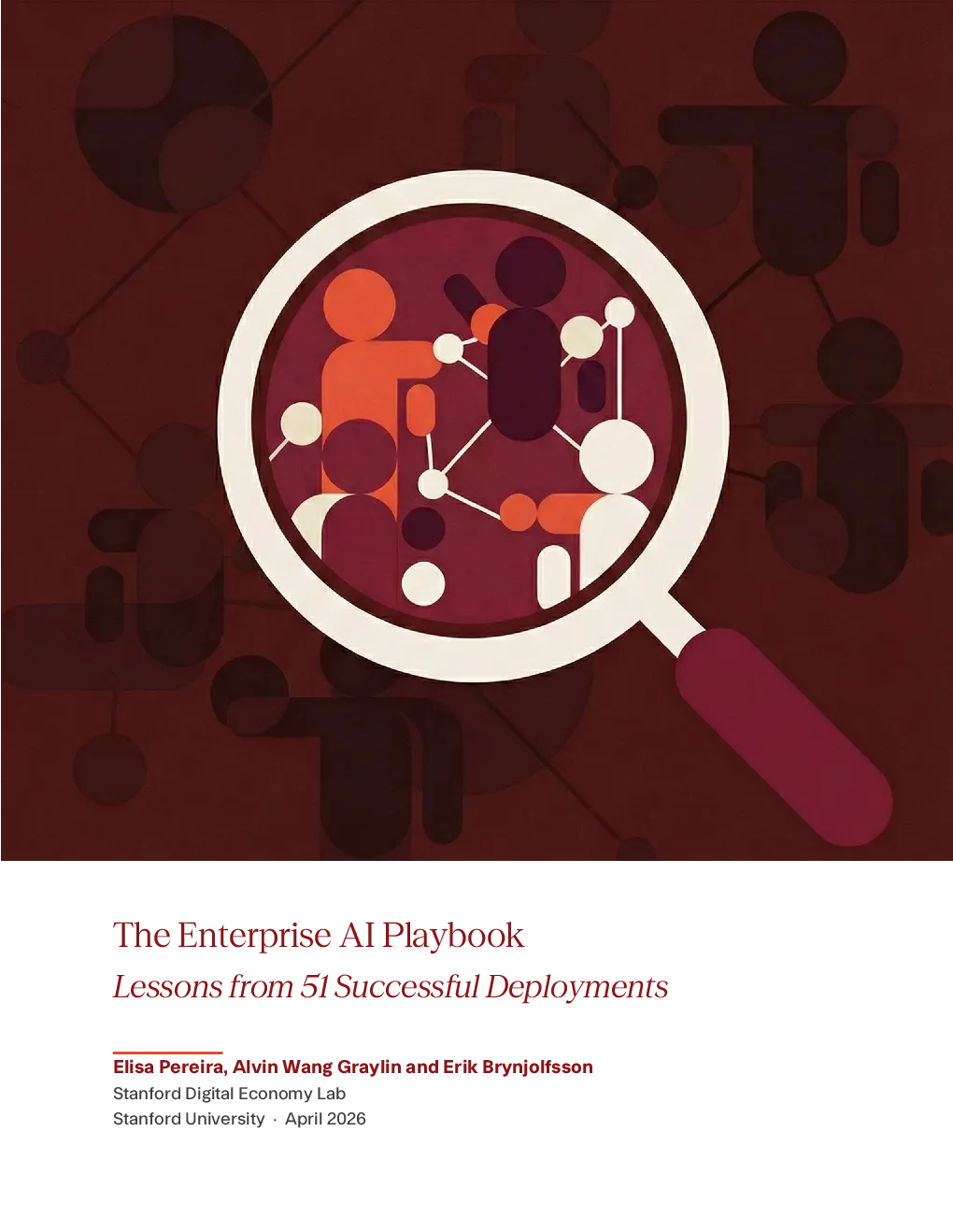
报告封面

Foreword There is no shortage of predictions and sentiment surveys about artificial intelligence today. Every week brings new forecasts and debates about whether AI is useful, which jobs will disappear,which industries will transform, which companies will dominate. But when we speak withexecutives actually deploying AI inside their organizations, we hear a different set of questions. Notwhat might happen in five years, but what is happening right now. Practical realities, not abstractframeworks. This report was born from a simple conviction: the most valuable insights about AI adoption are notin hypotheticals or predictions. They are in the patterns of those who have already walked the path. We set out to build something empirical. To document real-world use cases that have actuallydelivered business value. To map the practices of organizations that are not just experimenting withAI but successfully deploying it at scale. We wanted depth. To understand the pitfalls that do notmake it into press releases, the nuances that separate a successful pilot from a failed one, and theorganizational realities that no vendor whitepaper will tell you. Across 51 enterprise cases over 5 months, we found stories of transformation measured in weeksand others measured in years. Same technology, same use cases, vastly different outcomes. Thedifference was never the AI model. It was always the organization. Its readiness, its processes, itsleadership, its willingness to change and fail. Our ambition with this research is simple: to offer a practical window into what is actuallyhappening inside companies as they create value with AI, including detailed company case studies.The future of work only makes sense when one first understands the present of work. In the conclusion, we offer some forward-looking insights based on upcoming trends in the AIspace. We hope these findings serve as both a mirror and a map. Reflecting where yourorganization might be and illuminating the paths on how you can move forward with confidence. Elisa Pereira, Alvin Wang Graylin & Erik Brynjolfsson The Research TeamStanford Digital Economy Lab Contributors Elisa Pereira Researcher, Stanford Digital Economy Lab · MSx Candidate, Stanford Graduate School ofBusiness Elisa Pereira is a researcher at Stanford's Digital Economy Lab and MSx candidate at theStanford Graduate School of Business, with a background in venture capital and hands-onexperience building dozens of enterprise AI solutions across Latin America. Her currentresearch focuses on measuring the real-world impact of these deployments, identifyingpatterns behind successful implementations, and exploring how Latin America canestablish technological sovereignty. Alvin Wang Graylin Digital Fellow, Stanford Digital Economy Lab · Stanford University Alvin Wang Graylin is Digital Fellow at the Stanford Digital Economy Lab, and an author,serial entrepreneur and technology executive with over 35 years of experience in AI, XR,cybersecurity and semiconductor industries. He’s currently the chairman of the VirtualWorld Society, Senior Fellow at the Asia Society Policy Institute CCA, lecturer at MIT andadvises governments, organizations and corporations on technology transitions. His book,Our Next Reality, discusses how AI and immersive technology will reshape our world in thecoming decade. His current research is focused on the economics of AI and the associatedgovernmental policies needed to ensure a smooth transition to a post-labor economicmodel. Erik Brynjolfsson Director, Stanford Digital Economy Lab · Professor, Stanford UniversityErik Brynjolfsson is the Director of the Stanford Digital Economy Lab and the Jerry Yangand Akiko Yamazaki Professor and Senior Fellow at the Stanford Institute for Human-Centered AI (HAI). He is also the Ralph Landau Senior Fellow at SIEPR, professor bycourtesy at the Stanford Graduate School of Business and Department of Economics, anda research associate at the National Bureau of Economic Research (NBER). One of themost-cited authors on the economics of information, he has co-authored hundreds ofarticles and books, including The Second Machine Age and Machine, Platform, Crowd. Heputs his academic insights to practical use via Workhelix, a company he co-founded toidentify and measure the benefits of AI Contents Foreword The Macro Context Methodology Key findings briefly Chapter 1Why do AI business cases underestimate real investment? Chapter 2How to cross the valley of death between deployment and ROI? Chapter 3How much human oversight is optimal? Chapter 4What separates sponsors who drive results from those who just approve budgets? Chapter 5Where does fatal resistance come from? Chapter 6When productivity gains are high, what happens to headcount? Chapter 7Where is AI opening doors that were previously closed? Chapter 8Is agentic AI generating real value? Chapter 9How clean does enterprise data actually need to be? Chapter 10Does rigorous