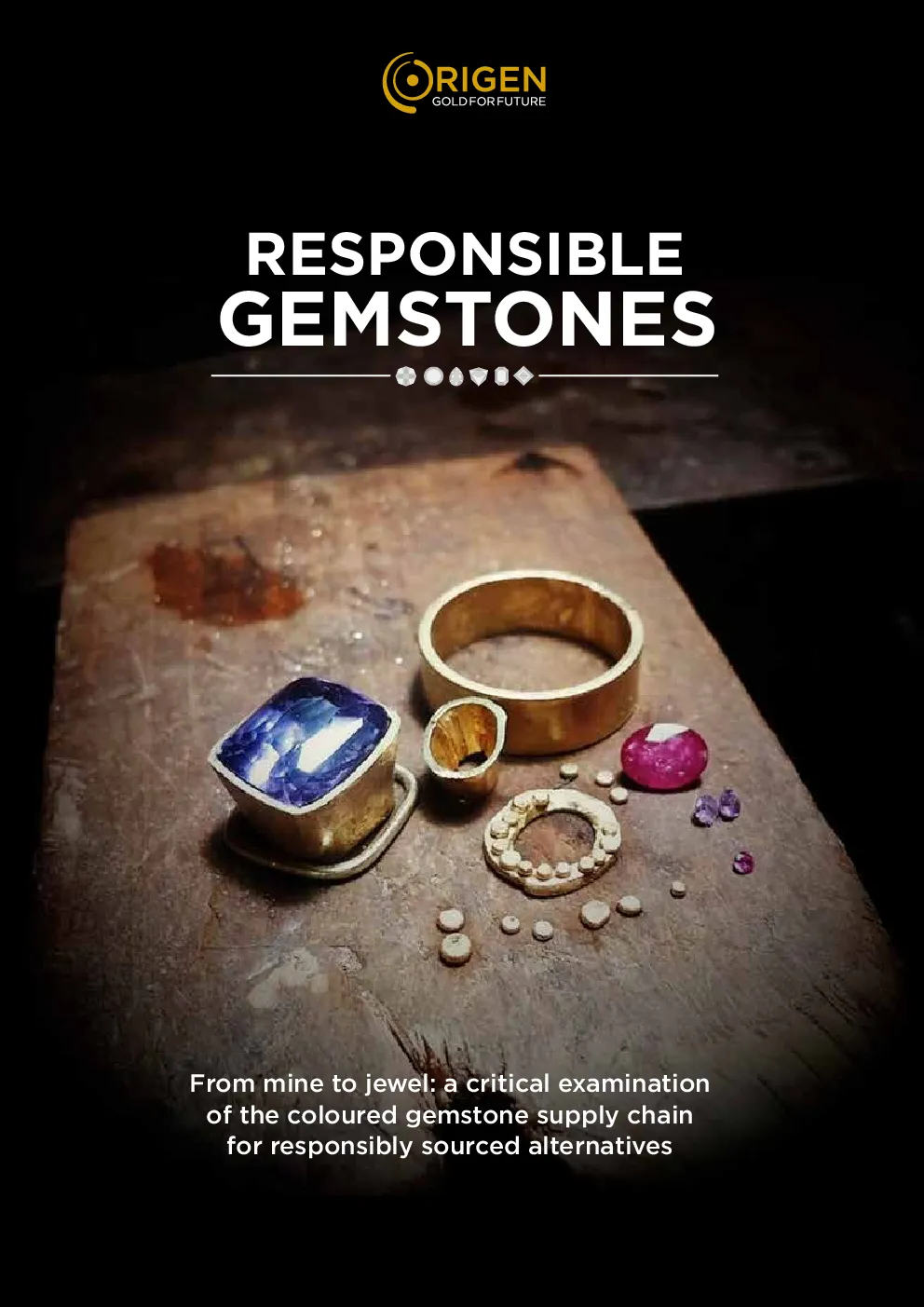
Gems are prized for their beauty, durability, and rarity, connecting us to the planet's uniqueness. However, the supply chains for most raw materials, especially coloured gemstones, are associated with severe environmental damage, armed conflict, corruption, child labour, and human rights violations. This report examines the coloured gemstone supply chain, focusing on the environmental and social impacts of mining operations, cutting and polishing processes, treatments applied to stones, and gem dealing activities.
The coloured gemstone market is highly opaque and largely unregulated, with approximately 90% of gems originating from Africa, Asia, and Latin America, where artisanal mining often serves as a subsistence economic activity driven by poverty and limited opportunities. The supply chain involves numerous actors and intermediaries, making traceability difficult and often leading to exploitation of miners and cutters.
Supply Chain Steps:
- Gems are initially discovered as rough stones and undergo cutting and polishing before being set into jewellery.
- The journey from mine to jewellery involves rough dealers, treater dealers (for treated stones), wholesale dealers, and retail dealers, with the gemstone potentially passing through the hands of around fifteen intermediaries.
- Traceability is essential but often lost due to the lengthy and opaque supply chain.
Artisanal and Small-Scale Mining (ASM):
- ASM accounts for 80% of coloured gems and is often unlicensed and illegal, leading to hazardous working conditions, forced and child labour, and environmental damage.
- Women play a significant role in ASM, constituting 40-50% of the workforce, but often face gender-based disadvantages and lack access to information, training, and resources.
Medium and Large-Scale Mining:
- Approximately 20% of coloured gems come from medium and large-scale mining, with particular relevance for emerald, ruby, tanzanite, and jade.
- Concerns exist regarding human rights abuses by multinationals, environmental destruction, low royalties paid to countries of origin, and financing of armed conflict and corruption.
Cutting and Polishing:
- Gem cutting is a highly specialised work often performed with basic equipment in small workshops or homes.
- The process involves sawing, grinding, and polishing, with potential risks to the right to health and life due to silicosis, noise, chemical exposure, and injuries.
Gem Treatments:
- Many treatments are conducted to enhance the appearance and value of stones, including heating, irradiation, dyeing, impregnating, filling, and diffusion.
- It is essential that any treatments used are transparently disclosed as part of the gemstone's traceability.
Responsible Gemstone Mining and Sourcing:
- Responsible sourcing initiatives promote fair prices, safe conditions, human and environmental rights, and traceability.
- Examples include Anza Gems, Ceylon, Columbia Gem House, Nature's Geometry, Nineteen48, and MIADANA.
- Responsible dealers pay more for rough stones and often support local mining communities through social investment initiatives.
Key Data:
- Approximately 90% of coloured gemstones originate from the Global South (Africa, Asia, Latin America).
- Artisanal mining is practised in 85-119 countries, with around 44.67 million people directly engaged in ASM worldwide.
- Only a small portion of the profit from gemstone mining remains in the countries of origin.
- A miner in the traditional supply chain typically receives around 5% of the wholesale value of a stone.
Conclusion:
The report highlights the need for responsible jewellery practices rooted in material origin and traceability. By supporting transparent, sustainable, and equitable sourcing practices, we can benefit all stakeholders and promote positive social and environmental impacts. The mine-to-market model, which shortens the supply chain and ensures fair compensation for miners and cutters, is presented as a viable solution. The report concludes by encouraging jewellers to research suppliers and select ethically sourced, traceable materials, viewing responsible sourcing as a path of constant progression.