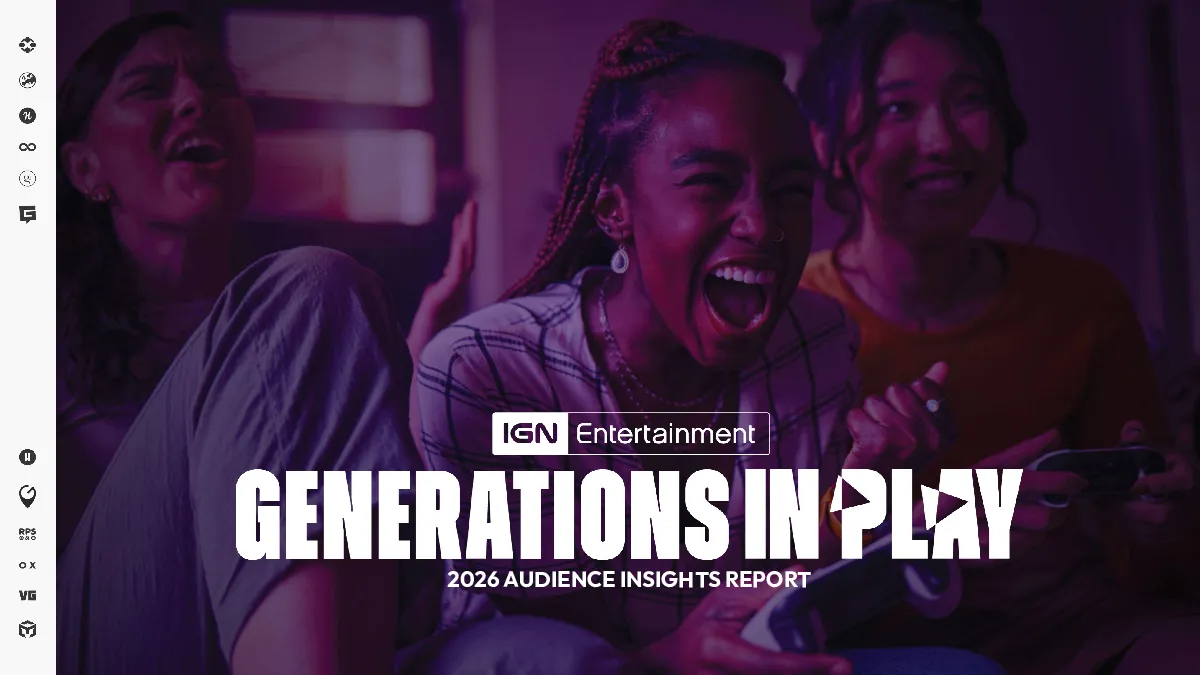
THE ENTERTAINMENT LANDSCAPEHAS CHANGED Thirty years ago, IGN was founded in a media landscape defined byscarcity. Access was limited, discovery was linear, and entertainmentwas something audiences consumed, not shaped. Today, entertainment is infinite, participatory, and always on. Hundredsof millions of people engage with games, film, television, and creatorsacrossIGN Entertainment’s ecosystem each month,spanningplatforms, formats, and culture around the world. Gaming is now the As this landscape has evolved, IGN Entertainment has evolved with it.We don’t just measure entertainment behavior, we sit inside it. Acrossour sites, channels, social platforms, and Game Help tools, we see how This Generations in Play study was designed to capture that reality.Rather than focusing solely on demographics or time spent, this reportexploreshow different generations discover,engage with,and Karl StewartSVP, Marketing& Head of IMAGINE AI. Tate FiebingSr. DirectorBusiness Intelligence INTRODUCTION THREE GENERATIONS,Chapter 1 CONTENT FOLLOWS INTENT,Chapter 2 THE RESIDENT &THE UTILITYChapter 3 CONCLUSION METHODOLOGY AUDIENCE SIZE: US / UK / AUS To participate, respondents had to meet at leastone of the following high-consumption criteria: Findings were enriched with IGN Entertainment’sfirst-party behavioral data and synthesized throughIMAGINE, our audience intelligence platform.The objective was to understand how generationalcontextshapesdiscovery,engagement,participation,not just how much content isBetweenAugustandNovember2025,IGNEntertainment conducted Generations in Play, ourlargest research initiative to date. In partnershipwith Kantar and UC Berkeley, we surveyed over6,250 respondents across the US, UK, and Australia.Thestudyfocusesonahighlyengaged consumed.Rather than revealing differences involume,the study surfaces distinct attentionsystems, where similar audiences can behave verydifferently depending on how intent is formed andacted on.entertainmentaudience,defined by sustainedparticipationrather than casual interest.Allrespondents qualified through meaningful weeklyengagement,including 10+hours spent gaming,streaming,watching YouTube,or using socialplatforms, or four or more movies watched in asingle week. RESEARCHPARTNERS: EVERYONE ELSE CALLEDIT GAMING.WE CALLED IT THE FUTURE. When gaming emerged as a medium in the mid-nineties, a new generation wasborn with it. Not just players, an entirely new kind of audience, one that engagedwith entertainment, discovery, and culture in ways the industry had never seen.The category was young. The audience was still forming. The brands that wouldeventually want to reach them didn't yet have the language, the tools, or the From day one, IGN didn't launch a website. We launched a network, fiveplatform-specific destinations simultaneously, each built around how gamersactually lived inside the medium, not how the industry wanted to talk at them.While others built single destinations for single audiences, we were already That instinct, to follow the audience rather than define the category, has guidedevery decision we've made in the thirty years since. It's what brought us here. Notas a gaming media company that survived, but as the only entertainment mediacompany to successfully serve every generation of the digital era. BEYOND THECONTROLLER The audiences that grew up with IGN didn't stay still, and neither did we. We quicklyrealized that people who love games also love movies and TV, and so entertainment hasbeen a core focus of our coverage for nearly three decades." Astechnology evolved,so did how this generation experienced entertainment.Broadband brought streaming. Social platforms turned private passion into publicconversation. The watercooler went digital, and the same instincts this audience haddeveloped inside gaming, discovering, debating, belonging, optimizing, began showing These weren't new behaviors. They were familiar ones on new stages.Because we'd spent a decade understanding not just what this audience consumed buthow they thought, how they assigned trust, how they decided what mattered, we werealready inside those conversations when streaming emerged, when social became thenew editorial layer, when gaming IP crossed into prestige television. We didn't pivot to Film. Television. Streaming. Commerce. Culture.These verticals evolved alongside an audience that was ready for them. And we evolvedwith them. That's not diversification. That's thirty years of paying attention. ONE ECOSYSTEMEVERY SCREENEVERY GENERATION We don't just observe how audiences discover, trust, andengage with entertainment, we understand why, acrossevery generation, simultaneously. That understandinglives inside everything we build, from our sites and socialchannels to our utility tools, commerce platforms, andaudio network, each one designed around a specific 470 million monthly visits, 90 million social followers,content distributed across 46 platforms and a prese