美泰 2026年季度报告
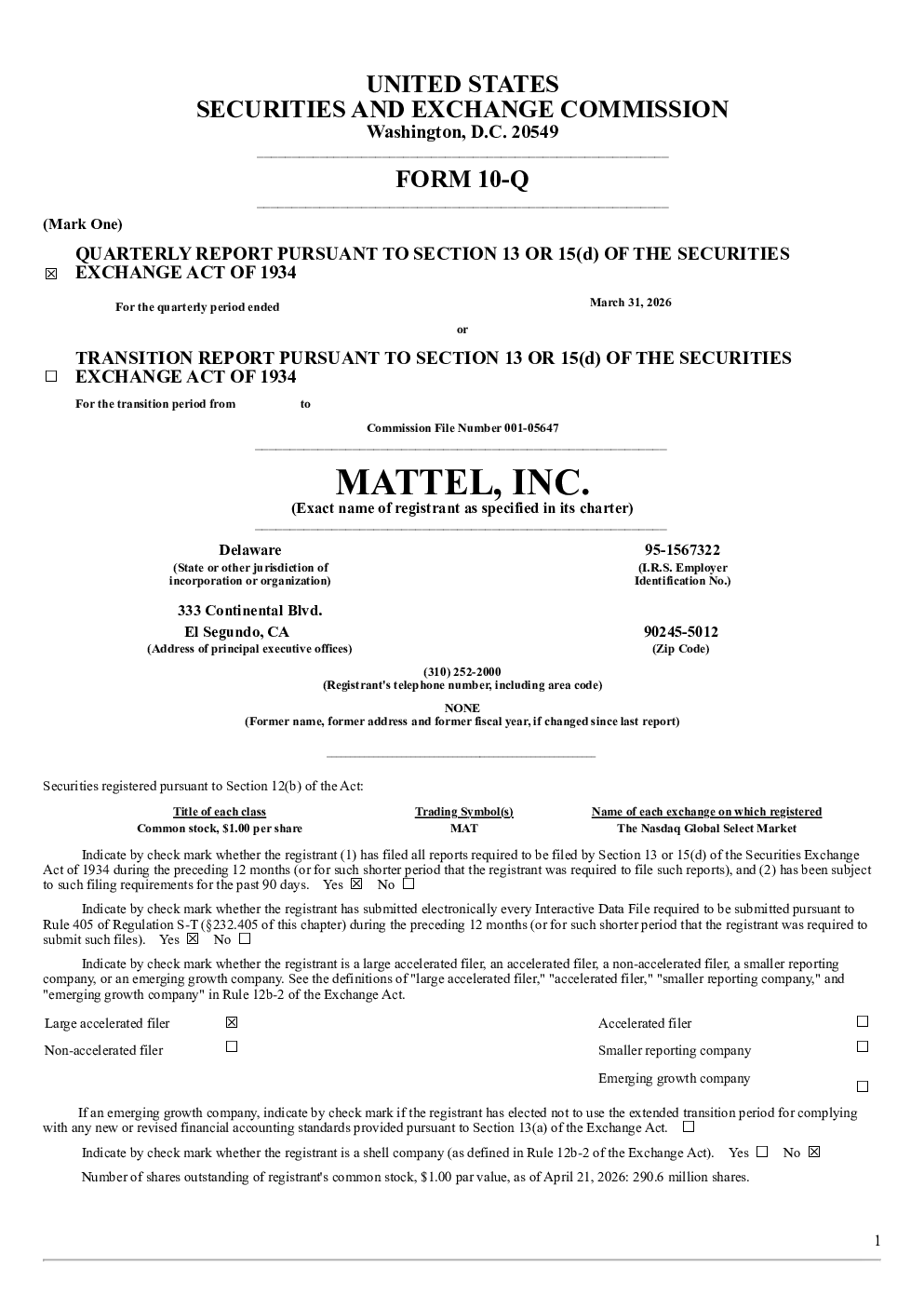
FORM 10-Q___________________________________________________________ Indicate by check mark whether the registrant has submitted electronically every Interactive Data File required to be submitted pursuant toRule 405 of RegulationS-T (§232.405 of this chapter) during the preceding 12 months (or for such shorter period that the registrant was required tosubmit such files).Yes☒No☐ Indicate by check mark whether the registrant is a large accelerated filer, an accelerated filer, a non-accelerated filer, a smaller reportingcompany, or an emerging growth company. See the definitions of "large accelerated filer," "accelerated filer," "smaller reporting company," and"emerging growth company" in Rule 12b-2 of the Exchange Act. If an emerging growth company, indicate by check mark if the registrant has elected not to use the extended transition period for complyingwith any new or revised financial accounting standards provided pursuant to Section 13(a) of the Exchange Act.☐ Indicate by check mark whether the registrant is a shell company (as defined in Rule 12b-2 of the Exchange Act).Yes☐No☒ Number of shares outstanding of registrant's common stock, $1.00 par value, as of April21, 2026: 290.6 million shares. PART I — FINANCIAL INFORMATION Consolidated Balance SheetsConsolidated Statements of OperationsConsolidated Statements of Comprehensive Income (Loss)Consolidated Statements of Cash Flows Consolidated Statements of Stockholders' EquityNotes to Consolidated Financial Statements Item2.Management's Discussion and Analysis of Financial Condition and Results of Operations Item1.Legal ProceedingsItem1A.Risk FactorsItem2.Unregistered Sales of Equity Securities and Use of ProceedsItem3.Defaults Upon Senior SecuritiesItem 4.Mine Safety DisclosuresItem5.Other InformationItem6.ExhibitsSignature Forward-Looking Statements This Quarterly Report on Form 10-Q contains a number of forward-looking statements within the meaning of the PrivateSecurities Litigation Reform Act of 1995. Forward-looking statements can be identified by the fact that they do not relate strictly tohistorical or current facts or by their nature are uncertain and include statements regarding Mattel's plans for future periods and otherfuture events. The use of words such as "anticipates," "expects," "intends," "plans," "projects," "looks forward," "confident that," "believes," and "targeted," among others, generally identify forward-looking statements. These forward-looking statements are basedon currently available operating, financial, economic, and other information and assumptions, and are subject to a number ofsignificant risks and uncertainties. A variety of factors or combination of factors, many of which are beyond Mattel's control, may cause actual results or outcomes, or the timing of those results or outcomes, to differ materially from those contained in any forward- looking statements. Specific factors that might cause such a difference include, but are not limited to: (i) Mattel's ability to design,develop, produce, manufacture, source, ship, and distribute products in a timely and cost-effective manner; (ii) sufficient interest inand demand for the products and entertainment Mattel offers by retail customers and consumers to profitably recover Mattel's costs; (iii) downturns in economic conditions affecting Mattel's markets which can negatively impact retail customers and consumers, andwhich can result in lower employment levels and lower consumer disposable income and spending, including lower spending on purchases of Mattel's products; (iv) other factors which can lower discretionary consumer spending, such as higher costs for fuel and food, drops in the value of homes or other consumer assets, and high levels of consumer debt; (v) potential difficulties or delays Mattel may experience in implementing cost savings and efficiency enhancing initiatives; (vi) other economic and public health conditions orregulatory changes in the markets in which Mattel and its customers and suppliers operate, which could create delays or increase Mattel's costs, such as higher commodity prices, labor costs, transportation costs, or outbreaks of disease; (vii) the effect of inflation onMattel's business, including cost inflation in supply chain inputs and increased labor costs, as well as pricing actions taken in an effortto mitigate the effects of inflation; (viii) currency fluctuations, including movements in foreign exchange rates, which can lower Mattel's net revenues and earnings, and significantly impact Mattel's costs; (ix) the concentration of Mattel's customers, potentially increasing the negative impact to Mattel of difficulties experienced by any of Mattel's customers, such as bankruptcies or liquidations or a general lack of success, or changes in their purchasing or selling patterns; (x) the inventory policies of Mattel's retail customers, aswell as the concentration of Mattel's revenues in the second half of the year, which, c