您的浏览器禁用了JavaScript(一种计算机语言,用以实现您与网页的交互),请解除该禁用,或者联系我们。 [麦肯锡]:精彩动作:与联合航空CEOS cott Kirby共饮咖啡(英) - 发现报告

精彩动作:与联合航空CEOS cott Kirby共饮咖啡(英)

休闲服务 2026-04-01 麦肯锡 Aaron
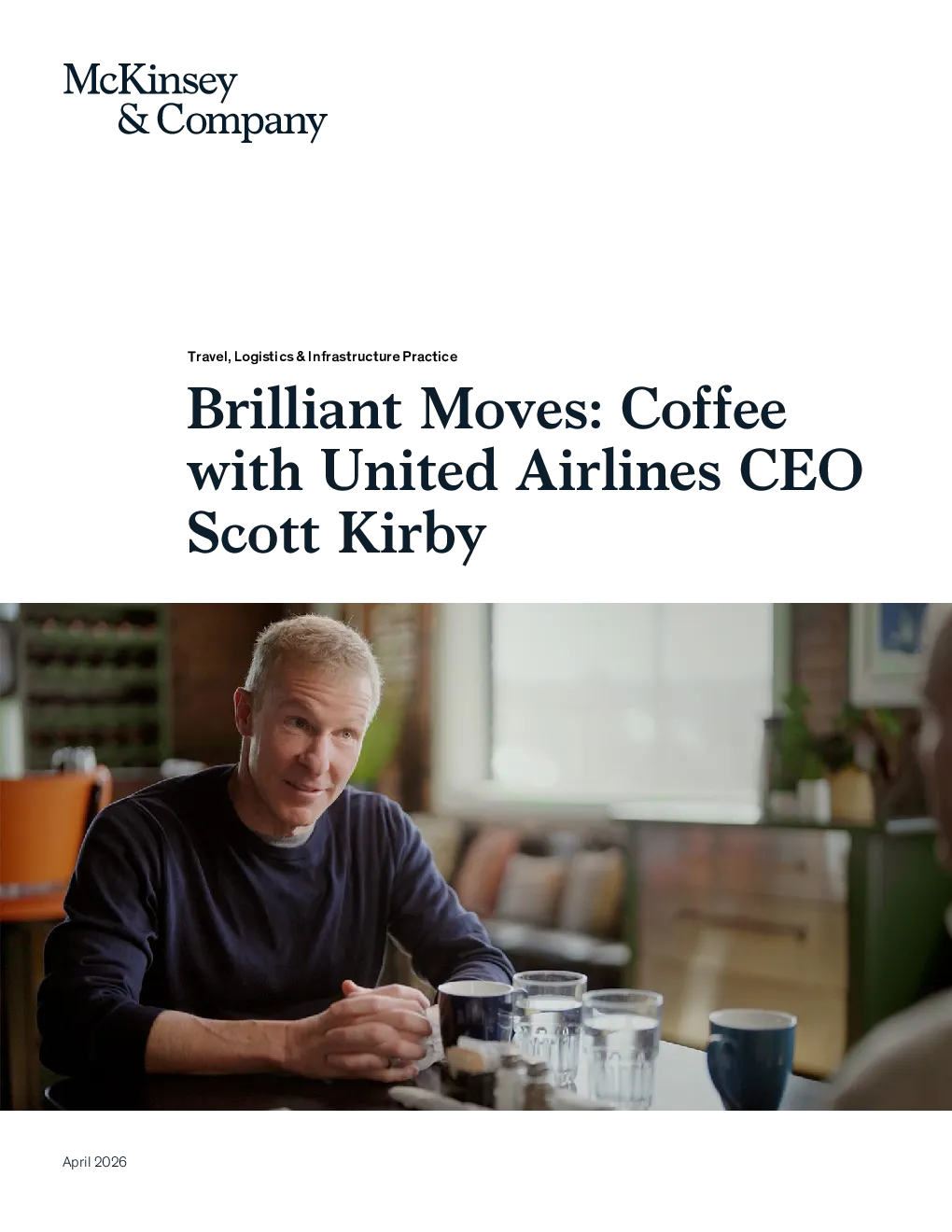
报告封面

Brilliant Moves: Coffeewith United Airlines CEOScott Kirby United Airlines CEO Scott Kirbyis focused on ensuring the company is built to thrive in anycontext. In this episode ofBrilliant Moves: Coffee with CEOs, McKinsey Global ManagingPartner Bob Sternfels sits down with Kirby, who reflects on resetting culture after the pandemicupended the airline industry, building radical transparency with customers, and leading withoptimism grounded in responsibility. From hiring for attitude to creating time for foresight, Kirbyshares the habits and convictions shaping United’s next decade. As both companies enter their second centuries, Kirby and Sternfels discuss combining legacyscale with start-up energy—and a no-excuses mindset. The following is an edited transcript oftheir conversation. Acting like a start-up at 100 years old Bob Sternfels:One reason I was excited to have this conversation is that our organizations havesome common history: We’re both in our 100th-year celebrations. As you know, not manyorganizations make it to 100. I know you’re focused on the future. Even if we can’t predict the next 100 years, looking at thenext decade for United, what are some things you’re confident won’t change? And what aresome things you think will? Scott Kirby:At United, one of the things I tell our employees is that we’re now a five-year-oldstart-up embedded inside a 100-year-old airline. Coming out of the pandemic—which was soexistential for us—we took the opportunity to really reset our culture and technology across theboard. As I look forward, I think we’re going to keep driving a lot of change. Of course, a lot of things are going to stay the same. Unless somebody invents a transporter,which doesn’t seem likely. Bob Sternfels:NoStar Trek? Scott Kirby:I’d love it. It’d be super cool. It’d blow up our business, but it’d be super cool. There will be technology changes—blended-wing bodies, and I think at some point we’re goingto have supersonic aircraft again, though it will be a niche. But the focus will be on how we make the whole experience feel good for passengers. Some ofthat is the onboard experience—having seat-back entertainment that’s relevant and givespassengers something to do. But those are not structural changes. Those are evolutionary changes, not revolutionarychanges. An epiphany for me was a decade ago when the CEO of a Fortune 50 company told me, “Onething I don’t like about travel is that it’s the only time in my life that I’m not in control. I have noidea what’s going on with a flight.” I think what will feel more revolutionary to customers is being communicated to transparently. Iwant to tell every customer exactly what I would hear, so you know what we know. Hiring for attitude and aptitude Scott Kirby:I say that I have the easiest job of anyone at United because I have only oneresponsibility: Create an airline that our employees are proud of. Because if they’re proud, theytake care of everything else. And when something goes wrong, whether it’s weather or anythingelse, they want to take care of you and make you feel the same way. If you’re proud ofsomething, you want everyone else to feel the same about it. It sounds so simple, and it really isso simple, but if you can get a team rallied, they can accomplish wonders. Bob Sternfels:I love your idea of a five-year-old start-up inside a 100-year-old company. Inthat five-year span, you’ve added a lot of folks. You’ve also been innovative, at least from theoutside, in creating pathways for people to join United—from flight attendants to pilots. How is that going? How are you thinking about sourcing talent? Where are you on that journey? Scott Kirby:We’re one of the few places left where people with a high school diploma can comework as a flight attendant, a gate agent, on the ramp, or in tech ops, with overtime pay. Oncethey get to the top of the seniority scale, they can earn six-figure incomes with great benefits,buy a house, send their kids to college. There just aren’t many careers like that left. So I’m proudof that. When we open up our flight attendant hiring for 2,000 to 3,000 positions, we get about 75,000applications within a couple of hours. So for us, the question is: How do you find people who have the right mentality and customerservice attitude? We can train them to do the jobs, but how do you build a process to pick theright people and keep them excited? Bob Sternfels:We get a lot of applications as well. I think worldwide, we receive more than amillion applications every year. And this idea you mention—do folks have the right attitude, theright orientation—did you ever rethink how you were assessing your talent approach? Scott Kirby:I started a new process. I asked our head of flight operations to select a dozen ofour pilots who were well-liked by everyone. And when candidates would come through forinterviews, these pilots would escort them around the building—go to lunch with them, takethem to the interviews, and s