土著人民和地方社区专项拨款机制的经验教训:对从业者的启示
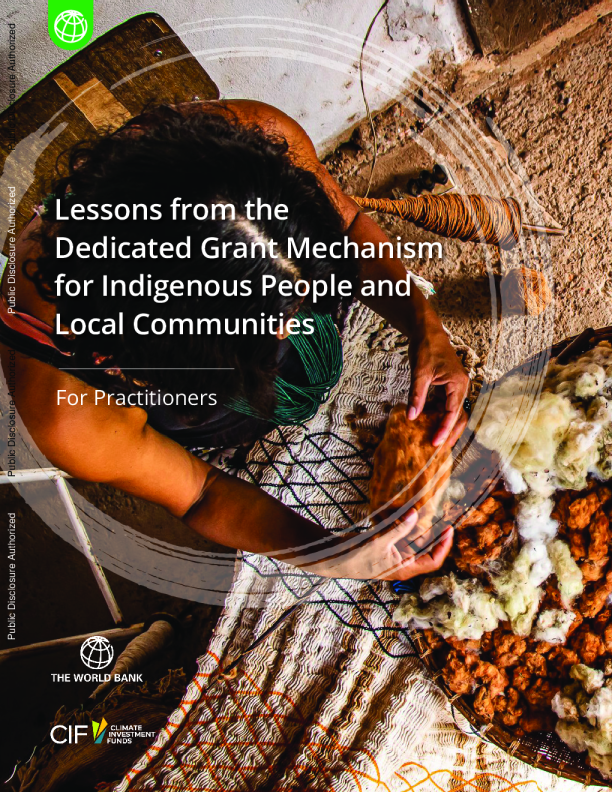
For Practitioners The Dedicated Grant Mechanism(DGM) has been a pioneerin engaging and working directly with indigenous peoples (IPs)and local communities (LCs) on sustainable forest landscapemanagement. The program has allowed direct access to financingby IPs and LCs and enhanced their role in decision making relatedto nature and climate. The lessons compiled in this document were derived fromreports and publications from national and global DGM projects.The document includes lessons related to the technical andinstitutional elements of the program, including its participatoryapproach, governance structure, participatory engagement andinclusion; as well as operational lessons towards project design,selection of subprojects, and, communications, monitoring andevaluation and knowledge sharing strategies. Finally, a set oflessons have been gathered to support the DGM’s sustainabilityand scaling up. The purpose of this document is to inform future DGMprojects and other initiatives to help IPs and LCs achievesustainable development and climate action. About the Dedicated Grant Mechanism The Dedicated Grant Mechanism(DGM) for indigenous people (IPs) and local communities(LCs) is a financing window that provides direct grant support to enhance the capacity ofIPs and LCs and support specific on-the ground nature and climate initiatives at the local,national, and global levels. DGM has been financed under two programs. Initially it was launched in 2015 under theForest Investment Program(FIP) financed by the Strategic Climate Fund (SCF) that is part ofthe multi-donor Climate Investment Fund. Under the FIP, a total $70 million was allocated to12 selected countries. In 2023 a new phase of DGM was approved with $40 million in grantfunding as part of theNature, People, and Climate program, also financed by the SCF. DGM has aproven track recordin building trust between communities and institutions, enhanceinclusive approaches, responding to nature and climate related community needs, buildingcapacity, empowering women, and fostering transparent governance. It has enabled IPs and LCsto manage natural resources sustainably, restore land access, and embrace climate action byapplying local and traditional knowledge. Atnational level, the DGM countryprojects provide IPs and LCsbeneficiaries end-to-end supportin designing and implementingsustainable land and forestmanagement activities according totheir needs and priorities. Projectsconsist of subprojects that financeon-the-ground activities in nature-based solutions and capacitybuilding activities for IP and LCorganizations. Each country project is executedby a National executing agency(NEA), reporting to the MultilateralDevelopment Bank (MDB) and theNational Steering Committee (NSC),both of which select the NEA. The projects are implemented under the guidance of the NSC that includes IP and LCrepresentatives and is in charge of approving annual budgets and funding allocations, as wellas mediating conflicts. The MDB attends the NSC meetings as observer and reports to CIF. At theglobal level, the DGM project is executed by a Global Executing Agency (GEA). TheGEA provides technical assistance and facilitates knowledge exchange, coordination andcommunications between the national DGM projects. The Global Steering Committee(GSC), consisting of NSC representatives, the GEA -acting as secretariat- and the MDB -asan observer-, is the main DGM governing body providing oversight and strategic direction,fostering stakeholder engagement and ensuring effective monitoring, redress andmediation. The GEA reports to the GSC and the MDB, in this case, the World Bank, who inturn reports to the CIF. 1. TECHNICAL LESSONS Promoting the Participatory Approach IPs and LCs require assistance withproject design and implementation toenable a truly participatory process. DGM projects that are designed toclearly respond to local needs willremain rooted in the communities. Fostering active participation of IPsis challenging; to do so, it is criticalto understand the social and culturalenvironment. Subprojects are morelikely to meet their goals when theimmediate needs of communities are met.Projects must adapt to the daily needsof communities, which are guided byancestral rights and traditional knowledge.InBurkina Faso, for instance, constructionof a well with DGM support respondedto immediate communities’ needs andallowed older women to be involved in thesubprojects involving small-scale farmingbecause they no longer needed to walklong distances to carry water for irrigation. Actively involving indigenous peoplein project decision making for projectdesign and implementation, fosters trust,ownership, and sustainability. The DGM’sgovernance model, which places IPsand LCs at the center through nationalsteering committees (NSCs) and nationalexecuting agencies (NEAs) that help executethe project’s vision, has proven effectivein ensuring that projects are relevant,culturally appropriate, and r