您的浏览器禁用了JavaScript(一种计算机语言,用以实现您与网页的交互),请解除该禁用,或者联系我们。[AColorBright]:杰出AI品牌视觉标识观察 - 发现报告

杰出AI品牌视觉标识观察

信息技术2026-03-19-AColorBright杨***
杰出AI品牌视觉标识观察

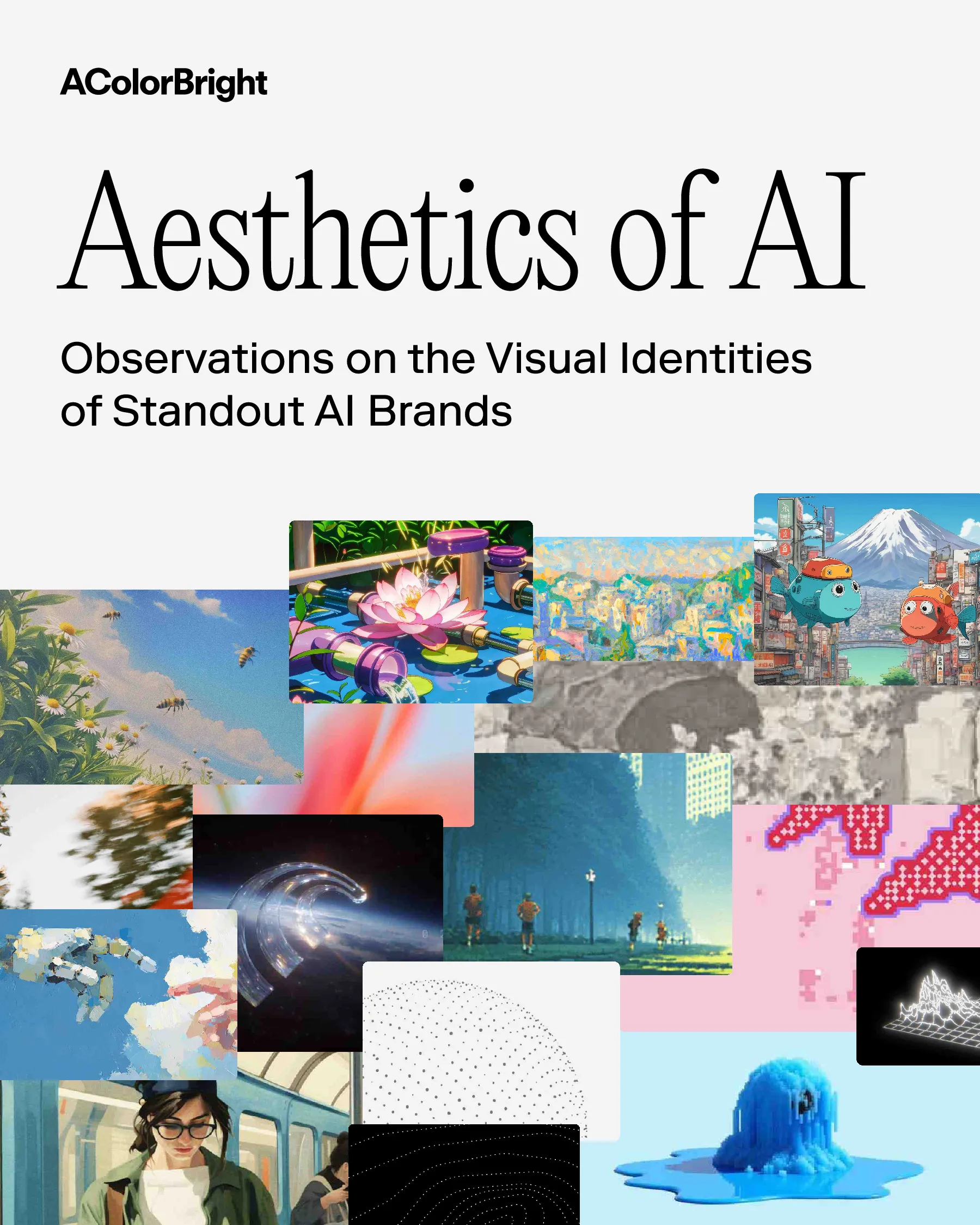
Observations on the Visual Identitiesof Standout AI Brand The AI race is running at an incrediblyhigh pace. But product-wise, it hasbecome somewhat monotonous. Eachnew model beats all others out there, untilthe next one lands. Everyone integrateseverything. Armies of agents areunleashed to create value by connectingthe dots in our data, yet they often justget in the way. From a branding perspective, however, AIis more exciting than ever. As in everycrowded market with low productdifferentiation, brand has become acrucial asset in the fight for attention,authority, and capital. A perfect moment to dive into the AIspace through a branding lens We looked at 23 standout AI brands, bigand small, to identify the trends thatcurrently shape visual identities in A Initial Observation Organic pleasantness gives a potentiallyterrifying technology a friendly appeal What stands out immediately is that many brands aim for a sense oforganic pleasantness, giving a potentially terrifying technology afriendly appeal. Shades of off-white and soft, organic gradients feelcalm, approachable, and trustworthy Expressive key visuals create distinctionwhen products essentially look alike On top of these pleasant canvases, many brands use expressive keyvisuals to create distinctiveness. That makes sense in a space whereactual product interfaces are barely differentiated. The spectrumranges from technical styles like pixel art and CAD-inspired illustrations,focusing on the technology itself, to human-inspired paintings andscribbles that emphasize what the technology enables people to do Motifs convey different ideas of AI: fromfriendly helper to radical disruption The motifs range from familiar to speculative. Everyday scenes andfriendly faces communicate the idea of AI as a tool that is here to makeour lives better. Retrofuturistic imagery and mysterious objects, on theother hand, convey AI as a technology poised to radically change theworld Visual Identity Trend Within this spectrum, we identified 14trends that shape visual identities in AI As with all trends, blindly following them leads to sameness and,ultimately, irrelevance. The real opportunity lies in making consciousdecisions: when to adopt, when to ignore, when to push a trend further,and when to deliberately counter it Shades of Off-White The quiet-luxury uniform of AI. Calm, warm, muted palettes designed toreduce friction and avoid visual risk. Signaling trust, restraint, andmaturity rather than excitement. Premium without gloss, authoritywithout dominance. A neutral backdrop that deliberately steps aside,allowing products and narratives to take center stage. ThePantonecolor of 2026already all over in AI Anthropi Organic Gradients Gradients are everywhere. They scale effortlessly and go with anything.Looking interesting without saying much. AI itself hasfiguredthis outand splashes gradients onto every interface it touches. To differentiate,brands are pushing gradients further. They make them more organic,add grain, texture, and subtle variation. The result is greaterdistinctiveness and a more ownable visual identity within a crowdedand homogenized landscape Digital Impressionism Soft, blurred forms and reduced detail avoid literal representation andinstead focus on mood and emotional resonance. By keeping nothingfully in focus, these visuals resist the urge to explain or over-specifywhat AI is or how it works. The imagery becomes suggestive rather thandescriptive, creating space for interpretation and projection. Digitalimpressionism allows brands to visualize intelligence without makingconcrete claims they can’t fully control Lomo Imagery Lomography-inspired imagery embraces imperfection as a signal. Highcontrast, washed-out colors, light leaks, blur, and visible “mistakes”deliberately reject polished, corporate aesthetics. This visual languageframes AI as exploratory rather than authoritative — something to playwith, not be intimidated by. By referencing analog photography andhappy accidents, these brands position themselves closer to humancreativity, curiosity, and experimentation. The messiness is intentional:it suggests openness, discovery, and a system still in motion rather thana finished, rigid product Contemporary Realism Contemporary Realism serves as both a metaphor for AI and proof of itscapability. It makes the invisible tangible and firmly grounds the oftenblurry, abstract technology in the real world. The style signals precision,control, and craft, creating a sense of reliability and mastery. It sets thebrand apart from vague, decorative gradients while hinting at the AI’suncanny ability to “see” and interpret the world, positioning thetechnology as advanced yet comprehensible General Intelligence Company of New Yor Pi A Sketch and Scribble Sketches and scribbles serve as a deliberate counterpoint to machineperfection. Uneven lines, quick marks, and half-formed diagrams createvisual traces of thinking rather than fi