您的浏览器禁用了JavaScript(一种计算机语言,用以实现您与网页的交互),请解除该禁用,或者联系我们。 [Common Sense Media]:2025年常识普查:0至8岁儿童的媒体使用情况 - 发现报告

2025年常识普查:0至8岁儿童的媒体使用情况

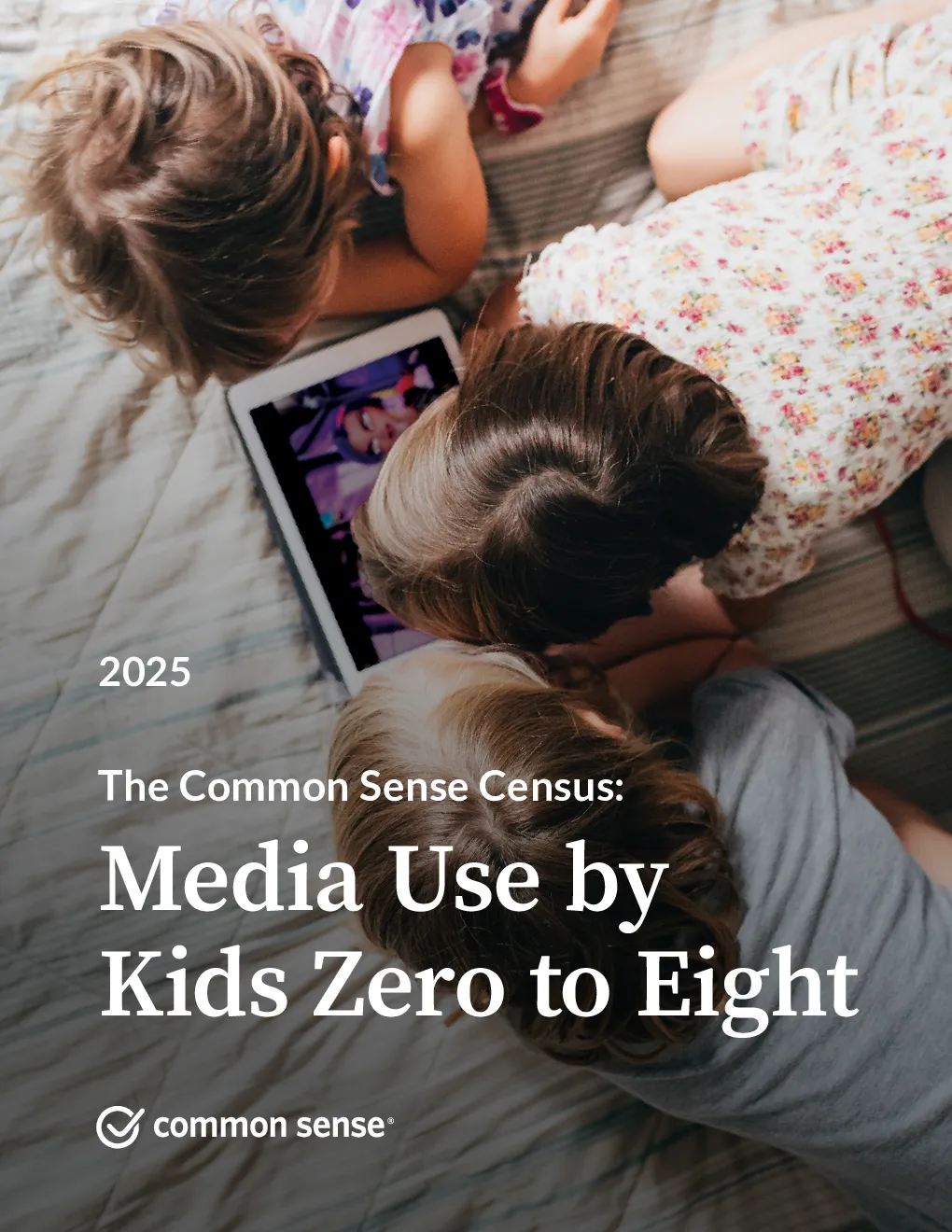
报告封面

The Common Sense Census: Media Use byKids Zero to Eight The Common Sense Census: Media Use by Kids Zero to Eight COMMON SENSE IS GRATEFUL FOR THE GENEROUS SUPPORT ANDUNDERWRITING THAT FUNDED THIS RESEARCH REPORT Bezos Family FoundationHerman H. Fleishman Foundation Jennifer Caldwell and John H.N. FisherMorgan Charitable Foundation A Letter from Our Founder Dear Friends, As technology continues to reshape every aspect of our society, it is more crucial than everto understand its influence on our youngest generation. We are excited to share the latestedition of theCommon Sense Census: Zero to Eight, which provides the firstcomprehensive look since the pandemic at how children from birth to age 8 are engagingwith media and technology. We see both challenge and opportunity in our latest findings. While 75% to 80% of parentsexpress concerns about screen media's impact, three-quarters also recognize the potentialfor learning and connection. This tension—balancing technology's risks with its benefits—defines the modern parenting experience. Parents of young children face the dual challengeof navigating screen media use and preserving fundamental childhood experiences like dailyreading, which has declined from 64% to 52% among 5- to 8-year-olds since 2017, even asoverall screen time remains steady. James P. SteyerFounder and CEO The report highlights the convergence of early childhood and technology. Screen time is nolonger just a mainstay of children's entertainment and education—it's now an integral partof daily activities for many families. We found that 1 in 5 families now use mobile devices tohelp manage their child's bedtime routines, mealtimes, and emotional regulation. From the data, several critical themes have emerged: •Children are acquiring screens at a younger age. By age 2, 4 in 10 children have their owntablet (40%). By age 4, more than half (58%) of children have their own tablet. By age 8,nearly 1 in 4 children have their own cellphone. Overall, 51% of children age 8 andyounger have their own mobile device (such as a tablet or cellphone).•Parent supervision varies significantly by platform, with 62% of parents watchingYouTube occasionally alongside their children, but only 17% co-viewing TikTok content.•AI is making inroads into early childhood, with nearly one-third of parents reportingtheir child has used AI for school-related learning.•Children from lower-income households are spending nearly twice as much time withscreens compared to those from higher-income households (3:48 vs. 1:52 hours daily). Our report aims to help you understand these shifts and navigate them thoughtfully. Howwe respond to these changes today will shape not just our children's relationship withtechnology, but their development, learning, and well-being for years to come. We invite you to explore the full report and our corresponding Parents' Ultimate Guidesthat give practical "device advice" for kids of all ages. Together, we can build a healthierdigital future for our children. James P. SteyerFounder and CEOCommon Sense Media Credits The report authors and project team express their gratitude to the parents who gave their time to take the survey. We also wishto acknowledge the work of Vicky Rideout for her contributions to the development of the Common Sense Census reports overthe past waves of data collection. Additionally, we thank the following individuals for their time and expertise reviewing thesurvey and providing feedback: Claire Bessant, Jessica Blacksten, Lin Ong, and Kalia Vogelman-Natan. Key Findings............................................1Introduction...........................................10Key Tables. . . . . . . . . . . . . . . . . . . . . . . . . . . . . . . . . . . . . . . . . . . . .11Overall Screen Media Use. . . . . . . . . . . . . . . . . . . . . . . . . . . . . . . . . .15Mobile Media..........................................17Television, Streaming, and Online Videos. . . . . . . . . . . . . . . . . . . . . . . .20Video Games and Virtual Reality.............................23Reading..............................................25Non-Screen Media (Music, Podcasts, Audiobooks, and Smart Speakers). .27Parents' Experiences with Children's Media Use. . . . . . . . . . . . . . . . . . .28Parents' Perceptions of Children's Media Use....................30Generative AI. . . . . . . . . . . . . . . . . . . . . . . . . . . . . . . . . . . . . . . . . . .33Conclusion. . . . . . . . . . . . . . . . . . . . . . . . . . . . . . . . . . . . . . . . . . . . .34Methodology. . . . . . . . . . . . . . . . . . . . . . . . . . . . . . . . . . . . . . . . . . .35 Key Findings 1.Children age 8 and younger spendabout two and a half hours (2:27) a daywith screen media. Among 0- to 8-year-olds, percentage of average daily screentime devoted to ... In 2024, caregivers reported that children age 8 and youngerspent roughly the same amount of time with screen media asthey did in 2020 (2:27 vs. 2:2