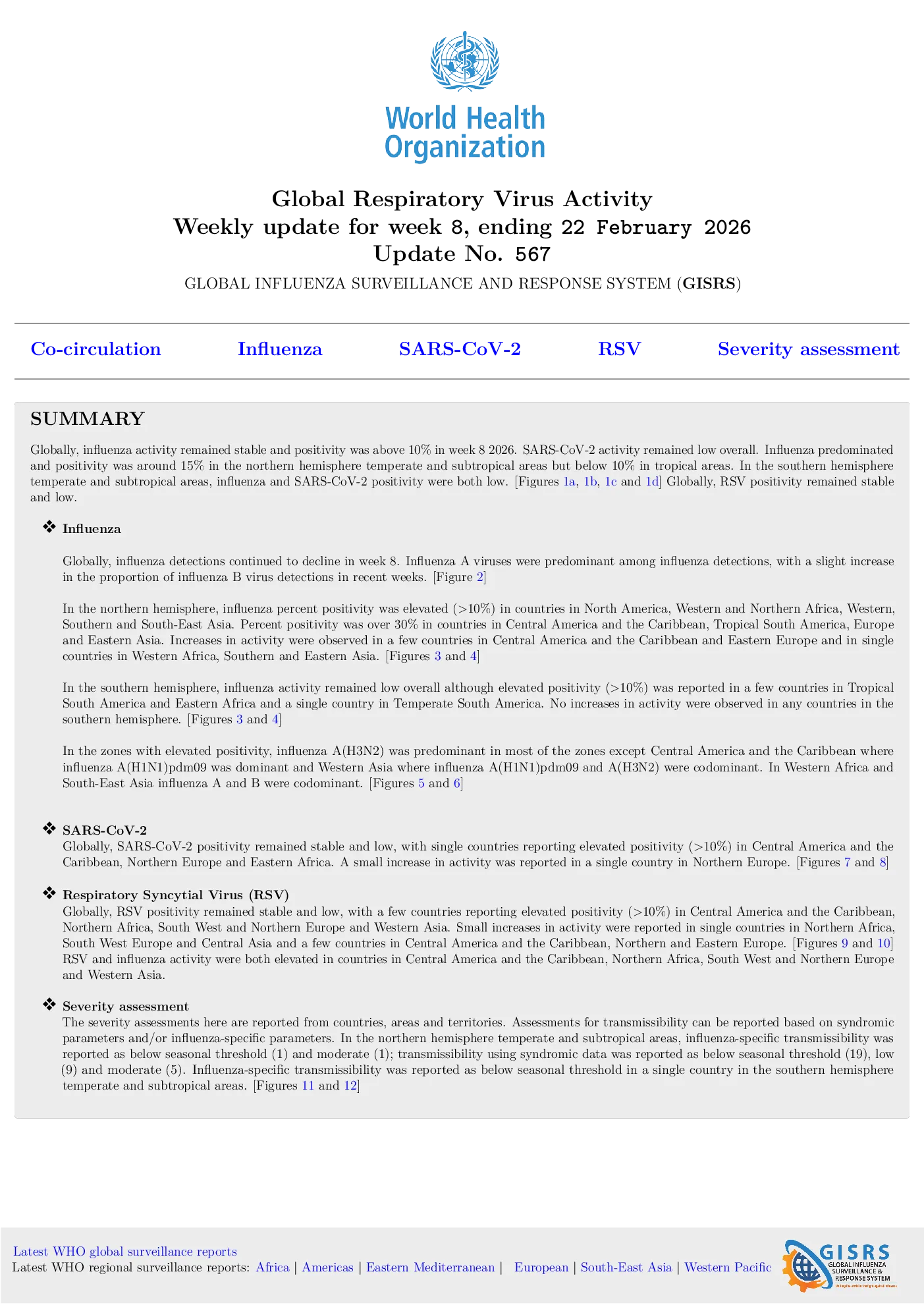
GLOBAL INFLUENZA SURVEILLANCE AND RESPONSE SYSTEM (GISRS) Co-circulationInfluenzaSARS-CoV-2RSVSeverity assessment SUMMARY Globally, influenza activity remained stable and positivity was above 10% in week 8 2026. SARS-CoV-2 activity remained low overall. Influenza predominatedand positivity was around 15% in the northern hemisphere temperate and subtropical areas but below 10% in tropical areas. In the southern hemispheretemperate and subtropical areas, influenza and SARS-CoV-2 positivity were both low. [Figures 1a, 1b, 1c and 1d] Globally, RSV positivity remained stableand low. qInfluenza Globally, influenza detections continued to decline in week 8. Influenza A viruses were predominant among influenza detections, with a slight increasein the proportion of influenza B virus detections in recent weeks. [Figure 2] In the northern hemisphere, influenza percent positivity was elevated (>10%) in countries in North America, Western and Northern Africa, Western,Southern and South-East Asia. Percent positivity was over 30% in countries in Central America and the Caribbean, Tropical South America, Europeand Eastern Asia. Increases in activity were observed in a few countries in Central America and the Caribbean and Eastern Europe and in singlecountries in Western Africa, Southern and Eastern Asia. [Figures 3 and 4] In the southern hemisphere, influenza activity remained low overall although elevated positivity (>10%) was reported in a few countries in TropicalSouth America and Eastern Africa and a single country in Temperate South America. No increases in activity were observed in any countries in thesouthern hemisphere. [Figures 3 and 4] In the zones with elevated positivity, influenza A(H3N2) was predominant in most of the zones except Central America and the Caribbean whereinfluenza A(H1N1)pdm09 was dominant and Western Asia where influenza A(H1N1)pdm09 and A(H3N2) were codominant. In Western Africa andSouth-East Asia influenza A and B were codominant. [Figures 5 and 6] qSARS-CoV-2Globally, SARS-CoV-2 positivity remained stable and low, with single countries reporting elevated positivity (>10%) in Central America and the qRespiratory Syncytial Virus (RSV)Globally, RSV positivity remained stable and low, with a few countries reporting elevated positivity (>10%) in Central America and the Caribbean, Northern Africa, South West and Northern Europe and Western Asia. Small increases in activity were reported in single countries in Northern Africa,South West Europe and Central Asia and a few countries in Central America and the Caribbean, Northern and Eastern Europe. [Figures 9 and 10]RSV and influenza activity were both elevated in countries in Central America and the Caribbean, Northern Africa, South West and Northern Europeand Western Asia. qSeverity assessmentThe severity assessments here are reported from countries, areas and territories. Assessments for transmissibility can be reported based on syndromic parameters and/or influenza-specific parameters. In the northern hemisphere temperate and subtropical areas, influenza-specific transmissibility wasreported as below seasonal threshold (1) and moderate (1); transmissibility using syndromic data was reported as below seasonal threshold (19), low(9) and moderate (5). Influenza-specific transmissibility was reported as below seasonal threshold in a single country in the southern hemispheretemperate and subtropical areas. [Figures 11 and 12] Co-circulation of influenza and SARS-CoV-2 1c) Weekly numbers of influenza andSARS-CoV-2 virus specimens tested andpercent positivity in tropical areas 1d) Weekly numbers of influenza andSARS-CoV-2 virus specimens tested andpercent positivity in southern hemispheretemperate and subtropical areas 1b) Weekly numbers of influenza andSARS-CoV-2 virus specimens tested andpercent positivity in northern hemispheretemperate and subtropical areas Influenza 3) Proportions of specimens that tested positive forinfluenza (year-week:2026-08) 4) Change in proportions of specimens that testedpositive for influenza (year-week:2026-08) 6) Weekly distribution of influenza virus types andsubtypes by geographic zone (last 12 months) 5) Proportions of influenza virus types and subtypes byinfluenza transmission zones (year-week:2026-08) SARS-CoV-2 7) Proportions of specimens that tested positive forSARS-CoV-2 (year-week:2026-08) 8) Change in proportions of specimens that testedpositive for SARS-CoV-2 (year-week:2026-08) Respiratory syncytial virus 9) Proportions of specimens that tested positive for RSV(year-week:2026-08) 10) Change in proportions of specimens that testedpositive for RSV (year-week:2026-08) Severity assessment 12) Syndromic transmissibility (year-week:2026-08) 11) Influenza specific transmissibility (year-week:2026-08) 13) Number of countries, areas or territories reporting to FluNet (from year-week2026-04to year-week2026-08) Additional information Data and methodsThe data presented in this report orig