您的浏览器禁用了JavaScript(一种计算机语言,用以实现您与网页的交互),请解除该禁用,或者联系我们。 [GSMA]:用区块链改造索马里兰的乳香供应链 - 发现报告

用区块链改造索马里兰的乳香供应链

信息技术 2025-04-17 GSMA 土豆不吃泥
报告封面

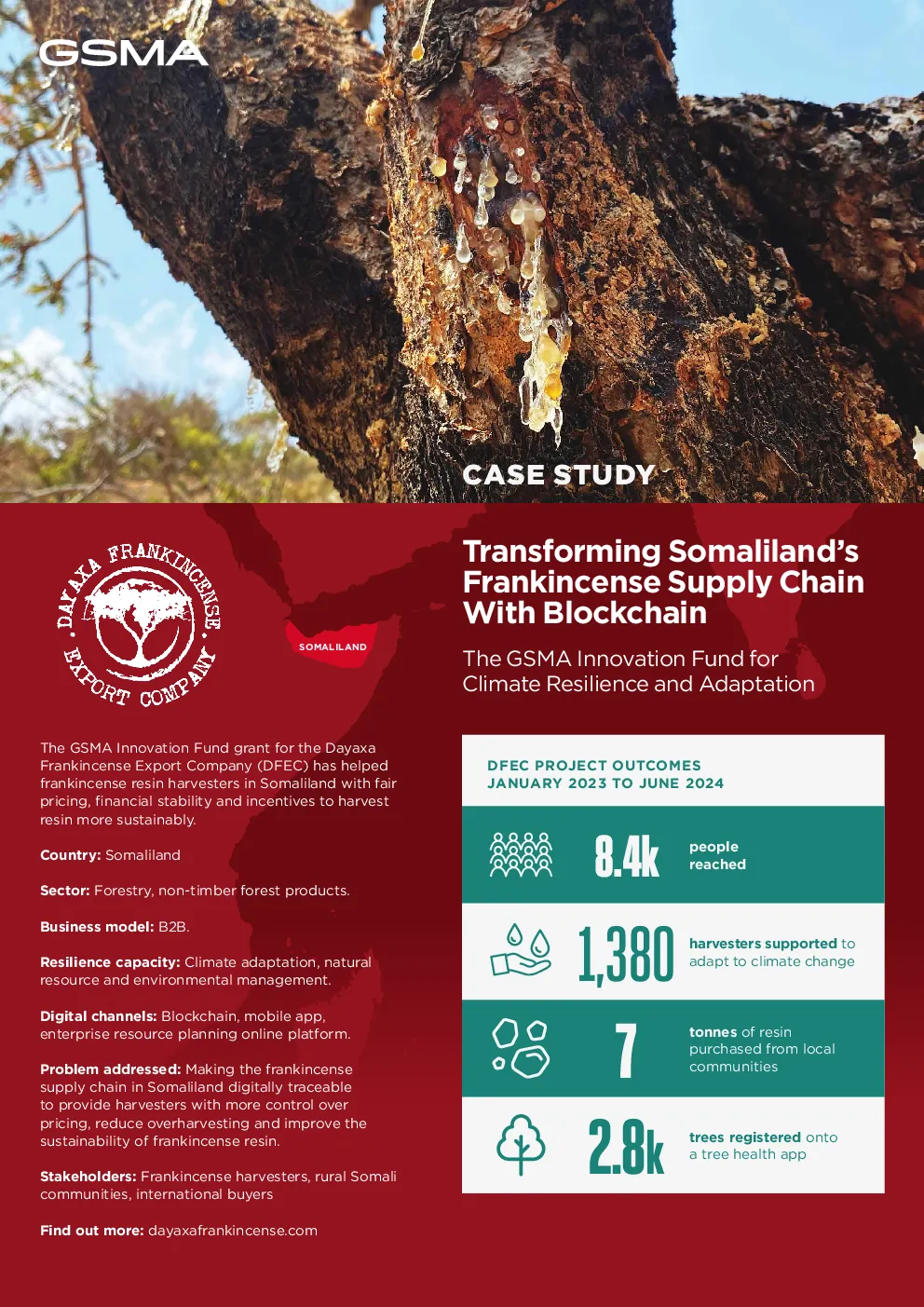
Transforming Somaliland’sFrankincense Supply ChainWith Blockchain The GSMA Innovation Fund forClimate Resilience and Adaptation The GSMA Innovation Fund grant for the DayaxaFrankincense Export Company (DFEC) has helpedfrankincense resin harvesters in Somaliland with fairpricing, financial stability and incentives to harvestresin more sustainably. DFEC PROJECT OUTCOMESJANUARY 2023 TO JUNE 2024 8.4k peoplereached Country:Somaliland Sector:Forestry, non-timber forest products. Business model:B2B. 1,380 harvesters supportedtoadapt to climate change Resilience capacity:Climate adaptation, naturalresource and environmental management. Digital channels:Blockchain, mobile app,enterprise resource planning online platform. tonnesof resinpurchased from localcommunities Problem addressed:Making the frankincensesupply chain in Somaliland digitally traceableto provide harvesters with more control overpricing, reduce overharvesting and improve thesustainability of frankincense resin. 2.8k Stakeholders:Frankincense harvesters, rural Somalicommunities, international buyers Find out more:dayaxafrankincense.com About DayaxaFrankincenseExport Company The Dayaxa Frankincense Export Company (DFEC) wasfounded in 2019 by Abdirizak Salah Mohamed, who wasinspired by a deep connection to his Somaliland rootsand a desire to empower local communities. With a long-standing family history in the frankincense trade, Abdirizakestablished DFEC to address the challenges faced byfrankincense harvesters, including a lack of fair marketaccess and knowledge of sustainable practices. Committedto social, economic and environmental transformation, thestart-up works closely with local frankincense communitiesto ensure fair pricing and contribute to the conservation offrankincense forests. precisely understood by owners, and landmanagement is governed by traditional law,which includes rules against harming treesand mandates rest periods. Disagreementsare resolved by clan elders, as the centralgovernment exerts little influence, but disputesover land ownership and access to Boswelliatrees have been a major source of conflict incommunities, and exacerbated by externalpressures like droughts. Traditional land tenuresystems also often clash with state policies onthe commercial exploitation of frankincenseresources, marginalising local communities.5 pastoral farming in drought conditions, thereare few economic alternatives, exacerbatingtheir dependence on this resource. Introduction The frankincense tree itself is incrediblyresilient. By the age of three or four yearsold, it can withstand harsh climates withminimal rainfall due to its extensive anddeep-rooted system. Boswellia forest cover – with two key species nativeto Somaliland: Boswellia sacra (syn.B. carteri) andBoswelliafrereana. These trees’ unique propertiesand aroma are prized by buyers who refer to themas “the king of incense”. This high demand has madeSomaliland’s frankincense trade one of the largestin the world, with more than 1,000 tonnes estimatedto be exported every year, and the highest qualityoils shipped to Europe and the United States.4 Impact of climate change oncommunities in Somaliland Frankincense expert Unsustainable tapping practices3 Somaliland’s arid climate is severely affected byclimate change, which has led to unpredictablerainfall patterns and extreme weather eventssuch as droughts and flooding. The full impactsof climate change on livelihoods in Somaliland –and what can be done to mitigate them – are notcompletely understood,1 but it is clear that theyare harming pastoral farming communities byreducing crop and livestock productivity, depletingresources and increasing social instability. 65% ofthe population is estimated to be involved in thelivestock sector, and many are transitioning frompastoralism to agropastoralism as a climate changeadaptation strategy.2 Excessive and illegal harvesting remains acritical issue, with trees often overtapped, farexceeding sustainable volumes and depths ofincisions to extract resin. Not allowing the treeto recover between tapping can also contributeto the degradation of the tree, as can harvestingimmature trees or stripping the tree bark. Ifthese unsustainable practices persist, there maybe no trees left, which poses a significant issuefor local communities. The harvesters in thesecommunities are heavily, if not entirely, relianton this market for their livelihoods. Fluctuating market demands6 Market demand for frankincense fluctuates.Overall, demand for frankincense resin hasincreased, driven by the booming essentialoil market that has seen market value andprices rise. These market pressures and priceincreases have strained relations betweenharvester and traders, with breaches ofagreements and unfair pricing reducingharvesters’ income. Export demand hasalso led to increased harvesting, includingunsustainable harvesting for short-termlivelihood gains. Challenges facing theSomaliland frankincense trade GS