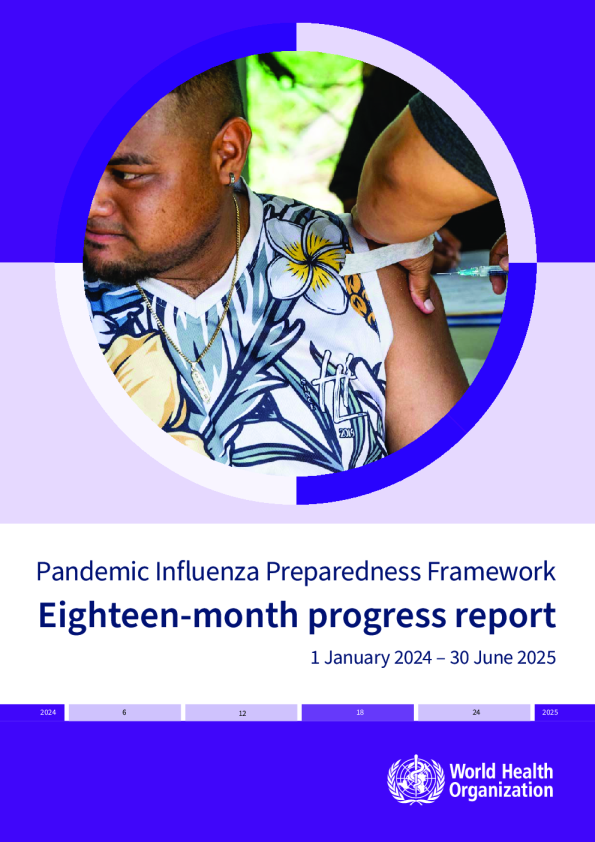
大流行性流感医疗对策准备工作组:职权范围
Terms of Reference 1. Background and Rationale Influenza viruses with pandemic potential continue to pose a significant global risk, requiringsustainedpreparedness and coordinated action across international systems. Effective pandemicresponse depends not only on national readiness, but on the ability of global partners to operate The Pandemic Influenza PreparednessFramework:Partnership ContributionHigh-LevelImplementation Plan III2024-2030(HLIP III) establishes a priority to develop a commonapproach to access, allocation and deployment of pandemic influenza MCMs, supported byconcrete deliverables and the use of Partnership Contributionfunds1. This common approach is In parallel, technical partners, regional bodies and international organizations are undertaking awide range of pandemic preparedness activitiesas per their organizational priorities. There istherefore a shared interest in ensuring that these efforts are mutually reinforcing andaligned Building on insights from recent simulation exercises2and ongoing technical work, WHO willconvene a working group to support structured collaboration with partnerexpertson prioritytechnical and operational questions related to pandemic influenza MCM preparedness. This Engagement in this work offersexpertsan opportunity to contribute technical perspectives to thedevelopment of globally applicable approaches, ensure compatibility withnon-WHOinstitutionalpreparedness planning, and strengthen collective readiness for a future influenza 2. Purpose The purpose of the Working Group is to support the development and operationalization of acommon global approach to pandemic influenza MCM access, allocation and deployment, in linewiththe PIP Framework, through structuredtechnical collaboration among WHO and relevant 3. Objectives The Working Group will aim to: 1.Support WHO in advancing practical approaches to pandemic influenza MCMpreparedness that are operationally feasible and informed by partner experience andexisting initiatives.2.Promote coherence across global and regional preparedness efforts related topandemicinfluenzaMCM access, allocation and deployment. 4. Scope of Work The Working Group will address selected priority areas relevant to pandemic influenza MCMpreparedness, includingbut not limited todata, modellingandoperational coordination. Specific technical focus areas and associated activities will be reviewed periodically and mayevolve over time in response to emerging needs, lessons from exercises, or developments in the Initial priority workstreams are described in Annex 1. 5. Functions The Working Group will: •Serve as a technicalexchangeforum for structured discussion on pandemic influenzaMCM preparedness issues of shared relevance;•Contribute to the development, testing and refinement of tools, frameworks orapproaches–contributions being done inlinewith technicalexpertiseandWHOconflict-of-interestrequirements; 6. Membership andparticipation Participation in the Working Group will be open to relevant WHO departmentsat HQandRegional Offices, technical partners, regional bodies, and international organizations with Members participate on a voluntary basis and contribute ina personal capacity. Contributionsmay include technical input, review of draftmaterials, participation in discussions, or sharing of WHO will convene the Working Group and ensure appropriate coordination across WHO 7. Ways ofworking The Working Group willoperate through a combination of: •Periodic plenary meetings (virtual and/or in-person as feasible);•Time-limited technical discussions(based on modules)or task-oriented activities as WHO will prepare meeting agendas,related materials, and will coordinate follow-up actions as The Working Groupprovides insight on pandemic influenza related topics butdoes not replaceexisting governance or decision-making bodiesand the WHO products will follow WHO review On average, contributionsmay amount to approximately16hours per month, depending on the Nomination process Participation in the Working Group will be based on a nomination process.Interested organizations will be invited to submit nominations by email to Ioana Ghigaat ghigai@who.intby20 February 2026. Nominations should include: •The name and contact details of the proposed participant;•A brief curriculum vitaeorsummary statement outlining relevant experience; To ensure transparency and broad awareness, the call for nominations will be made availablethrough a WHO web-based announcement and will remain open for a minimum period of two Criteria for participation Nominees should have: •Demonstrated technical or operational experience relevant to pandemic influenza medicalcountermeasuresor related pandemic preparedness and response processes(e.g. vaccines,antivirals, diagnostics, allocation, regulation, manufacturing, financing or deployment); Participation is in an individual expert capacity. WHO will review nominations to ensure an appropriate balance of