XT…营销人员的崛起(EIU)
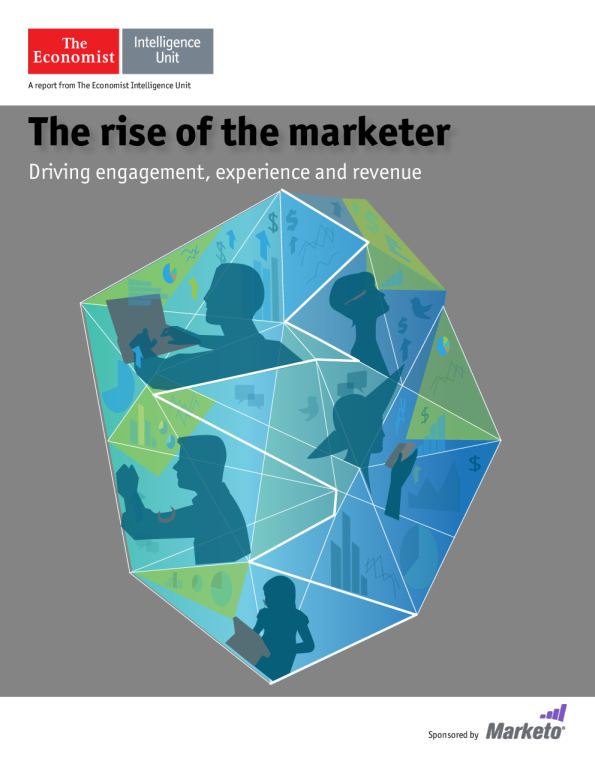
The rise of the marketer Driving engagement, experience and revenue The rise of the marketer: Driving engagement,experience and revenueis an Economist IntelligenceUnit report, sponsored by Marketo. The EconomistIntelligence Unit bears sole responsibility for thecontent of this report. The findings do notnecessarily reflect the views of the sponsor. Interviewees John Dragoon, Executive Vice-president and ChiefMarketing Officer, Houghton Mifflin HarcourtChris Clark, Group Head of Marketing, HSBCMayur Gupta, Global Head, Marketing Technology& Innovation, Kimberly-ClarkRaja Rajamannar, Chief Marketing Officer,MasterCardLuanne Calvert, Chief Marketing Officer, VirginAmericaJamie Moldafsky, Chief Marketing Officer, WellsFargoBrian Harrington, Executive Vice-president andChief Marketing Officer, Zipcar The report draws on two main sources for itsresearch and findings: lA survey that included responses from 478 CMOsand senior marketing executives worldwide.More than 50% of respondents hold the CMOtitle or top marketing position. Respondents arelocated in North America (33%), Europe (30%),Asia-Pacific (29%) and Rest of World—whichencompasses Africa and Latin America (9%).More than 50% of survey respondents (52%)hail from companies with more than US$500min revenue; 20% have revenue of over US$5bn.lA series of in-depth interviews with seniorexecutives. We would like to thank all interviewees and surveyrespondents for their time and insights. The reportwas written by Dan Armstrong and edited byGilda Stahl. Marketers have seen their jobs transformed overthe past ten years. The transformation ishappening again—but faster this time. Accordingto the Economist Intelligence Unit’s survey of 478high-level marketing executives worldwide, morethan 80% say they need to restructure marketingto better support the business. And 29% believethe need for change is urgent. 3.Engagement is becoming paramount. Amarketer’s greatest achievement is an engagedcustomer. And because an engaged customerkeeps coming back, engagement is defined mostoften in terms of sales and repeat sales. Morethan six out of ten (63%) marketers polled saythat engagement is manifested in customerrenewals, retention and repeat purchases.Adding in the 15% who see engagement interms of impact on revenue, a full 78% ofmarketers see it as occurring in the middle orlater stages of the classic funnel.1A minority(22%) view engagement in terms of love for abrand—still important, but part of marketing’slegacy skill set. Marketers believe that change will occur in sixareas: More than 80% ofmarketingexecutivessurveyed say theyneed torestructuremarketing tobetter support thebusiness—29%believe the needfor change isurgent. 1.Marketing will increasingly be seen less as acost and more as a source of revenue. Theproportion of companies where marketing isviewed as a cost centre will dwindle and thenumber where it is seen as a driver of revenuewill grow. In three to five years, surveyrespondents say, approximately four of fivecompanies will classify the marketing functionas a revenue driver. (Whether marketing has aformal P&L is another matter.) 4.The new marketer combines operational anddata skills with a grasp of the big picture (andpossibly working within a differentorganisational structure as well). Marketersare aggressively seeking new skills—especiallythose who believe that change is urgent. Nearlyfour of ten marketers (39%) want new blood inthe two areas of digital engagement andmarketing operations and technology. A closethird, and not significantly different, is skills inthe area of strategy and planning (38%).Meanwhile, marketers are tinkering withorganisational structures to foster agility, 2.Marketing will take the lead in the customerexperience. The customer experience isincreasingly seen as a key to competitiveadvantage in every industry. Slightly more thanone-third of marketers polled say they areresponsible for managing the customerexperience today. However, over the next threeto five years, 75% of marketers say they will beresponsible for the end-to-end experience overthe customer’s lifetime. increase cross-functional co-operation and helpthe organisation to scale. Technology investment plans by marketersillustrate both the dominance andfragmentation of digital channels. Three of thefour most widely cited investments are aimed atreaching customers through different channels:via social networks, on mobile devices and onthe old standby of e-mail. The fourth, analytics,is needed to knit together data from multiplechannels into a coherent and actionable portraitof the consumer. 6.Two trends to watch: real-time personalisedmobile and the Internet of Things. Just overhalf of marketers expect the Internet of Things—where ubiquitous, embedded devices withunique IP addresses constantly convey real-timedata—to revolutionise marketing by 2020.Almost the same proportion cites the power ofreal-time personalised mobile communicationsas the trend with the biggest