XT…增长首席营销官(福布斯)
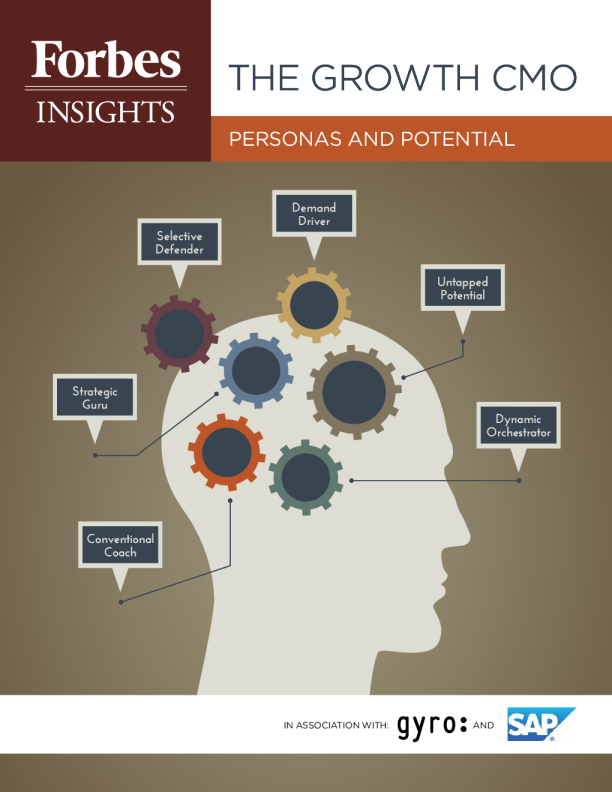
THE GROWTH CMO PERSONAS AND POTENTIAL CONTENTS Executive summary ............................................................................................................2Description of the project.................................................................................................5How CMOs are reaching for growth........................................................................... 6The six CMO personas ...................................................................................................... 9Appendix 1: Portrait of the CMO.................................................................................30Appendix 2: Methodology of the study..................................................................33Acknowledgments ...........................................................................................................36 EXECUTIVE SUMMARY Almost all chief marketing officers (CMOs) have a mandate to drive growth. Sometimesit’s growth in revenue; sometimes market share; and sometimes a particular segment ofthe business. While the quality of growth can vary, the CMO’s job is always about helpingthe company thrive. Forbes Insights, in association with SAP and gyro, conducted qualitative and quantita-tive research with 318 CMOs and senior marketing executives from around the world.Using “the growth CMO stack”1elements described in “The DNA of a Growth CMO” asa guide, this research study showed that CMOs, on average, do well at promoting a cul-ture of market centricity supported by facts and learning and building capabilities thatlead to outcomes resulting in growth. KEY FINDINGS Based on the data from this survey and a variety of sta-tistical techniques, Forbes Insights developed a set ofsix personas and a statistical portrait of the CMO thatexpresses often-surprisingfindings on the responsi-bilities,backgrounds,performance,and aspirationsof CMOs around the world. Keyfindings are notedbelow: significantly toward owning customer interfaces such aslead generation or customer relationship management(CRM) systems tend to be associated with weaker per-formance. CMOs are unified by a desire to influencestrategy – that’s their aspiration. Common struggles and conflicts arerelated to data, digital, and goal alignment.Aligning objectives and actions with other parts of the CMOs are a diverse audienceunified by a strategic focus.CMO backgrounds and portfolios can be very diverse, business is a recurring theme in the CMO agenda. It isone of the top aspirations of CMOs, and also the mostcommon source of conflict. Omnichannel market-ing, digital channels, and Big Data are huge strugglesfor CMOs. Few can confidently say they are engagingthese areas well; even the best-performing CMOs don’tdo much better than the rest. Ownership of digital and it’s incorrect to assume that the title means the samething to all organizations. The most common areas ofCMO ownership – analytics, research and intelligence,advertising, and branding – are increasingly data-drivenand strategic in nature. CMOs whose roles are weighted channels and social media among CMOs is low, and agreat deal of conflict with other functions is focused onprecisely this. Customer loyalty is the most commoncause of concern for CMOs. Key indicators separatethe average from the elite. Keydifferentiators between high-performing mar- keting organizations and less successful teams includethe level of planning and internal controls in place, themarketing team’s ability to listen and learn collectively,as well as the budgets and income available to drivemarketing’s goals. In addition, how well defined therole of the CMO is within the company and the levelof partnership with other functions has a significantimpact on the marketing organization’s performance. There is an elite group ofhigh-performing “growth CMOs.”Only 38 out of the 318 CMOs, or about one in eight, scored sufficiently high enough across a variety of attri-butes to belong to this group. Each has strengths and weaknesses; each provides a distinctive path to growth. The six personas are described below: THE SIX PERSONAS 1The Strategic Guru Is likely to be a longtime marketer with strategy-oriented responsibilities. He or she is an adept networkerand most likely runs marketing at a large company where mastering process and influencing colleaguesare paramount. 2The Dynamic Orchestrator Surrounds himself/herself with capable people, performs well under pressure, and achieves high scoreson agility despite having a big personality and desire for control. 3The Selective Defender Selectively picks his/her battles to defend the marketing turf. This person is less ambitious and more risk-averse than average. He or she has more limited responsibilities and little to do with corporate strategy. 4The Conventional Coach Carries out static plans under rigid controls for large, slow-growth companies. This person has a narrowlydefined function and tends to eng