您的浏览器禁用了JavaScript(一种计算机语言,用以实现您与网页的交互),请解除该禁用,或者联系我们。[世界卫生组织]:加强西太平洋地区感染预防和控制讲习班,菲律宾马尼拉,2025年9月16日至18日:会议报告 - 发现报告

加强西太平洋地区感染预防和控制讲习班,菲律宾马尼拉,2025年9月16日至18日:会议报告

2025-10-13世界卫生组织
AI智能总结
查看更多
加强西太平洋地区感染预防和控制讲习班,菲律宾马尼拉,2025年9月16日至18日:会议报告

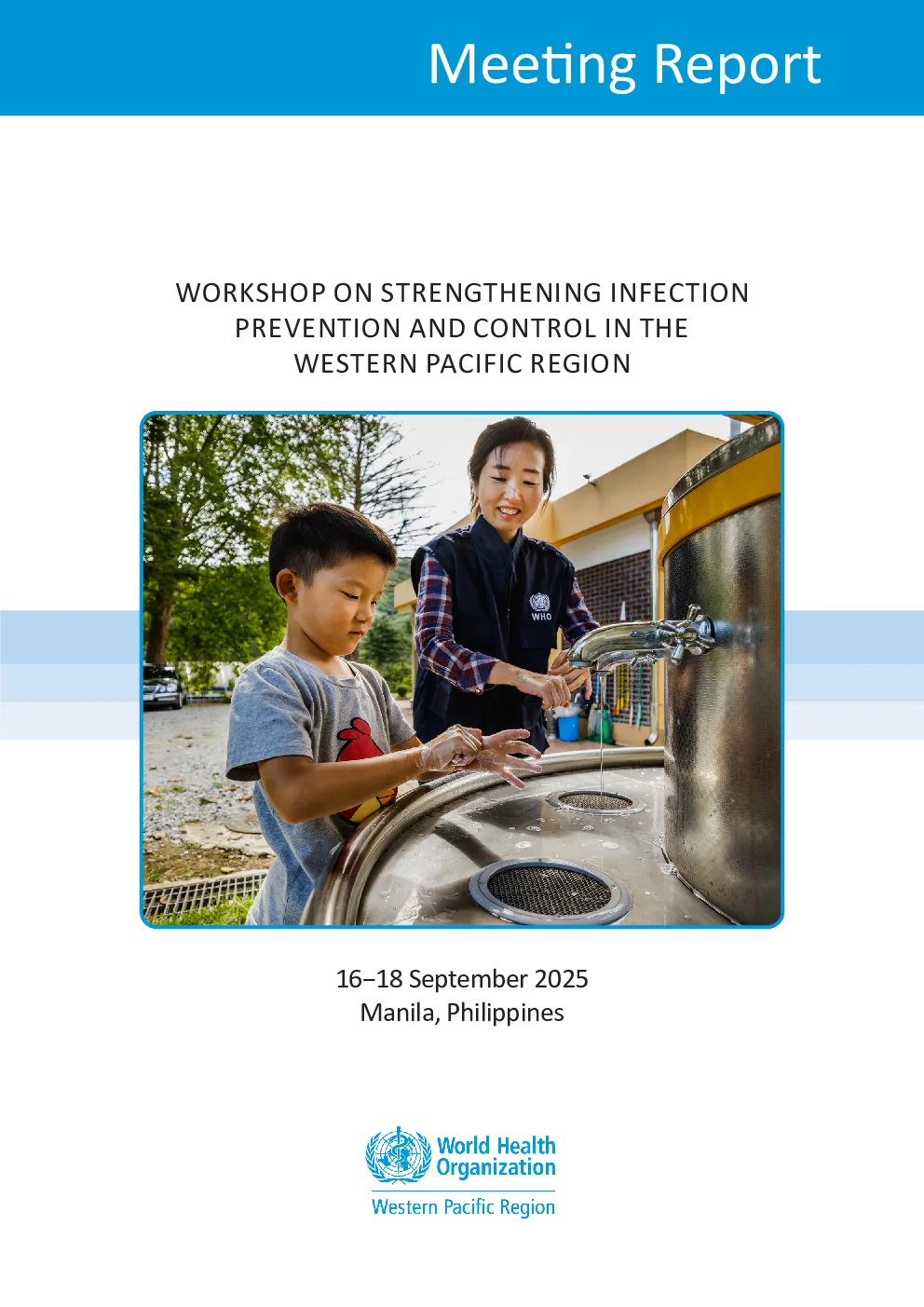
16−18 September 2025Manila, Philippines WORLD HEALTH ORGANIZATION REGIONAL OFFICE FOR THE WESTERN PACIFIC English only RS/2025/GE/36(PHL) MEETING REPORT WORKSHOP ON STRENGTHENING INFECTION PREVENTION ANDCONTROL IN THE WESTERN PACIFIC REGION Convened by: WORLD HEALTH ORGANIZATIONREGIONAL OFFICE FOR THE WESTERN PACIFIC Manila, Philippines16−18September 2025 Not for sale Printed and distributed by: World Health OrganizationRegional Office for the Western PacificManila, Philippines October 2025 NOTE The views expressed in this report are those of the participants of the Workshop on StrengtheningInfection Prevention and Control in the Western Pacific Region and do not necessarily reflect thepolicies of the conveners. This report was prepared by the World Health Organization Regional Office for the Western Pacificfor Member States in the Region and for those whoparticipated in the Workshop on StrengtheningInfection Prevention and Control in theWesternPacificRegioninManila,Philippines,from16 to 18 September 2025 CONTENTS BACKGROUND .....................................................................................................................................................3OBJECTIVES ..........................................................................................................................................................4PARTICIPANTS .....................................................................................................................................................4DISCUSSION/HIGHLIGHTS AND CHALLENGES............................................................................................4CONCLUSIONS......................................................................................................................................................5NEXT STEPS ..........................................................................................................................................................5 ANNEX 1. LIST OF PARTICIPANTSANNEX 2. PROGRAMME OF ACTIVITIES Keywords: WORKSHOP ON STRENGTHENING INFECTION PREVENTION AND CONTROL INTHE WESTERN PACIFIC REGION MEETING REPORT BACKGROUND Health-care-associated infections (HAIs) pose a significant burden on health-care systems globally,compromising patient safety, increasing morbidity and mortality, and imposing financial strain.Effective infection prevention and control (IPC) measures are critical for reducing the transmission ofHAIs, thereby improving the overall quality of care delivered in health-care settings. A strong IPCsystem minimizes the risk of complications for patients undergoing medical treatments andprocedures, ultimately reducing hospital stays and promoting better health outcomes. IPC is alsointegral to the global fight against antimicrobial resistance (AMR). The improper or overuse ofantibiotics in the treatment of infections − many of which are preventable with proper IPC measures −accelerates the rise of resistant strains of bacteria. In this context, IPC not only helps reduce HAIs butalso limits the need for antibiotic use, mitigating the threat of AMR and preserving the efficacy ofcurrent treatments. The 2022 global IPC minimum requirements survey conducted by the World Health Organization(WHO) indicated significant gaps, with many countries lacking an IPC programme or operationalplan. Among the eight core components for IPC programmes at the national and acute health-carefacility level, “establishing and strengthening HAI surveillance systems” was identified as a priorityby Member States within the core targets of the WHO global action plan and monitoring frameworkfor IPC. From 2021 to 2023, the WHO Regional Office for the Western Pacific carried out an in-depth IPCsystem scoping review across six countries in the Western Pacific and identified major issues in IPCroutine monitoring and evaluation (M&E). Insufficient HAI surveillance capacity was found to be oneof the key systems barriers to quality of care. Another challenge is the significant lack of information on how Pacific countries and areas areperforming against WHO global indicators. Focal points from the ministries of health of the MarshallIslands, Papua New Guinea, Solomon Islands and Vanuatu have actively contributed to the WHO IPCregional consultations on IPC strategy and action plans. Despite progress made, however, challengesremain, including time zone differences for information-sharing sessions and internet connectivityissues that hinder full participation by Pacific stakeholders. The workshop focused on assessing and developing actionable recommendations for countries tostrengthen IPC and HAI surveillance capacity at both facility and national levels across the WesternPacific Region. Preparation for the workshop included a standard survey to benchmark against WHOglobal standards and guidelines, including theGlobal Action Plan and Monitoring Framework forInfection Prevention and Control (2024–2030)endors