赋能团队:制造商如何装备团队引领工业4.0
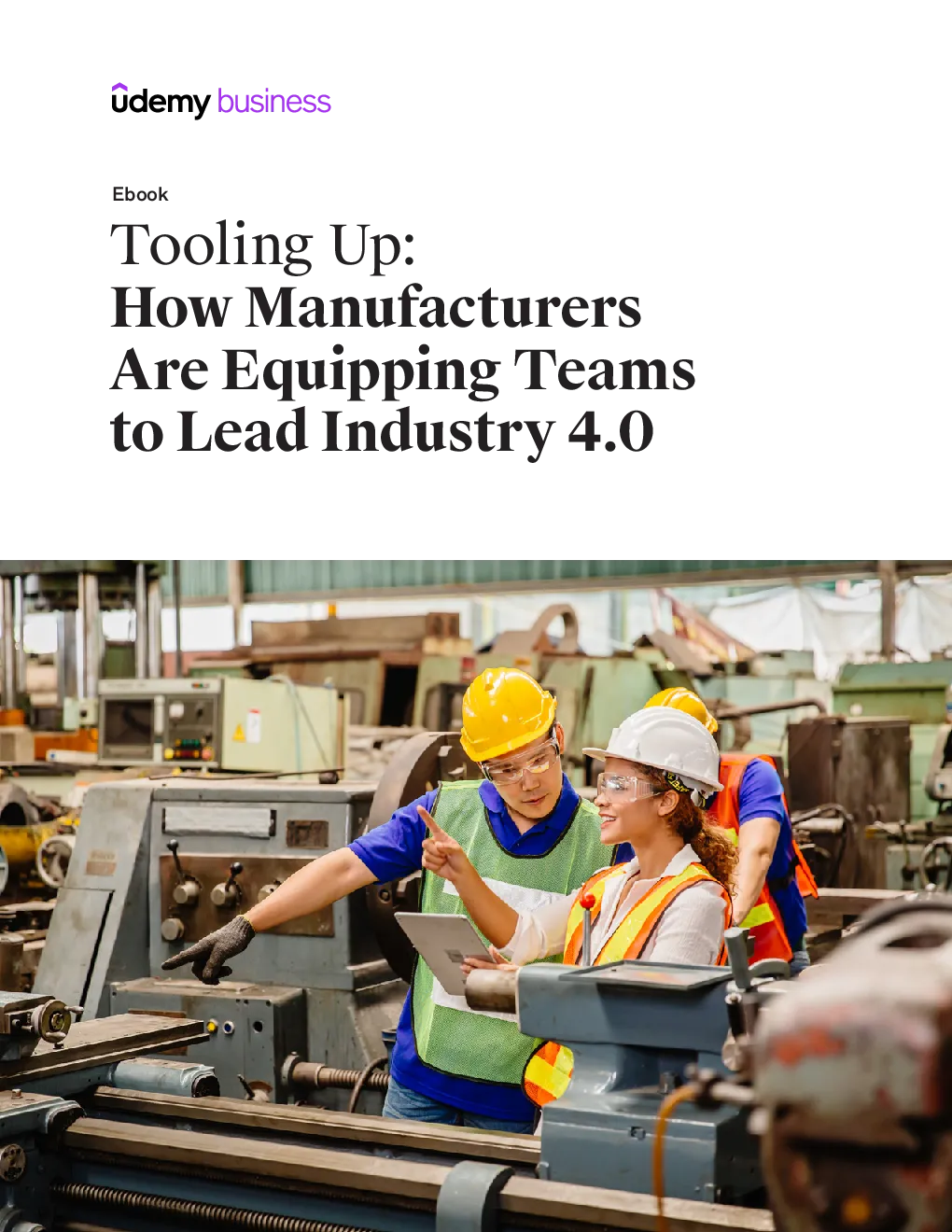
Ebook Tooling Up:How ManufacturersAre Equipping Teamsto Lead Industry 4.0 Modern manufacturing demandsmore than machines — it requiresa future-ready workforce. Manufacturers are under mounting pressure. From rising tariffs andoperational costs to tougher sustainability expectations and fast-changingconsumer demands, staying competitive means doing more with less, anddoing it better. This requires optimizing production, strengthening supplychains, and adapting quickly without sacrificing quality. Technology — and particularly AI — can help, but only if people can keep upwith it. That’s where manufacturers face a growing challenge: critical skillsgaps and a rapidly aging workforce are among the biggest challenges facingbusinesses today. Yet, hiring new talent is expensive. According to Deloitte’s2025 Manufacturing Industry Outlook, 60% of manufacturers spendbetween $10,000 and $40,000 per hire, with more than half saying turnoverhas a moderate to severe impact on their bottom line. Additionally, neededskills are evolving rapidly and the skillset any new hire brings to the tablewould have to quickly evolve to keep pace with the needs of the businessand technological innovation. Rather than compete for scarce talent, forward-thinking manufacturers areturning to their existing workforce. For them, upskilling is not just a retentionstrategy — it’s a smart and affordable way to build capability and resiliencefrom within. This ebook looks at how four global manufacturers —BEST Transformer,Jabil, a large manufacturing company, and one of the world’s largestfood and beverage companies— are addressing these industry challengeshead-on. From building future-ready teams to strengthening supply chainresilience, these companies are leaning on Udemy Business to upskill theirworkforce and prepare it for the unknown. Executive summary Industry 4.0 opens up major opportunities for manufacturers toincrease productivity and efficiency, but many still lack people withthe right digital and leadership skill set to make the leap forward.The Manufacturing Institute projects that the U.S. manufacturingsector will need to fill 3.8 million jobs between 2024 and 2033, withapproximately half expected to remain unfilled due to skills gaps andan aging workforce. Forty-eight percent of executives are reportingmoderate to significant challenges in filling production and operationsmanagement roles. Thirty-five percent were concerned aboutequipping workers with the skills and tools they need to adapt tosmart manufacturing technology. This talent crunch and shrinking margins are pushing manufacturersto innovate. Rather than hiring and training new people, forward-thinking businesses are investing in their existing talent. This ebookshows how Udemy Business helped four companies: Reduce costs and talent attrition Improve employee engagement and retention Optimize supply chains and boost productivity By training their teams, the four companies featured inthis ebook built resilient, future-ready operations andinvested in their greatest asset: their people. Top manufacturing challenges: Risk of leaving employees behind:Transitioning to Industry 4.0 tools,like AI, means upskilling or losingvaluable talent. Talent shortages: Finding employees with the rightdigital and leadership skills remainsa top barrier to transformation. Disconnected supply chains: Without a comprehensive overview ofthe entire supply chain, it’s difficult tooptimize processes from end to end. Digital transformation in manufacturing isn’t just abouttechnology — it’s about building the human capabilitiesthat make that technology deliver value. ”“ Satya NadellaCEO, Microsoft Expanding throughupskilling: BEST Transformer1 2Building cloud expertisefrom within: Jabil 3Embracing AI andautomation: a largemanufacturing company 4Strengthening supplychain resilience: a globalconsumer packaged goods(CPG) company Expanding throughupskilling: BESTTransformer Conquering international markets is the holy grail ofany expansion strategy, but doing business in foreigncountries comes with its challenges.Each region brings itsown regulations, cultural norms, workforce expectations, andoperational complexities, making workforce adaptability a must. BEST Transformer, Turkey’s largest industrial-grade transformermanufacturer, was acutely aware of this as it geared up toexpand its operations overseas right before the COVID-19pandemic. The company was already exporting more thanhalf of its products to international markets, and the businessneeded a highly skilled workforce to drive its growth ambitionseven further. Standardizing talent at scale Upskilling played a key role in their global expansion effortsas BEST needed to standardize its global operations andbuild a workforce that could implement it on the ground. Themanufacturer is known for hiring graduates, so the businessalso needed a program that would be easily accessible acrossregions and that could cater to junior and