您的浏览器禁用了JavaScript(一种计算机语言,用以实现您与网页的交互),请解除该禁用,或者联系我们。[ZeroHedge]:人工智能现在也成了一个债务泡沫,悄然超越所有银行,成为市场上最大的板块 - 发现报告

人工智能现在也成了一个债务泡沫,悄然超越所有银行,成为市场上最大的板块

信息技术2025-10-09-ZeroHedge周***
AI智能总结
查看更多
人工智能现在也成了一个债务泡沫,悄然超越所有银行,成为市场上最大的板块

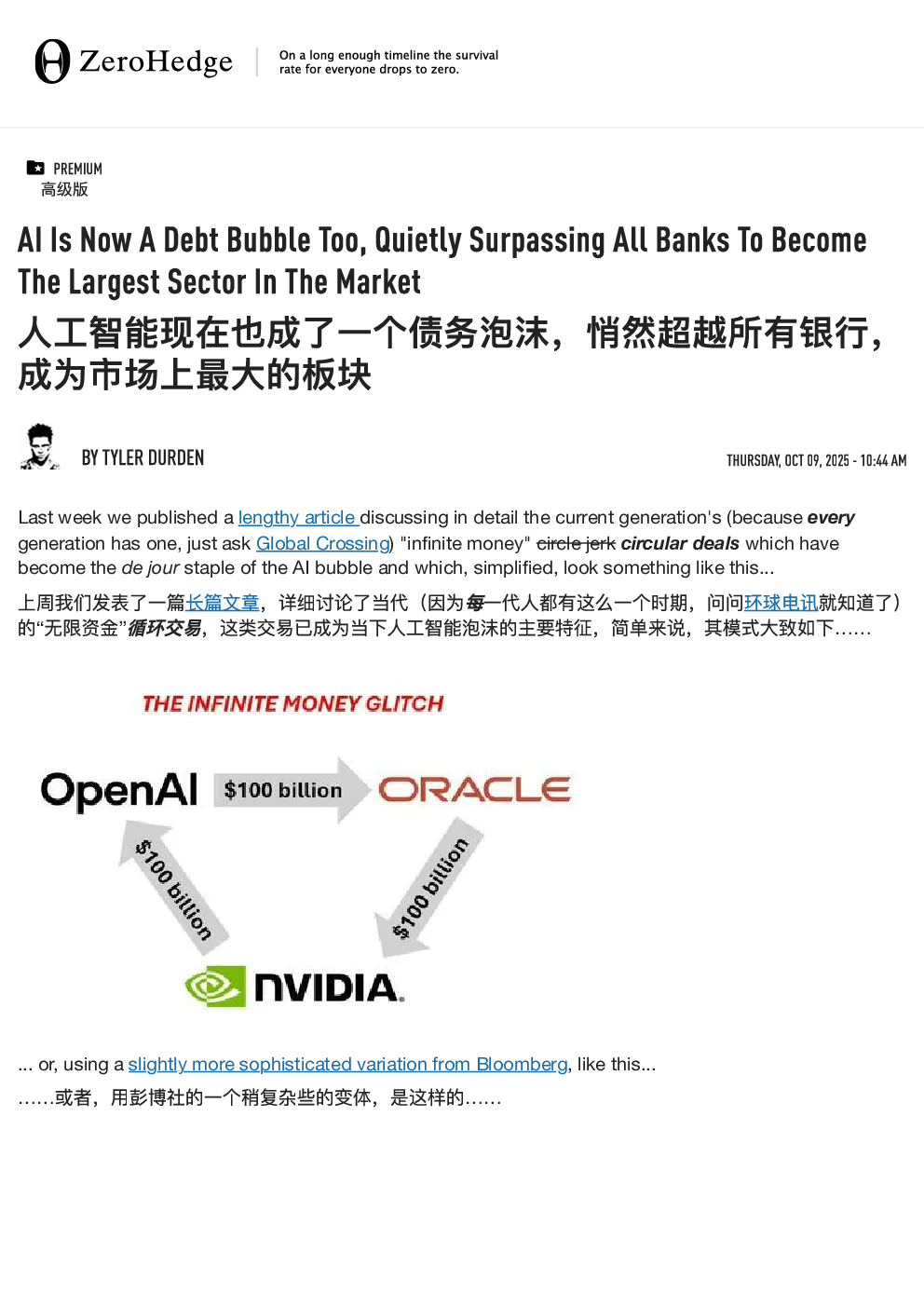
AIIsNowADebtBubbleToo,QuietlySurpassingAllBanksToBecomeTheLargestSectorInTheMarket ⼈⼯智能现在也成了⼀个债务泡沫,悄然超越所有银⾏,成为市场上最⼤的板块 BYTYLERDURDEN THURSDAY,OCT09,2025-10:44AM Lastweekwepublishedalengthyarticlediscussingindetailthecurrentgeneration's(becauseeverygenerationhasone,justaskGlobalCrossing)"infinitemoney"circlejerkcirculardealswhichhavebecomethedejourstapleoftheAIbubbleandwhich,simplified,looksomethinglikethis... 上周我们发表了⼀篇⻓篇⽂章,详细讨论了当代(因为每⼀代⼈都有这么⼀个时期,问问环球电讯就知道了)的“⽆限资⾦”循环交易,这类交易已成为当下⼈⼯智能泡沫的主要特征,简单来说,其模式⼤致如下…… ...or,usingaslightlymoresophisticatedvariationfromBloomberg,likethis... ……或者,⽤彭博社的⼀个稍复杂些的变体,是这样的…… ...whichJPM'sMichaelCembalestdescribedlaconicallyasfollows... ……摩根⼤通的迈克尔·森巴莱斯特对此简短地描述如下…… Oracle’sstockjumpedby25%afterbeingpromised$60billionayearfromOpenAI,anamountofmoneyOpenAIdoesn’tearnyet,toprovidecloudcomputingfacilitiesthatOraclehasn’tbuiltyet,andwhichwillrequire4.5GWofpower(theequivalentof2.25HooverDamsorfournuclearplants),aswellasincreasedborrowingbyOraclewhosedebttoequityratioisalready500%comparedto50%forAmazon,30%forMicrosoftandevenlessatMetaandGoogle. 在获得OpenAI承诺的每年600亿美元后,甲⻣⽂的股价飙升了25%。⽽这笔钱OpenAI⽬前尚未赚到,甲⻣⽂也尚未建成相关的云计算设施,且这需要4.5吉瓦的电⼒(相当于2.25座胡佛⽔坝或4座核电站),此外,甲⻣⽂还需增加借款,其资产负债率已达500%,相⽐之下,亚⻢逊为50%,微软为30%,Meta和⾕歌则更低。 ThereisnowayforOracletopayforthiswithcashflow.Theymustraiseequityordebttofundtheirambitions.Untilnow,theAIinfrastructureboomhasbeenalmostentirelyself-fundedbythecashflowsofaselectfewhyperscalers.Oraclehasbrokenthepattern.Itiswillingtoleverageuptohundredsofbillionstoseizeashare.Thestableoligopolyiscracking…Theimplicationsareprofound.Amazon,MicrosoftandGooglecannolongertreatAIinfrastructureasadiscretionaryinvestment.Theymustdefendtheirturf.Whathadbeenadisciplined,cash-flow-fundedracemaynowturnintoadebt-fueledarmsrace. 甲⻣⽂公司⽆法⽤现⾦流来⽀付这笔费⽤。他们必须通过增发股票或举债来为⾃⼰的雄⼼壮志提供资⾦。到⽬前为⽌,⼈⼯智能基础设施的繁荣⼏乎完全是由少数⼏家超⼤规模科技公司的现⾦ 流⾃筹资⾦推动的。甲⻣⽂打破了这⼀模式。它愿意举债数千亿美元来抢占⼀席之地。稳定的寡头垄断格局正在瓦解……其影响是深远的。亚⻢逊、微软和⾕歌不能再将⼈⼯智能基础设施视为可⾃由⽀配的投资了。它们必须捍卫⾃⼰的地盘。这场原本由现⾦流⽀撑、井然有序的竞争,如今可能会演变成⼀场由债务驱动的军备竞赛。 ...andwhichhasconjuredoutofthinairmassiveamountsofinvestmentcapitalwhichasJensenHuangwaskindenoughtoadmittoCNBCearliertoday,actuallydoesnotevenexist... ……并且凭空变出了巨额的投资资⾦,正如⻩仁勋今天早些时候在接受CNBC采访时坦⾔的那样,这些资⾦实际上根本不存在…… ...butwillatsomepointinthefuture,eitherintheformoffuturecashfromoperations,equityraises(don'ttellcurrentinvestors)ordebt.Well,reallyjustdebt. ……但在未来的某个时刻,⽆论是以未来的经营现⾦流、股权融资(别告诉现有投资者)还是债务的形式。嗯,实际上只有债务。 Lotsandlotsofdebt,becausewithnegligibleenterprisepenetrationandthebiggestusecasesofarbeinga$19.99monthlysubscriptionforlazycollegestudentswhoareoutsourcingtheiressaywritingtosomechatbot,someonehastopayforthe$500billioninannualcapex. 债务堆积如⼭,因为企业渗透率微乎其微,⽽迄今为⽌最⼤的应⽤场景不过是每⽉19.99美元的订阅服务,供那些懒得⾃⼰写论⽂、把写作任务外包给某个聊天机器⼈的⼤学⽣使⽤,可总得有⼈为每年5000亿美元的资本⽀出买单。 Thatsomeone,wediscussedindetail,willbeanewgenerationofcreditors.SomewillbeprivatecreditorsasweexplainedbackinJulyin"TheShockingMath:PayingForAICapexWillRequireOver$1TrillionInNewDebtBy2028,"inwhichwequotedsomestunningnumbersfromMorganStanley: 我们详细讨论过,这个⼈将是新⼀代的债权⼈。正如我们在7⽉的《惊⼈数据:到2028年,⽀付⼈⼯智能资本⽀出将需要超过1万亿美元的新债务》中所解释的那样,其中⼀些将是私⼈债权⼈,在那篇⽂章中,我们引⽤了摩根⼠丹利的⼀些惊⼈数据: Weforecastroughly$2.9trillionofglobaldatacenterspendthrough2028,comprising$1.6trilliononhardware(chips/servers)and$1.3trilliononbuildingdatacenterinfrastructure,includingrealestate,buildcosts,andmaintenance. 我们预测到2028年,全球数据中⼼⽀出约为2.9万亿美元,其中包括1.6万亿美元的硬件(芯⽚/服务器)⽀出,以及1.3万亿美元的datacenter基础设施建设⽀出,涵盖房地产、建设成本和维护费⽤。 Thistranslatesintoinvestmentneedsofover$900billionin2028.Forcontext,thetotalcapexspendingbyallcompaniesintheS&P500indexcombinedwasabout$950billionin2024. 这意味着2028年的投资需求将超过9000亿美元。作为参考,2024年标普500指数所有成分公司的资本⽀出总额约为9500亿美元。 Suchlargepotentialspendinghassignificantmacroconsequencesaswell.Oureconomistsexpectthatinvestmentspendingrelatedtodatacenter constructionandpowergenerationwilladdupto40bptoUSrealGDPgrowthbetween2025-26. 如此庞⼤的潜在⽀出也会产⽣重⼤的宏观影响。我们的经济学家预计,2025⾄2026年间,与数据中⼼建设和发电相关的投资⽀出将为美国实际GDP增⻓贡献40个基点。 That'sthegoodnews...whichmanywillsayisalreadylargelypricedin.Thebadnews,again,iswhopaysforallofthis.AndMorganStanleyadmittedasmuch: 这是个好消息……许多⼈会说,这在很⼤程度上已经体现在价格中了。⽽坏消息,同样的,是谁来为这⼀切买单。摩根⼠丹利也承认了这⼀点: Byanymeasure,thecapitalrequirementstosupportthislevelofinvestmentare staggering,andmobilizingefficientandscalablecapital becomesincreasinglycritical.Wedidadeepdiveintothistopic,exploringalternativeavenuesofcapitaltofinancethisexpenditure,inacollaborativereportpublishedafewdaysago.Thekeytakeawayfromthereportisthatcreditmarkets–secured,unsecured,andsecuritizedinbothpublicandprivatemarkets–willplayagrowingroleinfinancingdatacenters. ⽆论从哪个⻆度衡量,⽀撑这种投资规模所需的资本量都⼤得惊⼈,因此,调动⾼效且可扩展的资本变得愈发关键。⼏天前,我们在⼀份合作发布的报告中深⼊探讨了这⼀话题,研究了为这类⽀出融资的其他资本渠道。该报告的核⼼结论是,信贷市场——包括公共和私⼈市场中的有担保、⽆担保及证券化信贷——将在数据中⼼融资中发挥越来越重要的作⽤。 Tobeclear,capexrelatedtoAIanddatacentershasbeeninmotionforthelastfewyears.Spendingfromthehyperscalersalonehasgonefrom~$125billiontwoyearsagoto~$200billionin2024andtheconsensusexpectationisthatitexceeds$300billionin2025. 需要明确的是,过去⼏年与⼈⼯智能和数据中⼼相关的资本⽀出⼀直在进⾏。仅超⼤规模企业的⽀出就从两年