您的浏览器禁用了JavaScript(一种计算机语言,用以实现您与网页的交互),请解除该禁用,或者联系我们。[亚开行]:分担责任:与水社区一起发起洗衣运动(英)2025 - 发现报告

分担责任:与水社区一起发起洗衣运动(英)2025

商贸零售2025-09-08亚开行表***
AI智能总结
查看更多
分担责任:与水社区一起发起洗衣运动(英)2025

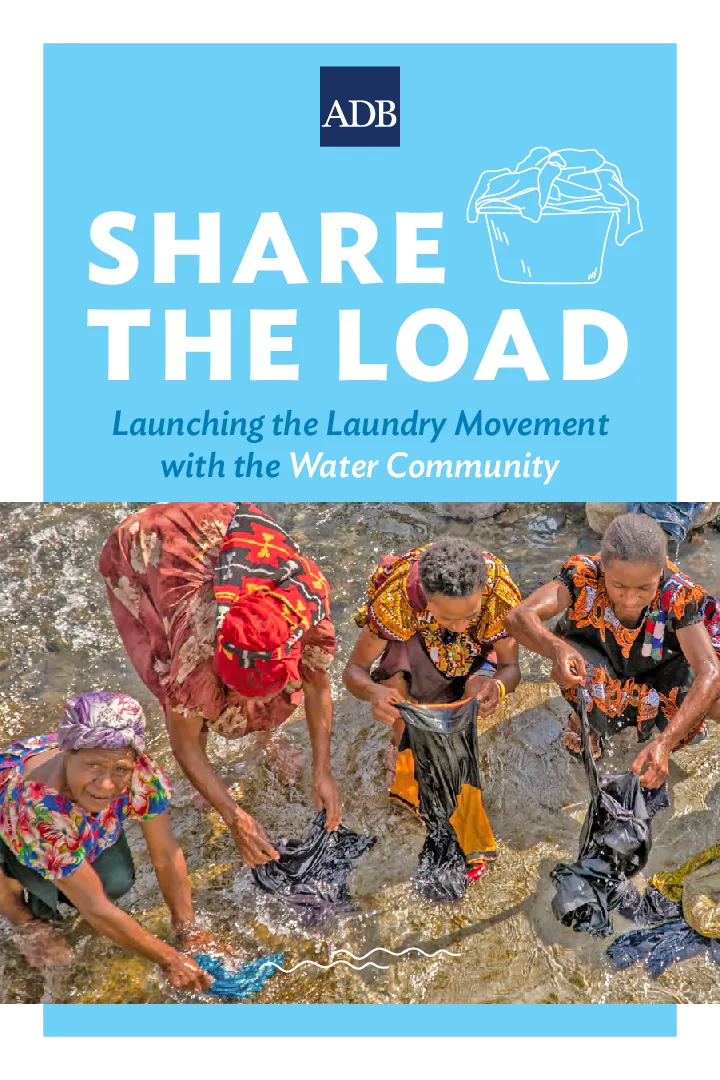
Launching the Laundry Movement WHY LAUNDRY?AN UNTAPPEDOPPORTUNITY FOR CHANGE DID YOU KNOW? Laundry is the simple yet necessary act of washing clothes, a chore so mundanethat it is often overlooked. However, as unassuming as it can be, laundry has About 4 billionpeople worldwidewash their clothesby hand, which For many people around the world, primarily women and girls, laundry is still doneby hand. Despite progress with the kinds of washing machines available and agrowing laundry care industry (valued globally at $177.85 billion in 2024),2there In countless households, especially in rural and urban poor communities in Asiaand the Pacific, women can spend up to 20% of their active hours solely on manuallaundry—and this is even higher for areas where access to water is limited. Thisforgotten burden usually requires carrying hefty bundles of clothes to distant watersources (or conversely, fetching heavy containers of water in slippery paths), inaddition to the constant scrubbing, rinsing, lifting, bending, drying, and folding. This Machine washing, on the other hand, also has its own challenges relating toaccessibility, affordability, water consumption, and energy use and resulting The time is ripe for a global conversation. The world has to clean up its act now,from addressing the gaps in research and policies to introducing more initiatives Could laundry be the next breakthroughfor people, planet, and progress in Asia ENVIRONMENT WELL-BEING THE CRISIS OF CLEANING Due to societal norms, laundry is oftenseen as “women’s work,” with womenspending up to 15 hours per week onthis task6—time that could otherwise bedevoted to childcare, income-generatingactivities, or rest. The physical demandsof carrying heavy, wet laundry andwashing in uncomfortable positions can Detergents with synthetic surfactantsand phosphates contribute to theeutrophication of water bodies. Ifunmitigated, this can lead to “deadzones” where aquatic ecosystemscannot survive. Another growing threatis the amount of microplastics in theoceans. Plastic microfibers are released HOUSEHOLDECONOMY ENERGY There is more energy used in machinewashing, unless water is heated formanual washing. Washing machinestypically consume 0.5–2.5 kilowatt-hours (kWh) per cycle, though high-efficiency models using cold water andcompatible detergents7can go as low as0.3 kWh. Drying consumes even more—around 3 kWh per load.8These energy The quantity and type of clothing ina household significantly influencelaundry practices. Frequent washing,high water temperatures, and harshdetergents accelerate wear and tear.For low-income homes, replacing wornclothing can be costly—especially whenlimited wardrobes require more frequent EMPLOYMENT INNOVATIONS HEALTH WATER Innovations in laundry soaps anddetergents have contributed tobetter cleaning, although mostly formachine washing. These includebetter water and energy efficiency,enhanced hygiene through disinfection In many urban areas, women fromlow-income households earn a living aslaundry workers, offering laundry andironing services. Despite the physicaldemands of the work, they oftenreceive minimal compensation and face Laundry and water are deeplyintertwined, from water availabilityand quality to sanitation and hygiene.Manual washing needs about 20 litersper wash,3which can be reduced withproper tools and detergents, whilemachine washing requires about Soiled clothes, contaminated water,and shared laundry spaces can increasethe spread of infectious diseases duringthe washing process. Damp clothingcan lead to the growth of microbes andinfrequent or poor-quality washingcan also lead to hygiene issues andincrease the risk of infections. In clinics LAUNDRY AND WATER Whether through handwashing in a tub or using a machine, laundry begins withwater. To fully understand and transform this everyday task, it must be examinedthrough a water-focused lens—recognizing its central role in hygiene, labor, and Water Supply and Availability Water availability mainly determines a household’s ability to do laundry. In many ruraland underserved areas across Asia and the Pacific, water scarcity and intermittentsupply remain persistent challenges. Communities often rely on hand pumps, shallowwells, or groundwater, but when these sources are unavailable or insufficient, theymust turn to distant streams, wells, or even contaminated water sources. Ensuring Water Quality Water quality is just as critical as water supply in ensuring effective and safe laundrypractices. For instance, groundwater sources in certain areas of Nepal—particularlyin the Terai region—have been found to have arsenic and iron, forcing families touse polluted surface water for washing. This not only compromises cleanliness butalso poses significant health risks. In other countries in Asia and the Pacific, manyhouseholds contend with poor drainage systems. This causes laundry wastewater WASH IS NOT WASHING The water, sanitation, and hygiene field,