您的浏览器禁用了JavaScript(一种计算机语言,用以实现您与网页的交互),请解除该禁用,或者联系我们。[UNDP]:合作促进进步:开发署对内陆发展中国家的承诺(英)2025 - 发现报告

合作促进进步:开发署对内陆发展中国家的承诺(英)2025

房地产2025-09-08UNDP风***
AI智能总结
查看更多
合作促进进步:开发署对内陆发展中国家的承诺(英)2025

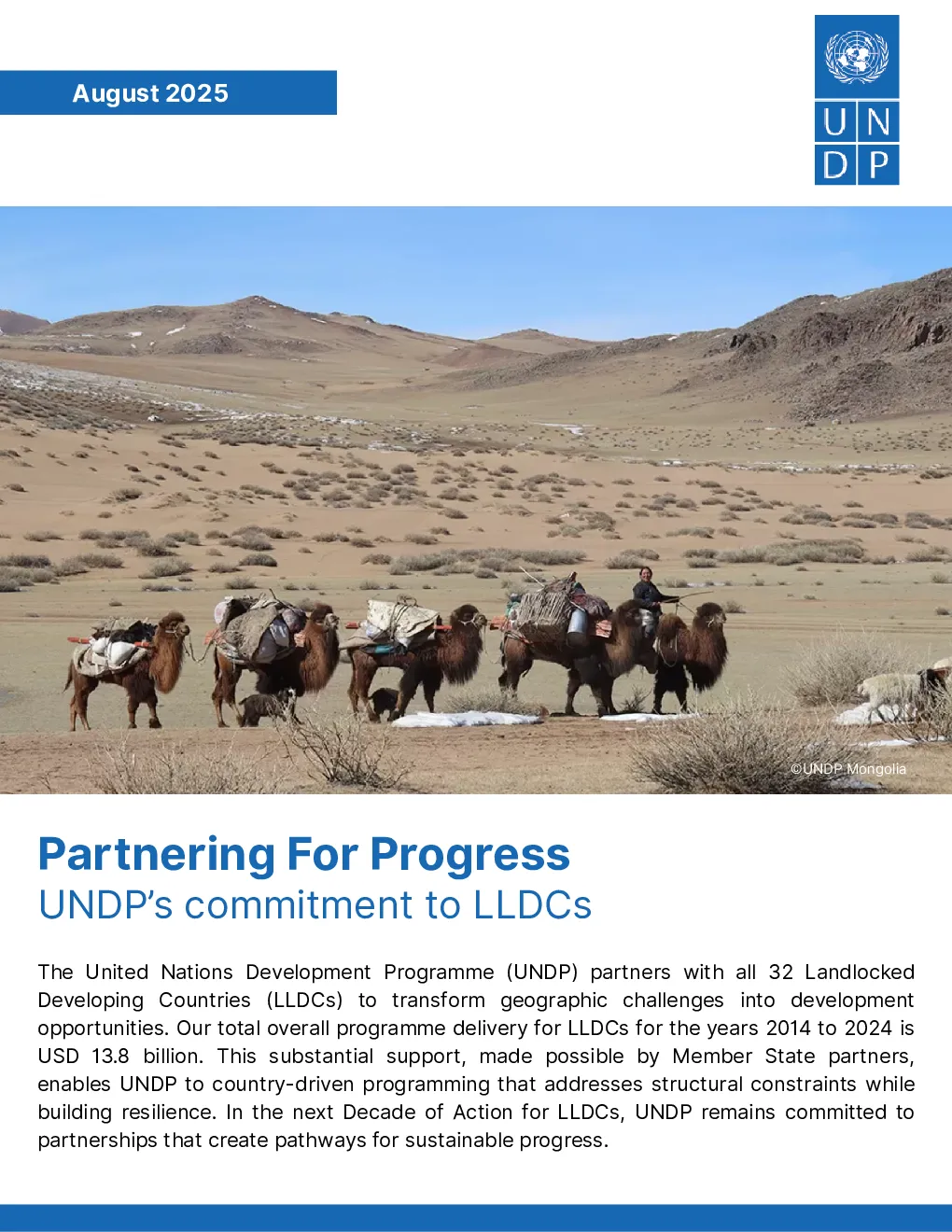
UNDP’s commitment to LLDCs The United Nations Development Programme (UNDP) partners with all 32 LandlockedDevelopingCountries(LLDCs)to transform geographic challenges into developmentopportunities. Our total overall programme delivery for LLDCs for the years 2014 to 2024 isUSD13.8 billion.This substantial support,made possible by Member State partners, From Land-locked to Land-linked LandlockedDeveloping Countries face uniquechallenges:limitedseaaccess,geographicisolation, and elevated trade costs that are nearlydouble those of coastal nations. Their geographyoftenmakes them vulnerable to desertification, As leaders gather in Awaza, Turkmenistan, for the 3rd International Conference on LLDCs(LLDC3), this is a critical juncture for accelerating progress and strengthening resilience. TheDecade of Action (2024-2034) positions LLDCs not as peripheral economies, but as central UNDPsupport to LLDCs is aligned with the 2030 Agenda,Paris Agreement,SendaiFramework, and other global frameworks. In the years ahead, UNDP will work to advanceLLDCs’priorities in key areas including Digital Transformation,Disaster Risk Reduction, A Decade of Impactful Action in LLDCs (2014 – 2024) Trade Barriers → Trade Gateways Tradefacilitation,connectivity and regional integration is essential for advancing economic With Aid for Trade in Central Asia, Kyrgyzstan, Tajikistan and Uzbekistan unlock the potential oftrade for resilient, people-centered and sustainable economies. The programme has assistedcountries in inclusive trade development policies and services, economic competitiveness of Small and Medium Enterprises (SME) developmentis essential for recovering local economies: TheABADEI programmein Afghanistan offers financing and capacity building to 75,000 women-led SMEs, and organization of women-only market days as safe spaces to sell their products and The global SDG Value Chains Programme provides technical assistance to MSMEs to help themintegrate into regional, national, and international supply chains. It operates in 16 countries in Digital Divide → Digital Opportunities Promoting inclusive digital transformationto help LLDCs unlock their potential and accelerate progress: Landlocked countries suchasMoldova,Kyrgyzstan, andNorth Macedoniahaveembarked on a digital transformation journeyundertaking thedigital readiness assessmentsto Climate Vulnerable→ Nature-positive Development Our support toolboxfor LLDCs spark ambitions of theirclimate pledges while embedding nature-positive approaches: E-mobility in Rwandais already a reality. By2025, 30,000 motorcycles will be retrofitted tobecome carbon neutral, as part of Rwanda’s Reactive Response→ Risk-informed Systems Risk-informed developmentin LLDCs is key to building resilience to shocks and crises. Progress toachievethe SDGs will remain elusive unless risk considerations are integrated into the socio- In South Sudan, UNDP set up theNational Coordination and Operations Center(NCOC) toenhance disaster preparedness, resilience building, and response management. The NCOC will Financing Gaps→ Scaled Action LLDCsneed access to affordable development finance fromdomesticandexternalsources,withcrucialde-riskingmechanisms and leveraging capital markets in order to sustain FinancingFrameworks(INFF)to align public and privateinvestmentswith SDG priorities.LLDCs are using INFFs invarious ways, from developing INFF financing strategy linked A Vision for the Future Recent shifts in global trade patterns present both challenges and unprecedented opportunities forLLDCs. In the context of evolving international supply chains and changing trade relationships, LLDCs Policy options centre on three sets of integrated actions: Deepening regional integration:South-South trade, growing at 6% annually while global tradecontracts, offers an alternative pathway for trade expansion.Digital and physical connectivity:Digital and physical connectivity investments directly addressthe trade cost disadvantage. Improving port facilities, border systems, and digital infrastructurecan halve transaction costs, making LLDC products globally competitive.Economic diversification and supply chain strengthening:Special economic zones, industrialparks and leveraging global supply chains can nurture new growth sectors, strengthen traditionalcomparative advantages. and leverage global supply chains that are being diverted and relocated. The Awaza Programme of Action provides a roadmap for LLDCs to take integratedand deliberate steps to improve their development prospects during the currentglobal rebalancing process. UNDP stands ready to support LLDCs to expand to The Power of Partnerships The path forward in this Decade of Action for LLDCs (2024-2034) will require sustained partnerships.Together, we turn structural constraints into development opportunities, ensuring LLDCs are not The generous allocation of UNDP's regular resources to LLDCs reflects a strong commitment in thesecountries' dev