Z世代:新的经济力量
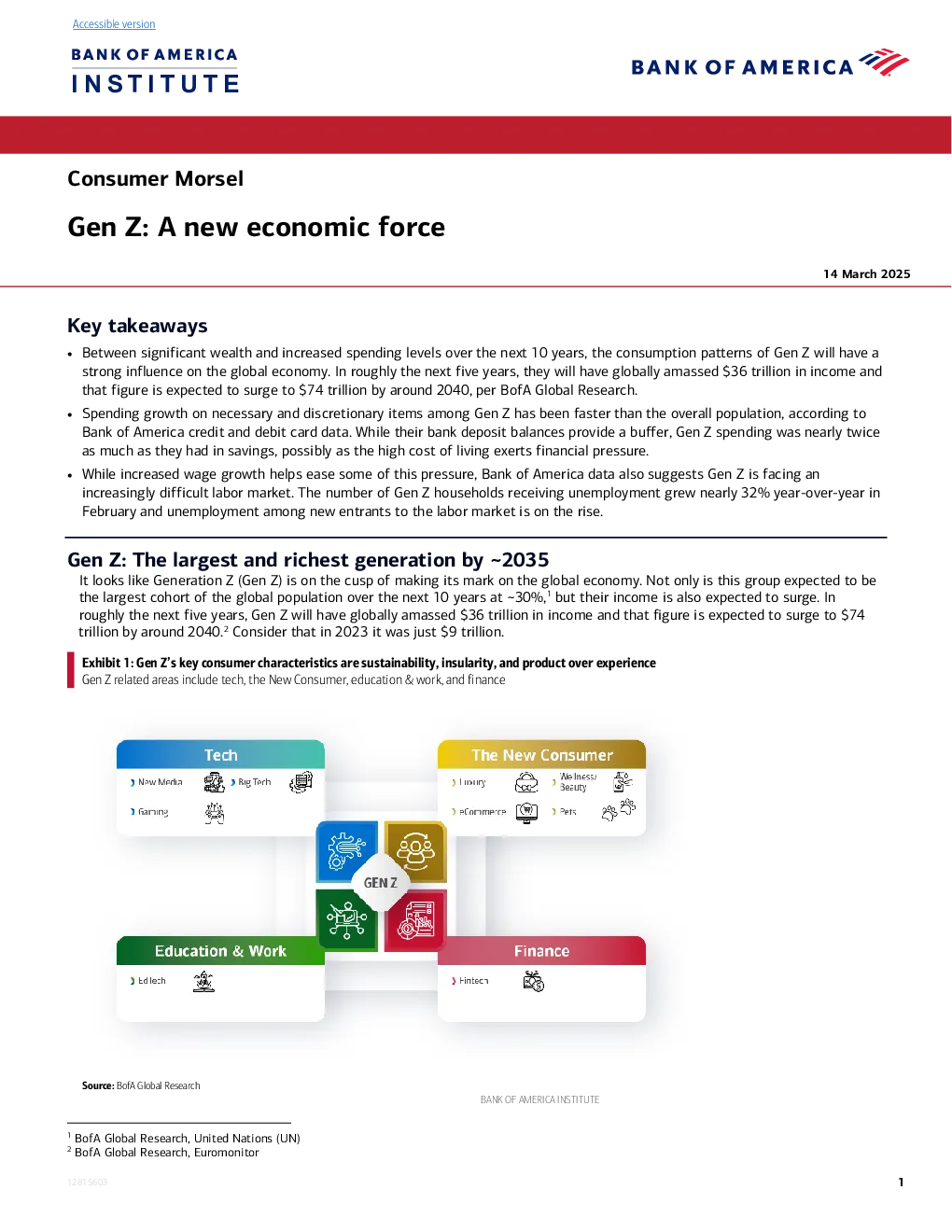
Gen Z: A new economic force Key takeaways •Between significant wealth and increased spending levels over the next 10 years, the consumption patterns of Gen Z will have astrong influence on the global economy. In roughly the next five years, they will have globally amassed $36 trillion in income andthat figure is expected to surge to $74 trillion by around 2040, per BofA Global Research. •Spending growth on necessary and discretionary items among Gen Z has been faster than the overall population, according toBank of America credit and debit card data. While their bank deposit balances provide a buffer, Gen Z spending was nearly twiceas much as they had in savings, possibly as the high cost of living exerts financial pressure. •While increased wage growth helps ease some of this pressure, Bank of America data also suggests Gen Z is facing anincreasingly difficult labor market. The number of Gen Z households receiving unemployment grew nearly 32% year-over-year inFebruary and unemployment among new entrants to the labor market is on the rise. Gen Z: The largest and richest generation by ~2035It looks like Generation Z (Gen Z) is on the cusp of making its mark on the global economy. Not only is this group expected to be the largest cohort of the global population over the next 10 years at ~30%,1but their income is also expected to surge. Inroughly the next five years, Gen Z will have globally amassed $36 trillion in income and that figure is expected to surge to $74trillion by around 2040.2Consider that in 2023 it was just $9 trillion. Exhibit1:Gen Z’s key consumer characteristics are sustainability, insularity, and product over experienceGen Z related areas include tech, the New Consumer, education & work, and finance Source:BofA Global Research In our view, this means that their consumption decisions and patterns will have a strong influence on the economy. That’sparticularly notable given that this group’s preferences are shifting away from the old economy towards tech-compatibility andeCommerce (Exhibit 1). A generation of spenders, but not savers? Beyond income levels, Gen Z could also see the largest increase in spending. By 2030, their global spending is expected to reachrea$12.6 trillion3compared to $2.7 trillion as of 2024. Thus, it’s likely they will be among the most disruptive generations toeconomies, markets and social systems.Whether it’s due to changing diets or reduced alcohol consumption (seeour recentpublication Raising the bar or last call?) or saving and housing, Gen Z will redefine what it means to be a US consumer. Within Bank of America aggregated credit and debit card data, Gen Z’s spending growth per household has been stronger thanthe overall population for both necessary and discretionary spending. For discretionary categories such as entertainment andtravel, Gen Z spending growth is notably stronger, up 25.5% year-over-year (YoY) and 13.8% YoY on a six-month moving averagein February, respectively (Exhibit 2). Exhibit2: Gen Z spending on discretionary items like travel andentertainment was much stronger than the overall populationCredit and debit card spending by category for Gen Z and overall Exhibit3: Gen Z spending on childcare was well above the overallpopulation, whereas spending on insurance was the reverseCredit and debit card spending by category for Gen Z and overallpopulation in February (six-month moving average, YoY%) population in February (six-month moving average, YoY%) In February, their spending on non-discretionary items such as rent and utilities was higher than the overall population.Notably,Gen Z’s outlays on childcare rose 500bps (Exhibit 3), likely due in part to changing family dynamics like having kids themselvesas well as the stubbornly high cost of childcare (seeour recent analysis on Labor pains or labor gains?) Perhaps more concerning is that over half (52%) of Gen Z respondents reported that they aren’t making enough money to livethe life they want and that the high cost of living is one of their main financial challenges, according to the2024 Better MoneyHabits Gen Z report. Gen Z’s savings don’t stack up to their spending levelsThe survey also found that, compared to their parents, almost a third (32%) feel they are behind where their parents were at the same age in meeting financial goals. And while Gen Z understands the importance of saving, many are not able to put aside asmuch money as they’d like. Using Bank of America internal deposit account data, we find that Gen Z, on average, does not have enough in balances to covera month of spending. In February, their spending-to-savings ratio (see Methodology) was 1.93, meaning they were spendingnearly twice the amount that they had in savings (Exhibit 4). This has increased since 2023 and remains much higher than othergenerations. However, there’s some evidence that they are making strides to improve their financial position. In fact, theirmedian deposit balances remain well above th