最佳展示:美国宠物饲养
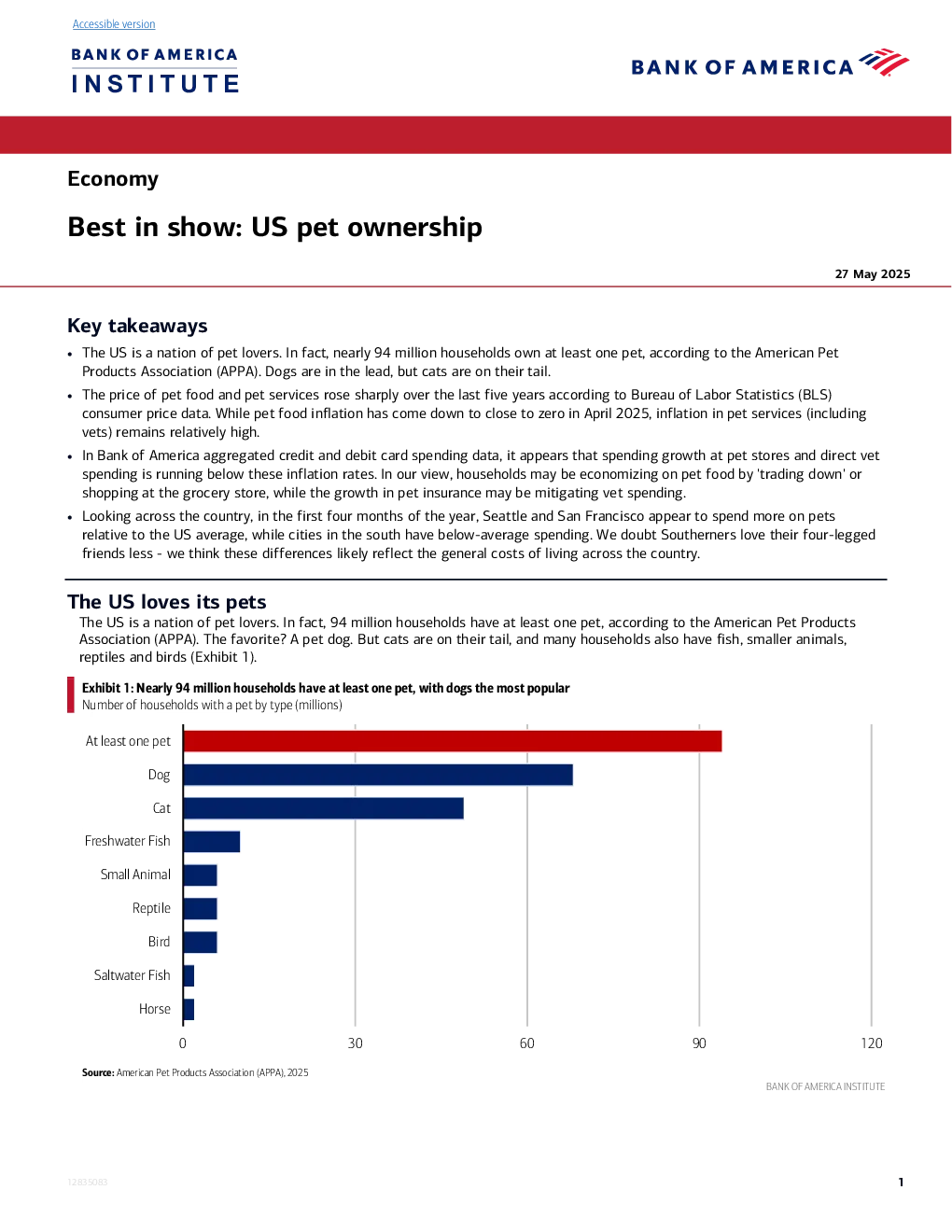
Best in show: US pet ownership Key takeaways •The US is a nation of pet lovers. In fact, nearly 94 million households own at least one pet, according to the American PetProducts Association (APPA). Dogs are in the lead, but cats are on their tail. •The price of pet food and pet services rose sharply over the last five years according to Bureau of Labor Statistics (BLS)consumer price data. While pet food inflation has come down to close to zero in April 2025, inflation in pet services (includingvets) remains relatively high. •In Bank of America aggregated credit and debit card spending data, it appears that spending growth at pet stores and direct vetspending is running below these inflation rates. In our view, households may be economizing on pet food by 'trading down' orshopping at the grocery store, while the growth in pet insurance may be mitigating vet spending. •Looking across the country, in the first four months of the year, Seattle and San Francisco appear to spend more on petsrelative to the US average, while cities in the south have below-average spending. We doubt Southerners love their four-leggedfriends less - we think these differences likely reflect the general costs of living across the country. The US loves its petsThe US is a nation of pet lovers. In fact, 94 million households have at least one pet, according to the American Pet Products Association (APPA). The favorite? A pet dog. But cats are on their tail, and many households also have fish, smaller animals,reptiles and birds (Exhibit 1). Number of households with a pet by type (millions) Across generations, this love for pets is spread fairly evenly, although millennials now form the largest proportion of pet-owninghouseholds according to APPA data (Exhibit 2). As to where people get their furry friends from, it appears many are rescuing them from shelters or fostering them, according toa survey from CivicScience (Exhibit 3). In fact, around only 35% of people appear to source their animals from breeders or thelocal pet store. Exhibit3:Pets come from varioussources,butshelters are themost commonat 35%How pet came into household (% of totalresponses) Exhibit2:Millennial householdsare the biggest share(almost30%)of pet-owning households% of pet owners byhousehold generation Feeding Fido: are budgets biting?The cost of pet food has risen significantly over the past five years. But the good news is that the current rate of inflation in pet food has fallen to around zero year-over-year (YoY), according to April’s Bureau of Labor Statistics (BLS) data. On the other hand,the cost of pet services, which includes vet bills, grooming etc., seems to be rising fairly sharply: up 4.6% YoY in April. In fact, theprices of these pet services are 42% higher vs 2019, compared to a rise of 22% for pet food and treats. Exhibit5:Spendingatpet stores wasdown around4% YoY inApril2025Credit and debit card data per households on vet payments and pet Exhibit4:Pet services inflation is running above 4% YoYConsumer price indices for pet food and treats and pet services (monthly, % YoY) stores (monthly, three-month moving average, % YoY) But, when we look at Bank of America aggregated data on credit and debit card spending, we find that card spending perhousehold at pet stores fell around 4% YoY in the latest April 2025 data, while card payments to vets dropped 1% YoY in April. Why might vet spending be below the significant inflation in this category? One reason may be the rise of pet insurance, whichhelps owners spread the costs of pet healthcare. The North American Pet Health Insurance Association (NAPHIA) reports that theaverage annual growth rate of insured pets has been 20% since 2020. However, the share of insured pets remains fairly low,suggesting the potential for continued growth in this area. But why is Bank of America card spending at pet stores weaker than pet food inflation? While it could be people are buying lessfood for their pets, it seems relatively unlikely that pooches have suddenly lost their appetite. Survey respondents toCivicScience mention“cost”and“convenience”are important considerations when buying pet food (Exhibit 6). This suggests tous that some households may be“trading down”in terms of the pet foods they are buying. Exhibit6:Both healthy choices and cost are top of mind ofconsumers when buying for their pet% responses to question “Which factors influence your purchases for Exhibit7: The largest pull-back in pet-related transactions is inlower-income millennials % change in share of households making pet related (pet stores andvets) transactions, May 2018-April 2019 to May 2024-April 2025, bygeneration and select income cohorts (percentage points) your pet?” Alternatively, consumers may be buying pet food from local grocery stores rather than pet stores in order to save money or asecond trip to the pet supply shop. When we look at the change in the share of households making card transactions at eitherpet