弹性和可持续性:依赖石油的经济体如何为未来建设
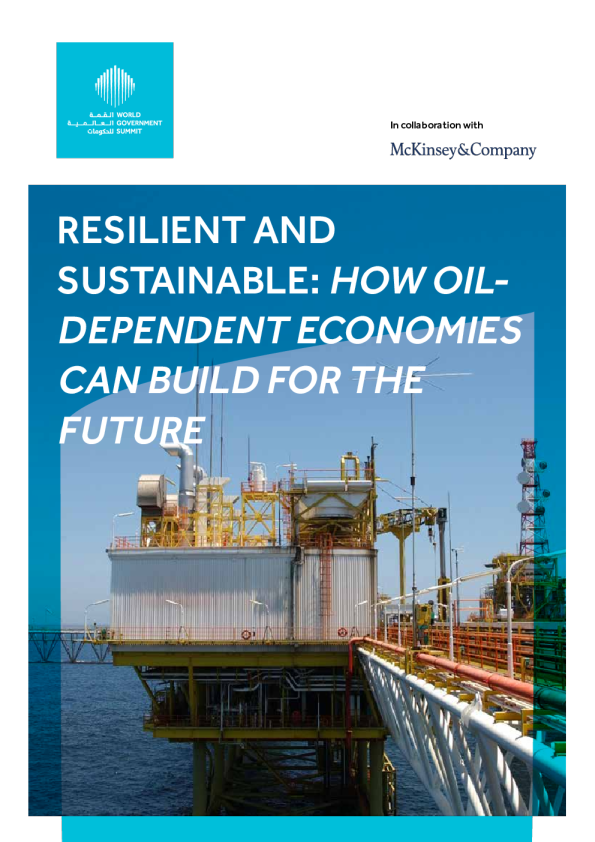
INDEX05INTRODUCTION06WHY IS THIS AN ISSUENOW?Long-term outlook for oildemandThe challenge of economicvolatilityPressure on existing models09UNDERSTANDING THECHALLENGESEconomic challengesFiscal challengesSocial factors15ONE EXAMPLE OF ASUCCESSFUL TRANSITION:NORWAY16FRAMING A SOLUTIONEconomic solutionsFiscal solutionsSocial solutions19CONCLUSION: HOWCOUNTRIES CAN DRIVESUCCESS INTRODUCTIONOil-dependent economies vary widely, from some of the world’s most prosperous nations to some of its poorest.But from Qatar (with the highest GDP per capita in the world) to Equatorial Guinea (where over half of thepopulation lives in poverty), they face common challenges in moving beyond a reliance on natural resources. Thispaper examines how these countries are addressing these challenges, looking at a group of countries includingmembers of the GCC, other members of the Organization of Petroleum Exporting Countries (OPEC), and someadditional energy-exporting nations.The need to diversify and move “beyond oil” is not new – it has been core to the economic development policies ofmany oil-producing countries for decades. Despite this focus, few countries have made much progress. The pressureto change has mounted, however, driven by a combination of factors, including the persistence of relatively lowprices, the need to manage economic volatility, and increasing pressure on existing economic and social models.To address these challenges, policymakers are pursuing two related objectives:•Increasing resilience:Handling price fluctuations, including managing oil-dependent industries over the courseof the commodity price cycle•Increasing sustainability:Diversifying for the long term, laying the foundations for prosperity after oil resourcesare depleted, or for the time when global demand shifts away from fossil fuels.There is no simple answer or quick fix. To achieve these goals, countries will need to address weighty and closelyrelated economic, fiscal and social challenges. In this report, we explain how one country has addressed comparablechallenges, admittedly from a different starting point, lay out potential solutions for other oil-exporting countries,and discuss some of the reforms underway now. WHY IS THIS AN ISSUE NOW?The challenge of diversification is not new. As far back as the first two national development plans in the 1970s,Saudi Arabia’s Ministry of Planning aimed to grow non-oil industries to diversify the economy. In 1999, Oman wasthe first country to adopt formal targets for the “Omanization” of its workforce as part of its Vision 2020.The recent push for diversification is driven by three major trends :•Long-term moderation in energy prices, and for some countries depletion of their resources, which undermineexport revenues•Volatility in economic growth over the past decade, through the global financial crisis and more recent com-modity price fluctuations•Challenges to the sustainability of existing economic models, given expanding populations and their rising ex-pectations for government services.LONG-TERM OUTLOOK FOR OIL DEMANDWhile prices have recovered somewhat from recent lows, and the medium-term outlook suggests that the sup-ply-demand balance will stabilize, demand is likely to face downward pressure over the long term. The IEA’s scenari-os suggest that overall demand for oil and coal as primary energy sources will remain more or less flat to 2040, withjust 0.5% growth per year. They forecast the fastest growth, from a low base, in renewable options and other cleanenergy sources (Exhibit 1).Several trends are at work. An increasing role for electricity in the energy mix will reduce the reliance on oil. Althoughoil is likely to remain the largest energy source overall, the share of electricity in final energy demand rose from 13%in 1990 to 18% in 2012. The IEA expect it to grow to 24% or even higher by 2040.1Also noteworthy are changes inpersonal transportation, with energy demand from light vehicles expected to peak in 2022 and then decline.Although experts do not expect alternative sources to supplant oil and gas in the next 20 years, long-term trendssuggest that demand will face downward pressure. This implies that oil-exporting countries cannot expect to ad-dress their economic challenges simply by waiting for prices to return to recent highs.THE CHALLENGE OF ECONOMIC VOLATILITYEconomic volatility is another key challenge for oil-exporting nations. While most have enjoyed higher real GDPgrowth than other nations over the past decade, their economies have also been more volatile (in line with the EU),with substantially higher standard deviations than the US or other OECD countries (Exhibit 2).Volatility matters. It poses challenges for sustained economic development.2Oil-exporting countries are particu-larly vulnerable: their ability to respond to downturns is limited by the nature of their fiscal systems, which oftendepend on “shallow” tax bases of export revenues. The large share of foreign workers
你可能感兴趣

如何为新兴气候机遇提供资金:通过审慎监管澄清和改革加强新兴市场和发展中经济体的气候融资
如何为新兴气候机遇提供资金:通过审慎监管澄清与改革加强新兴市场和发展中经济体的气候融资

金融科技报告中的大科技:Meta、苹果、谷歌和亚马逊如何为金融服务的未来而战
2023年亚洲中小企业监测:新冠肺炎大流行后,小企业如何为太平洋地区的弹性增长做出贡献
