数字时代的网络弹性
 AI智能总结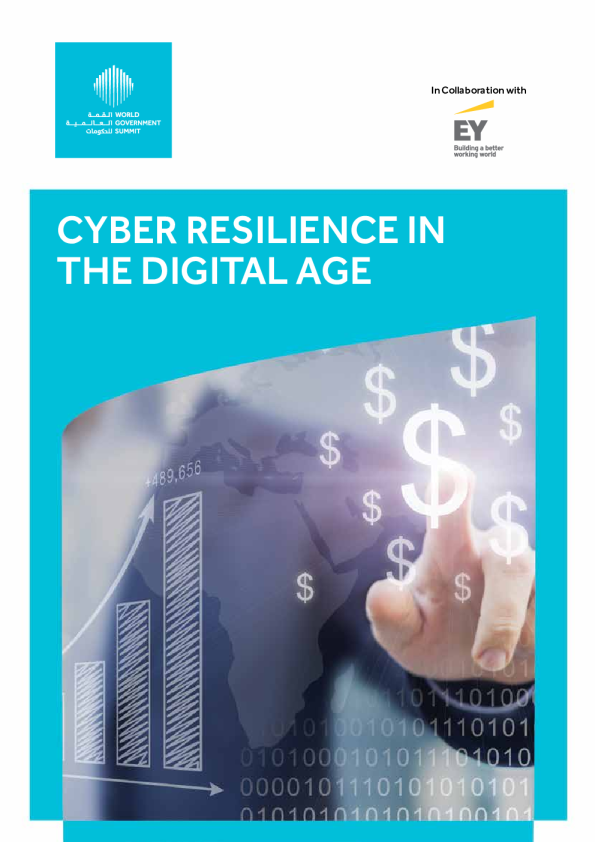
INDEX03EXECUTIVE SUMMARY05THE ROLE OFGOVERNMENT IN CYBERRESILIENCE STRATEGY07DIGITIZATION ALTERSCYBER THREATLANDSCAPE10TRADITIONAL CYBERDEFENSES ARE OBSOLETE12CYBER RESILIENCE IN THEDIGITAL AGE 15BUILDING A CYBERRESILIENT ECOSYSTEM19THE VALUE OF CYBERRESILIENCE20RECOMMENDATIONS21CONCLUSION22REFERENCES EXECUTIVE SUMMARYThe rapid digitization of the global economy is leadingto a dramatic increase in the number of cyber securityincidents. In 2015, and around the world, four out offive organziations employing over 2,500 people wheretargets of cyber attacks and the estimated financialimpact of all such events exceeded $440b.As people grow more reliant on technology for theireveryday activities, they are also looking totheirgovernments to provide for a and robust environment.One where organizations can leverage technologyand information storage with a sense of securityand comfort in storing and exchanging information.Citizens and visitors alike demand strong protectionagainst all sorts of threats, including threats to theirdigital world. Concurrently, governments are relyingon digital innovations to help serve stakeholders,contain costs and provide a competitive edge inthe global market. These trends point to a growingimperative for cyber threat “resilience” in the digitalage. Governments, organizations in the private andpublic sectors and individuals must all play their part inbuilding an ecosystem that is resilient to cyber threats.1 millionNew malware threatsper day4 of 5Companies employingmore than 2,500 peoplewere targets of cyberattacks last yearIn 2014 the number of cyberattacks against large companiesrose by40%Source: Internet Security Threat Report, SymantecSource: The Ponemon Institute2015 Cost of Data Breach Study: Global Analysis60%of all targeted attacksstruck small- andmedium-sized organizations$575 billion$15.4 billion200 daysFinancial impactAverage costResponse timeCyber attacks and their impactWhatdoes resilience mean in the content of aDigital Landscape? We define resilience to be theorganizational capability to sense, resist and react todisruptive cyber events, and to recover from themin a timely fashion. By definition, a digital economyis borderless and ever changing. Therefore, ratherthan build a seemingly impregnable fortress around acountry’s digital presence, the objective, instead, is tocreate the capability to anticipate threats, to absorbthe impacts of such threats and to react in a rapid andflexible way to ensure that a nation’s key systems andprocesses continue operating. With the use of smarttechnologies, such as artificial intelligence and machinelearning, organizations systems will be able to recoverfrom the attack and build stronger defenses againstfuture such events. 5 of the 10Largest ever databreaches occured in2013 and 2014 Governments have a crucial role to play in helpingbuild a national cyber resilient culture, one whereindividualsand organizations are educated.Onlygovernmentscan create the required effectivefoundation that organizations, citizens and visitorscan rely on, leverage and trust.Cyber threats are real and can be as devastating asrisks of terror and catastrophic events. Governmentscan establish a framework in which organizationscollaborate to enhance their resilience against cyberattack, because the former are able to see the biggerpicture. When an organization comes under a cyberattack, the target is likely to perceive it as an isolatedevent, as it attempts to respond. Governments areable to put the event into a national context and torespond on a national or international scale, if needbe.If governments are successful in this endeavor, theirresidents will feel more secure about the inviolabilityof their data. Innovation and investment in technologywill thrive within an environment nurtured by smart,strong governments.“We stand on the brink of a technologicalrevolutionthat will fundamentallyalter the way we live, work, and relateto one another. In its scale, scope, andcomplexity,the transformation willbeunlike anything humankind hasexperienced before”(World Economic Forum, 2016) This reports looks to establish the following themes:•Governments play a crucial role in creating astrategy for cyber resilience and then implementingit.•Governments require a clear visibility over thethreat landscape, both in its current form, and thechanging dynamics. This will serve to protect whatis most vital and vulnerable to cyber threats.•Traditional cyber defense strategies are no longereffective; the emerging threat vectors and speed ofchange, amplified by a digital revolution, cannot beaddressed by traditional methods. THE ROLE OF GOVERNMENTIN CYBER RESILIENCESTRATEGYGovernments play an important part in shaping thedigital future of their countries. There must be a visionof the digital needs of society and of the ecosystemthat will achieve it. If the digital economy is to flourish,governments have to create a fertile environment inwhich innovation and entrepreneurship th