AI智能总结
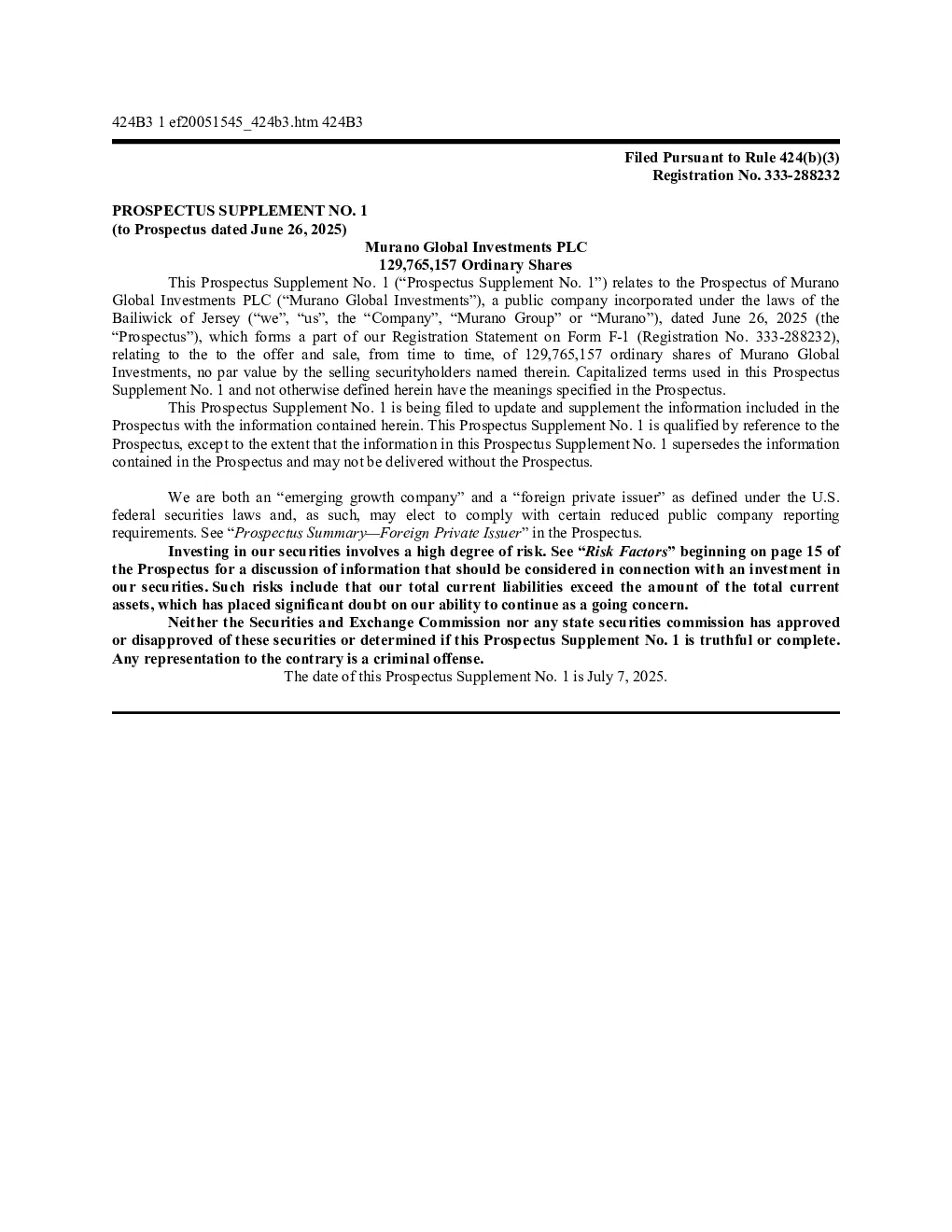
招股说明书补充文件第1号(截至2025年6月26日招股说明书) Murano全球投资有限公司129,765,157普通股 本招股说明书补充文件第1号(“招股说明书补充文件第1号”)涉及穆拉诺全球投资有限公司(“穆拉诺全球投资”)的招股说明书,穆拉诺全球投资是一家根据泽西岛行政区法律设立的公司(“我们”、“我们”、“公司”、“穆拉诺集团”或“穆拉诺”),日期为2025年6月26日(“招股说明书”),该招股说明书构成我们根据F-1表格提交的注册声明的一部分(注册编号333-288232),涉及不时出售1,297,651,157股穆拉诺全球投资的普通股,这些股份由其中列出的出售证券持有人持有。本招股说明书补充文件第1号中使用的首字母大写术语,且在本补充文件中未另行定义的,具有招股说明书中规定的含义。 这份招股说明书补充公告第1号是提交的,旨在更新和补充招股说明书中包含的信息以及本文件中包含的信息。这份招股说明书补充公告第1号经参考招股说明书予以确认,除非本招股说明书补充公告第1号中的信息取代了招股说明书中的信息,且不得脱离招股说明书单独交付。 我们既是根据美国联邦证券法定义的“新兴成长公司”,也是“外国私人发行人”,因此可以选择遵守某些降低的公众公司报告要求。参见“招募说明书摘要—外国私营发行人“在招股说明书中。 投资我们的证券涉及高度风险。参见“风险因素“自第15页招股说明书开始,将讨论与投资我们证券相关应考虑的信息。此类风险包括我们的总流动负债超过总流动资产金额,这已对我们持续经营能力产生重大质疑。” 证券交易委员会或任何州证券委员会均未批准或否定这些证券,也未确定本号招股说明书补充文件是否真实或完整。任何与此相反的表示都是刑事犯罪行为。 此招股说明书补充文件第1号的日期为2025年7月7日。 近期发展 马拉诺宣布通过比特币(BTC)储备金计划加强其核心战略,并在执行高达5亿美元备用股权购买协议(SEPA)后进行 • 威拉诺将增强现有核心战略 • 已购买21枚比特币(BTC);目标是成为主要BTC持有者 • 加入BTC公司及迈克尔·萨利尔(Michael Saylor)的战略支持倡议“企业比特币”作为董事长圆桌会议成员 • 预计将使用SEPA的大量收入购买BTC 伦敦,2025年7月7日– 玛瑙环球投资有限公司(纳斯达克:MRNO)(“玛瑙”或“公司”)今日宣布其企业战略的加强,旨在建立比特币(BTC)储备库。公司将继续其核心战略,即发展房地产并经营其墨西哥酒店和度假村业务,同时利用其经营现金流、大量的房地产持有以及资本市场准入来建立一个稳健的比特币储备库。 这次转型旨在加速Murano现有战略,即探索释放其被房地产发展项目长期锁定的资本的方法,以推动更高的资本效率,释放资产负债表流动性,并为股东创造更好的收益。如近期提交的文件中详述的,这些释放长期资本的方法可能包括: • 优先发展待售资产(如大岛坎昆项目下一阶段规划的住宅公寓);和 • 追求出售和回租交易以盘活资金,同时保留酒店运营的经营管理和未来盈利能力。 作为其比特币储备计划的一部分,Murano最近购买了21枚比特币。此外,在2025年7月1日,Murano加入了“企业比特币联盟”,这是一个由BTC公司及迈克尔·萨勒尔策略支持的行业联盟,旨在加速企业采用比特币,成为“董事长圈成员”。 公司的创始人、董事长兼首席执行官伊利亚斯·萨卡尔评论说:“我们非常兴奋地通过这个补充的比特币财富计划来增强我们的核心战略。我们将比特币视为一种变革性的资产,它不仅提供长期增长潜力,而且还能增强我们的资产负债表以对抗通货膨胀和系统性风险。” 穆拉诺现有的模型,通过其比特币财富计划得到增强,包括: 1. 酒店运营:穆拉诺正在审查和探索新的运营计划,例如将BTC作为支付方式以及比特币奖励计划,以进一步增强和区分公司现有的酒店运营。 2. 房地产剥离:作为评估中的替代方案之一,穆拉诺可以考虑进行机会性出售回租交易,以提高其流动性并为额外的BTC投资提供资金。 3. 资本市场活动:马拉诺与约克维尔达成了最高5亿美元的支持股权购买协议(“SEPA”)。马拉诺预计将使用根据SEPA出售股票所得的资金用于一般公司用途,主要包括投资BTC。 4. 购买比特币:该公司打算逐步扩大其现有的比特币投资组合,以创建一个强大的资产组合。 风险因素 除本招股说明书补充声明第1号中列明之其他信息外,您应仔细阅读招股说明书第15页开始的风险因素部分,以讨论与投资我们证券相关应考虑的信息。 我们面临与我们的比特币财富计划和比特币投资相关的风险。 In July 2025, we announced our Bitcoin Treasury Initiative, and we plan to continue to integrate Bitcoin into our regular treasury management activities. Our expansion into such treasury management activities for our Bitcoin holdingssubjects us to unforeseen risks, challenges and uncertainties, and there is no guarantee that we will generate revenue from such activities or realize any of the other anticipated benefits of such activities. The transactions in which theBitcoin treasury function may engage in could involve significant risks. Trading in Bitcoin and Bitcoin- related financial products is a speculative activity. The price of Bitcoin has been subject to significant historical volatility and may besubject to influence from malicious actors, real or perceived scarcity, political, economic, and regulatory conditions, and speculation, making its price more volatile. By investing in Bitcoin, we may become subject to counterparty risk, such as with our Bitcoin custodians and those with whom we transact in Bitcoin or other crypto-currencies. The broader digital assets industry may also be subject to counterparty risks, which could adversely impact the adoption rate, price, and use of Bitcoin. Some of the markets in which we may effect transactions in Bitcoin will not be “exchanged-based”, including “over-the-counter” or “interdealer” markets (i.e., principal to principal contracts between us and thirdparties entered into privately, rather than on an exchange). As a result, we are not afforded the regulatory and financial protections of an exchange or its clearinghouse (or of the government regulator that oversees such exchange andclearinghouse), and in privately negotiated transactions, the risk of the negotiated price deviating materially from fairvalue is substantial. This exposes us to the risk that a counterparty will not settle a transaction in accordance with itsterms and conditions because of a dispute over the terms of the contract (whether or not bona fide) or because of acredit or liquidity problem, thus causing us to suffer a loss. Such “counterparty risk” is accentuated for contracts with longer maturities where events may intervene to prevent settlement, or where we have concentrated our transactionswith a single or small group of counterparties. Furthermore, there is a risk that any of our counterparties could become insolvent and/or the subject of insolvency proceedings. If one or more of our counterparties were to become insolvent or the subject of insolvency proceedings, there exists the risk that the recovery of Bitcoin from our counterparties,including but not limited to, broker-dealers, will be delayed or be of a value less than the value of the Bitcoin originally entrusted to such counterparty. We may use counterparties located in jurisdictions outside the United States. Suchcounterparties are subject to the laws and regulations in non-US jurisdictions that are designed to protect their customers in the event of their insolvency. However, the practical effect of these laws and their appli


