您的浏览器禁用了JavaScript(一种计算机语言,用以实现您与网页的交互),请解除该禁用,或者联系我们。[日本森纪念财团]:2024年全球城市实力指数 - 发现报告

2024年全球城市实力指数

2024-12-01-日本森纪念财团L***
AI智能总结
查看更多
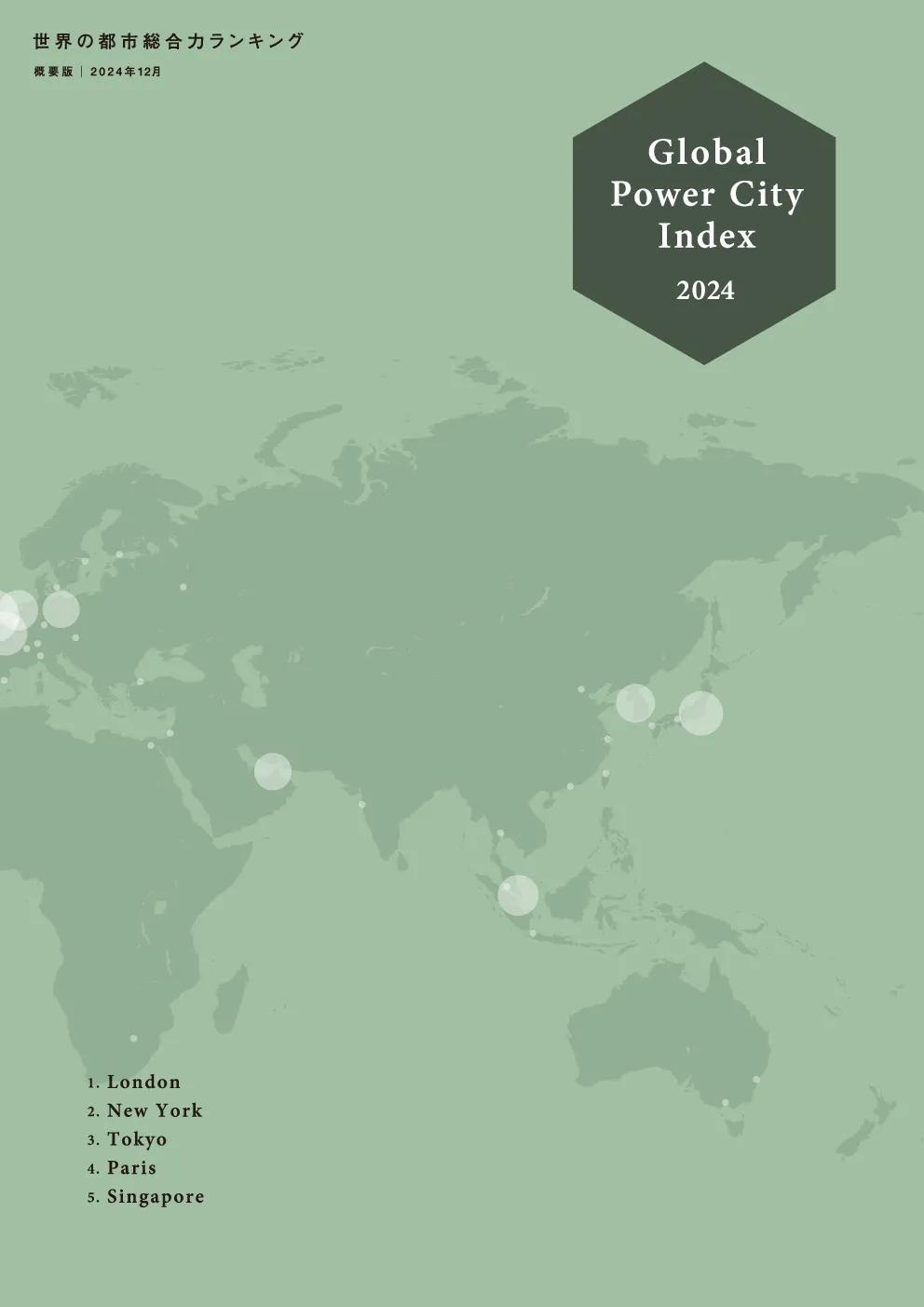
2024年全球城市实力指数

Andrés Rodríguez-PosePrincesa de Asturias Professor,London School of EconomicsMichael BattyBartlett Professor, andChairman,CASA,University College LondonCASAWhat is the GPCI?Executive CommitteePeer ReviewersGiven the global competition betweencities, the Global Power City Index(GPCI) evaluates and ranks the major cities ofthe world according to their “magnetism,” ortheir comprehensive power to attract people,capital, and enterprises from around the world.It does so through measuring 6 functions—Economy, Research and Development, CulturalInteraction,Livability,Environment,andAccessibility—providing a multidimensionalranking.Originally formulated with input from thelate Sir Peter Hall, an authority in the urbanresearch field, and published annually since2008, this ranking is created under the directionof the Executive Committee, comprised ofvarious experts in different fields, while theWorking Committee oversees concrete dataanalysis. In order to ensure the impartialitySaskia SassenRobert S. Lynd Professor,Columbia University ChairmanHeizo TakenakaProfessor Emeritus, Keio UniversityChairman, Institute for Urban Strategies,The Mori Memorial Foundation Hiroo IchikawaProfessor Emeritus, Meiji UniversityExecutive Director, The Mori Memorial FoundationOriginal Principal AdvisorSir Peter Hall1932-2014Professor,University College London1932-2014Principal : Hiroo IchikawaMember : Institute for Urban Strategies,The Mori Memorial Foundation::Peter NijkampResearch coordinator,Open University of the Netherlands,Heerlen, and Professor,AC Cuza University of IasiWorking Committee62008GPCI2008 Lise Bourdeau- LepageFull-Professor,University Lyon, France©Guillaume Voiseau, photographeHeng Chye KiangProvosts Chair Professor,National University of Singaporeof the ranking process and results, two third-party peer reviewers validate the contents andprovide suggestions for improvement.The GPCI is able to grasp the strengths,weaknesses, and challenges of global citiesin a continuously changing world not onlythrough a ranking, but also through analyzingthat ranking’s specific components. It is hopedthat in addition to this year’s results, thehistorical data since 2008 will also continue tobe of use to various stakeholders for planningurban policy and corporate strategy.GlobalPower City Index, GPCIGPCIAllen J. ScottDistinguished Research Professor,University of California,Los AngelesJ CBE MethodologyFunctionEconomy600 pt.R&D300 pt.CulturalInteraction500 pt. GPCI626702 , 6001ICT1CO2Number of Arrivals and Departures at Airports The GPCI evaluates its target cities in6 urban functions and each of thesefunctions comprises multiple indicator groups(total: 26 groups), which in turn consist ofseveral indicators. A total of 70 indicatorsare used in the GPCI.The average scores foreach indicator within an indicator group areWorking EnvironmentCost of LivingSecurity and SafetyWell-BeingEase of LivingSustainabilityAtmospheric Air Quality and ComfortUrban EnvironmentInternational NetworkAir Transport CapacityInner-City TransportationTransport ComfortabilityFunctionIndicator GroupLivability500 pt.Environment300 pt.Accessibility400 pt.The following indicator name was changed in GPCI-2024 |GPCI-2024(65)Ease of Mobility by Public Transportationwas changed fromStation Density.(66)Taxi Farewas changed fromPublic Transportation Use.(69)Traffic Congestionwas changed fromAverage Driving Speed.(70)Ease of Mobility by Bicyclewas changed fromEase of Mobility by Taxi or Bicycle. combined to calculate a city’s function-specificrankings, which are then totalled to determineits comprehensive ranking.The highest possibletotal score equals 2,600 points.Commitment to Climate ActionRenewable Energy RateWaste Recycle RateCO2Emissions per CapitaAir QualityComfort Level of TemperatureWater QualityUrban GreenerySatisfaction with Urban CleanlinessCities with Direct International FlightsInternational Freight FlowsNumber of Air PassengersEase of Mobility by Public TransportationTaxi FareTravel Time to AirportsCommuting TimeTraffic CongestionEase of Mobility by BicycleTotal Unemployment RateTotal Working Hours per CapitaWorkstyle FlexibilityHousing RentPrice LevelNumber of MurdersEconomic Risk of Natural DisasterLife ExpectancySocial Freedom and EqualityRisk to Mental HealthNumber of Medical DoctorsICT ReadinessNumber of Retail ShopsNumber of Restaurants383940414243444546474849505152535455565758596061626364656667686970No.Indicator 2New YorkNew York maintained its #2 position but saw adrop in its overall score compared to last year,widening the gap with London. It continued tosecure the #1 spot in both the Economy andR&D functions, demonstrating its strengths.Additionally, in the Accessibility function, NewYork improved its ranking, with factors likeEaseof Mobility by Public Transportationbeing highlyrated. However, in the Livability and Environmentfunctions, it remained in the 30s, indicating roomfor improvement. 1LondonLondon, ranked #1, maintained its topposition