AI智能总结
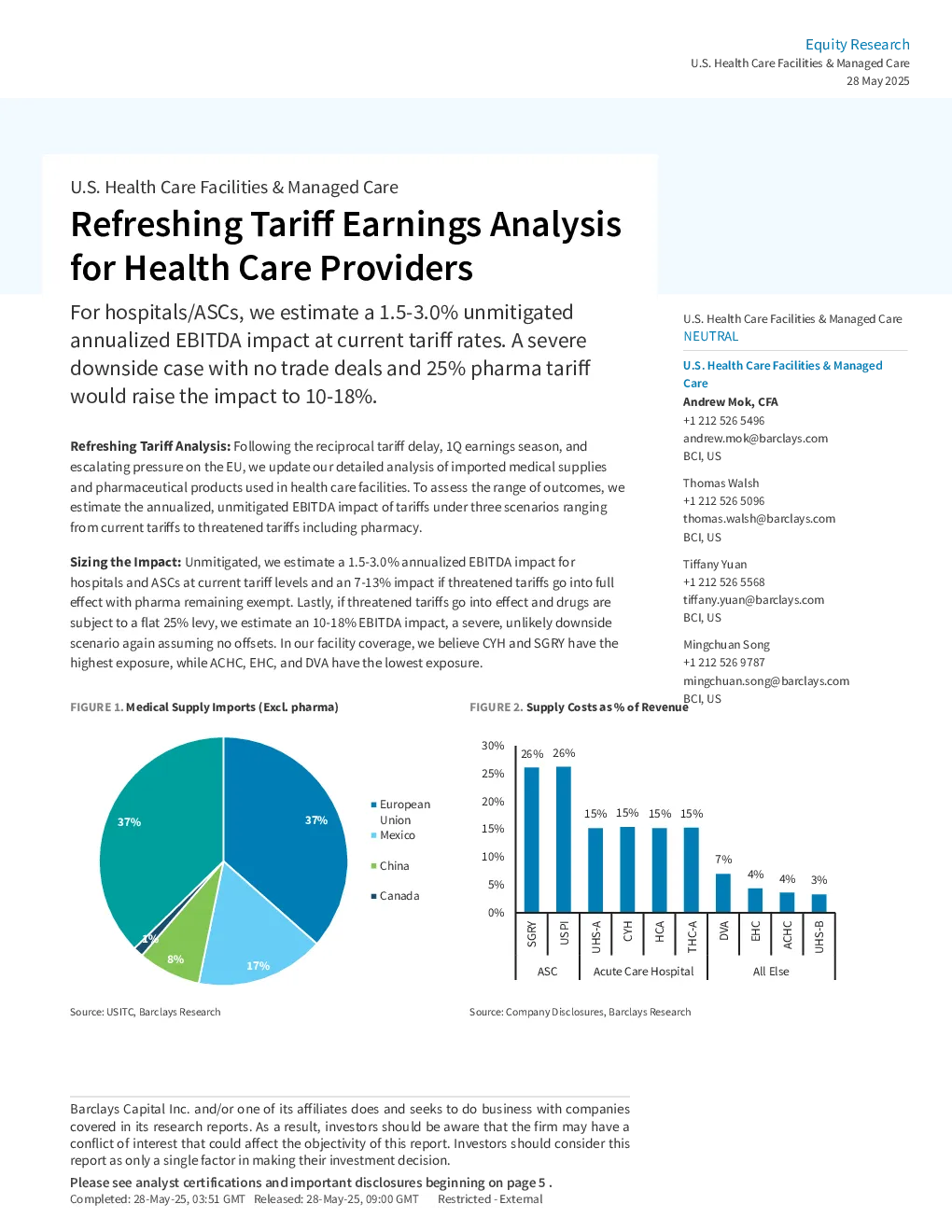
RefreshingTariffEarnings Analysisfor Health Care Providers For hospitals/ASCs, we estimate a 1.5-3.0% unmitigatedannualized EBITDA impact at currenttariffrates. A severedownside case with no trade deals and 25% pharmatariffwould raise the impact to 10-18%. U.S. Health Care Facilities & Managed CareNEUTRAL U.S. Health Care Facilities & ManagedCareAndrew Mok, CFA+1 212 526 5496andrew.mok@barclays.comBCI, US RefreshingTariffAnalysis:Following the reciprocaltariffdelay, 1Q earnings season, andescalating pressure on the EU, we update our detailed analysis of imported medical suppliesand pharmaceutical products used in health care facilities. To assess the range of outcomes, weestimate the annualized, unmitigated EBITDA impact oftariffsunder three scenarios rangingfrom currenttariffsto threatenedtariffsincluding pharmacy. Thomas Walsh+1 212 526 5096thomas.walsh@barclays.comBCI, US Sizing the Impact:Unmitigated, we estimate a 1.5-3.0% annualized EBITDA impact forhospitals and ASCs at currenttarifflevels and an 7-13% impact if threatenedtariffsgo into fulleffectwith pharma remaining exempt. Lastly, if threatenedtariffsgo intoeffectand drugs aresubject to a flat 25% levy, we estimate an 10-18% EBITDA impact, a severe, unlikely downsidescenario again assuming nooffsets.In our facility coverage, we believe CYH and SGRY have thehighest exposure, while ACHC, EHC, and DVA have the lowest exposure. TiffanyYuan+1 212 526 5568tiffany.yuan@barclays.comBCI, US FIGURE 2. Supply Costs as % of RevenueMingchuan Song+1 212 526 9787mingchuan.song@barclays.comBCI, US Barclays Capital Inc. and/or one of itsaffiliatesdoes and seeks to do business with companiescovered in its research reports. As a result, investors should be aware that the firm may have aconflict of interest that couldaffectthe objectivity of this report. Investors should consider thisreport as only a single factor in making their investment decision. Please see analyst certifications and important disclosures beginning on page 5 .Completed: 28-May-25, 03:51 GMTReleased: 28-May-25, 09:00 GMTRestricted - External Scenario #1: CurrentTariffStatus Where do we stand today? Afterbacking down on escalated 145%tariffrates, imports from China are currently subject to30%tariffsuntil August 12th. We estimate Chinese goods represent 8% of imported supply costsfor providers (ex. pharma). The remaining imports are subject to the 10%tariffbaseline duringthe reciprocaltariffpause which expires July 9th. Note, pharmaceutical products remainbroadly exempt fromtariffspending a review of national security implications which isexpected to be complete this summer. It remains uncertain how this policy will interact with theMost Favored Nation (MFN) drug pricing executive order. On Friday (5/23), President Trump announced that 50%tariffswould go intoeffecton June 1stfor imports from the European Union. However, by Sunday, he agreed to delay implementationuntil July 9th following a conversation with European Commission President Von der Leyen. Toassess the range of outcomes, we estimate the annualized, unmitigated EBITDA impact oftariffsunder three scenarios ranging from currenttariffsto threatenedtariffsincluding pharmacy. Methodology Afteridentifying and categorizing about 200 pharmaceutical and medical supply/equipmentimport codes, we aggregated the value of relevant imports from every country. Next, weadjusted the basket of products to represent supplies expenses for health care providers whichare responsible for approximately 10% of pharmaceutical expenditures. We then appliedtariffsby country to estimate the increase ineffectiveimported supply costs. Finally, we applied thisestimate to the provider peer group, taking into account import/ domestic mix (approximately40/60), varying cost structures, and EBITDA margins. Earnings Impact Analysis - CurrentTariffStatus Afterassessingtariffson imported supplies by country, we see a weighted average supplytariffof 10% leading to aneffectiveimport cost increase of 5.8%. From here, we estimate a1.5-3.0%EBITDA impact for most providers in our coverage and a notably lower EBITDA impact for ACHC,EHC, and DVA. Note, most supplies are under multiyear contracts, so it would take a few years tocycle in the full extent oftariffsinto providers' costs. Further, manufacturers and distributorswould bear portions of the burden over time and providers have opportunities to diversify theirsupply chain away from countries with the most severetariffs.For simplicity, we size theunmitigated annualized impact in each scenario implying providers bear the full impact. Scenario #2: No Trade Deals; Pharma Exempt Our second scenario assumes reciprocal and other threatenedtariffsgo into fulleffectandpharmaceuticals remain exempt, representing a downside outcome with no trade deals and noconcessions from the Trump administration (unlikely in our view). We use 50% as the full levyfor the EU and include incremental 25%tariffsthreatened for countries which