美国汽车行业:缺乏方向
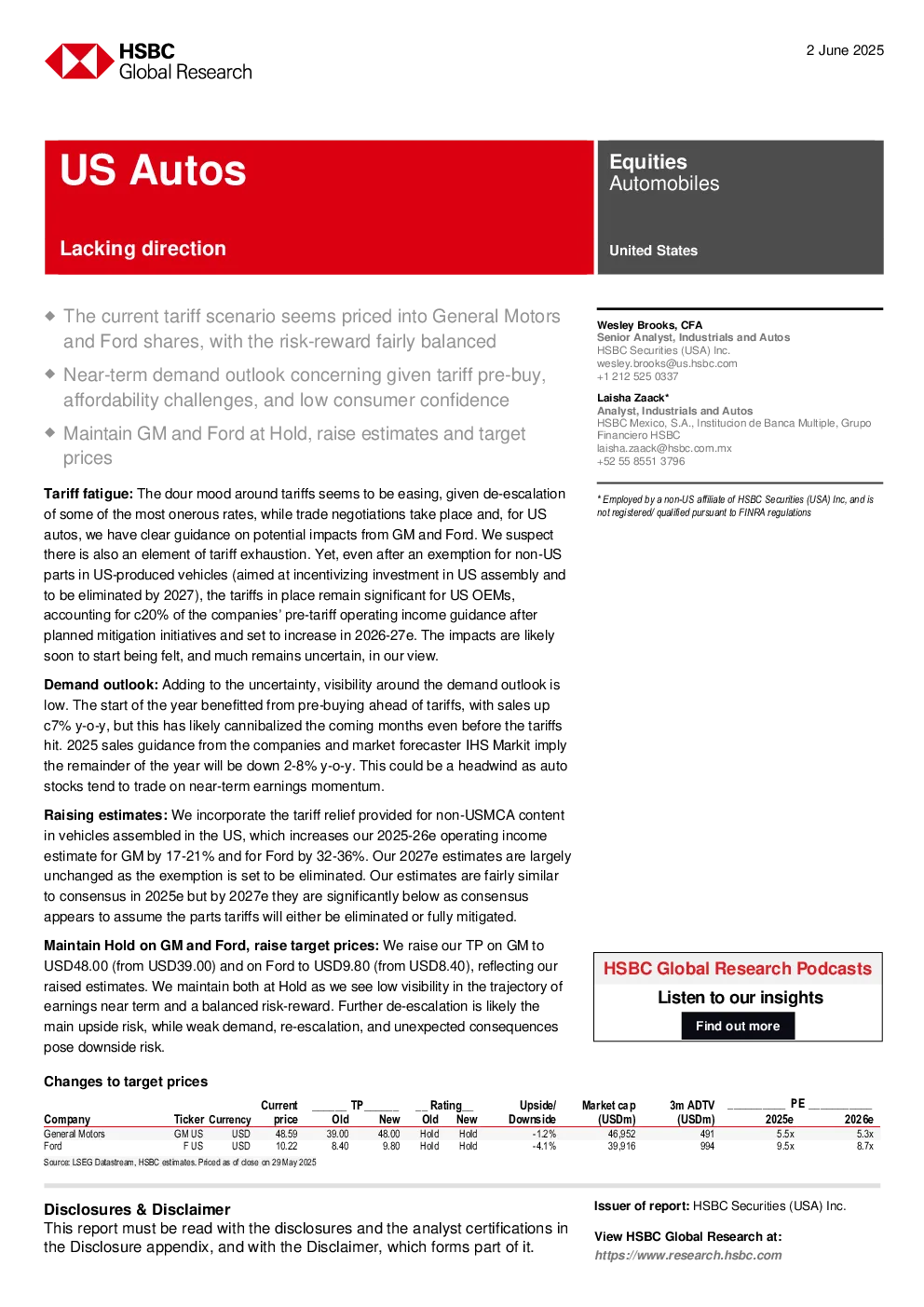
Issuer of report:HSBC Securities (USA) Inc.View HSBC Global Research at:https://www.research.hsbc.comListen to our insightsFind out moreHSBC Global Research PodcastsWesley Brooks, CFASenior Analyst, Industrials and AutosHSBC Securities (USA) Inc.wesley.brooks@us.hsbc.com+1 212 525 0337Laisha Zaack*Analyst, Industrials and AutosHSBC Mexico, S.A.,Institucion de Banca Multiple, GrupoFinanciero HSBClaisha.zaack@hsbc.com.mx+52 55 8551 3796* Employed by a non-US affiliate of HSBC Securities (USA) Inc, and isnot registered/ qualified pursuant to FINRA regulationsEquitiesAutomobilesUnited StatesMarket cap3m ADTV(USDm)(USDm)46,95249139,916994 ◆◆◆Current______TP________Rating__Upside/priceOldNewOldNewDownside48.5939.0048.00HoldHold-1.2%10.228.409.80HoldHold-4.1% __________PE___________2025e5.5x9.5x 2026e5.3x8.7x Current tariffsfairly reflected in consensus: c20% net EBIT impactTariffimpactscontinue todominate theautosdebate,even thoughGM and Ford both providedclear quantification of theirestimated2025impactswith 1Qreporting, unlike many EuropeanOEMs (seeWhat’s baked in: Looking for clear(er) space,12May2025). Thisprovided somerespite to the uncertainty, but much remains unknown,in our view, with the potential for tariffs tochange with a tweet and the real effects only likely starting to be felt now that inventories built inanticipationare beingrun down.Theimpacts remain significant.Despite somemajordifferences in their production footprintsand profitability, the guided gross and mitigated impacts of tariffs are very similar for GM andFord as a percentage of their2025EBIT guidance provided at the start of the year (pre-tariffs).At the midpoint of the tariff guidance, bothcompaniespoint to a c30% gross tariff burden, and ac20% net impact after expected mitigation impacts,which include a combination of selectiveprice increases and supply chainadjustments. Company tariff guidance came in close to our calculationsOur analysis below shows that our estimated tariff impacts were fairly accurate–extremely closeto what GM guided, while for Ford our estimate was below (and we now include the implied othertariffs in our model).The tariff situation remains fluid and newsflow on further trade deals couldquickly change thecalculations. As such, we continue to refer to our detailed tariff and pricemitigation calculations,where we estimated the tariffs for each company from the bottom up.Ifyou would like to see our working model,please contact us.Estimated tariff impactsvscompany guidance(2025e)USDmHSBC-estimated tariff on:Imports from Mexico and CanadaImports from AsiaSteel &aluminiumHSBC-estimated gross tariff impactsImplied additional tariffs not estimatedCompany gross tariff guidanceCredit for tariffs on imported content in US-assembled vehiclesSource: Company data, HSBC estimatesWhere tonext?Outlook seems balancedWith GM shares down 20% and Forddown 9%fromNovemberhighsbut up14% and18%,respectively, from recentAprillows, we believe the impacts from auto tariffs currently in placearefairlypriced in,based on 2025 estimates. However, therisk-reward looks well balanced,andwe struggle to have conviction on where the shares go from here.The main positive catalyst for the shares is likely de-escalation.Thishas been a key driverof the broader market, but so far the autos sector has not been included in tariff pauses related totrade deal negotiations. The main relief providedto the auto sectortodatehas been anexemption (in the form of a credit) for most imported content in cars assembled in the US in2025.We think this goes in the negative columnfor now,asthis credit isset toreduce byone-thirdin April 2026 andbeeliminated in 2027, which means that our earnings estimates for GMand Ford decline from 2025e to 2027e. We question how much of this content couldbe on-shored in such a short time frame, and whether there will be an appetite to make significantinvestments that would bear fruit only near the end of the current administration’sterm. GMFord2,4081,1151,4832594844554,3751,8291256714,5002,5001,6952,298 3 Negative catalystsabound andincludea re-escalation in tariffs,potentially weaker-than-expected earnings givena demand hangover after a significant demand pull-forward in JanuarytoApril and the beginning of tariff impacts being felt, supply chain disruptions, lower cashreturns to shareholders near term (GM pausedtheaggressive sharebuyback programthatwasa key driver of outperformance last year), and the market starting to price in higher tariffs in2026-27e.Demand outlook uncertainNew-car sales in the US were particularly strong in the firstfourmonths of the year,up7% y-o-yon a seasonally adjusted basis,with a 16.6m SAAR (17.8m in March).Wheresalesgo fromhere is uncertain. Cox Automotive forecasts the May SAAR at c16.0m, implying a significantcooling m-o-m but still slight 0.6% growthvstheprior-yearquarter.For 2025,GM and Fordsaidontheir 1Q earnings calls that they seea 15.5-16.0m SAAR,whichwe estimateimpliesa 15.0-15.5mSAARrangefor