AI智能总结
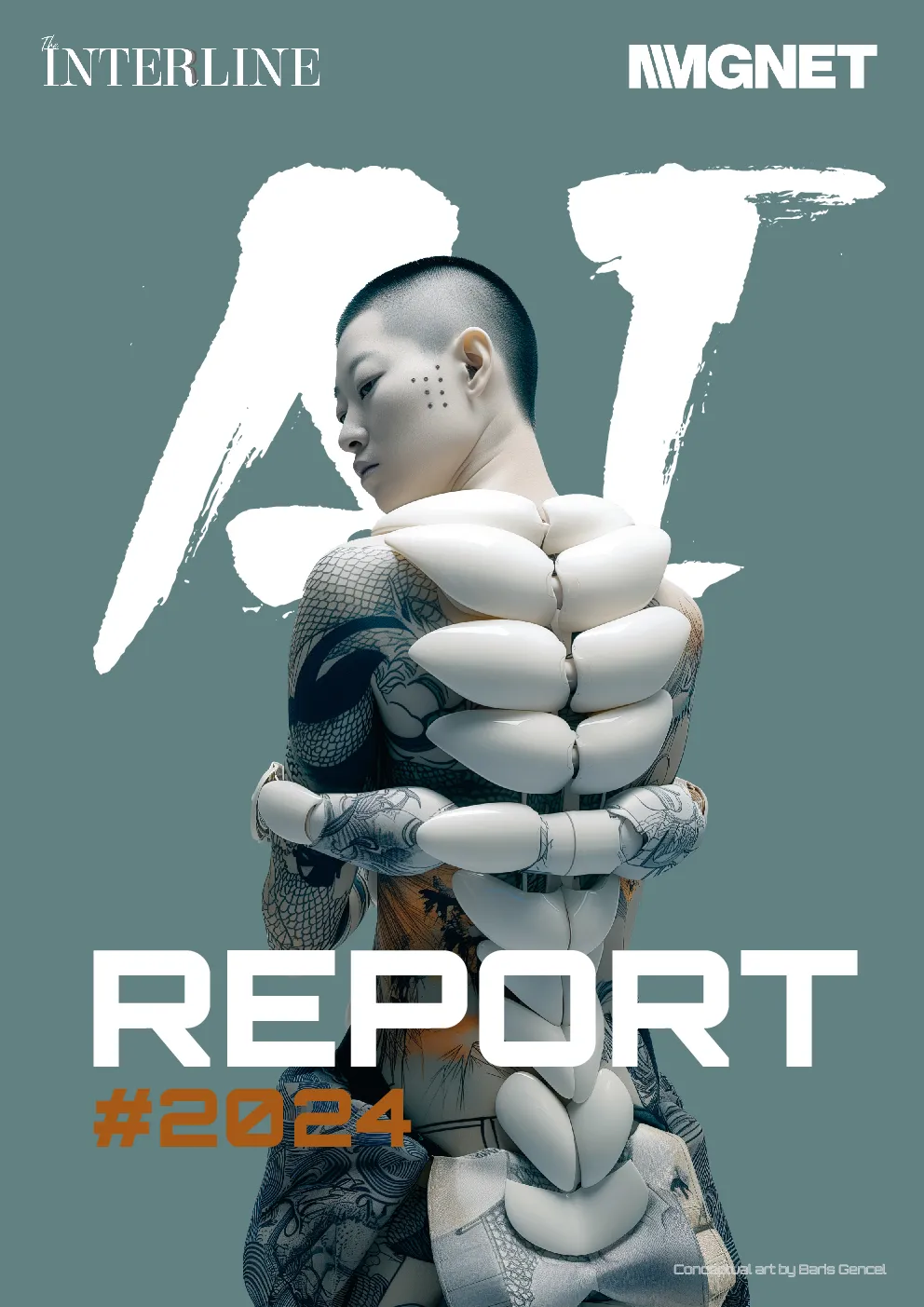
Conceptual art by Baris Gencel WELCOME TO THE BEGINNING OF OUR JOURNEY TO CHART THEEVOLUTION OF ARTIFICIAL INTELLIGENCE, AND UNDERSTAND ITSPLACE IN FASHION IN 2024 AND BEYOND.BY BEN HANSON,EDITOR-IN-CHIEF, THE INTERLINEAs technology hype waves go, there’s onlyone in recent memory that equals thefervourthat’s currently swirling aroundarti昀椀cial intelligence. And that’s the dot comrush and the rise of the internet.Whether a direct comparison between AIand the web is accurate or useful is honestlybeside the point: as a business you simplyneed an AI strategy in 2024 the same wayyou needed a web strategy in the late 1990s.Which is to say that it feels, today, likeeveryoneis demanding an immediateanswer from you, to an evolving questionwhere the end state is essentially impossibleto predict.Try to think about it like this: without thebene昀椀t of the hindsight we all now have,would you have been able to forecast when,where,and how deeply the昀氀edglinginternet was going to change our personaland professional lives? Would I?Could anyone have really seen, looking at aloosecohort of scrappy startups andscientists,how a synergy of software,INTRODUCINGTHE AGE OF AIThe front cover artwork for this publication was designed byBaris Gencel, an AI creator who now serves as GroupDirector for Digital Transformation & Innovation at Lanvin Group. Throughout this report you will 昀椀nd a mixture oftraditional photography, art, and illustration, as well as AI-generated elements across all those categories. TheInterline will continue to commission artists for all of our downloadable reports, and we endeavour, whereverpossible, to use AI tools that are trained on licensed content for which original artists are compensated in some way -although the setup of AI services and the uncertain provenance of AI training data makes this di昀케cult to guarantee.Images & art 2hardware, protocol and infrastructure wouldunlock everything from remote working andstreaming media to the gig economy andprogressive web applications?With any ill-de昀椀ned question with a shorttimelinefor responding,it’s extremelydi昀케cult to tell, in the current moment,whether your developing answer is headingin the right direction or not. Are you doing theright thing with AI here and now, consideringhow important it could eventually become? Isanyone? And are they doing it by design or byluck?All the same, just as the word on everyone’slips in my late teens was “online,” right nowinvestors,analysts,partners,users,communities, media, lawyers - everyonewantsto know where you,as anorganisation, stand on AI. And like the frenzyaround the web, “waiting and seeing” feelsanalogous to letting a potentially epoch-de昀椀ning moment pass you by.Whatever you do, the market says, youshould be working to put AI in it. Not in thefuture. Today. 3generative AI models. And even establishedvendorsof enterprise platforms andapplications have made rapid moves tointegrate AI capabilities into their existingsolutions where they see opportunities toeither change the end user experience or too昀昀er new ways to manipulate, interact with,and surface insights from data.So the race is on for AI toolmakers in fashion- at a scale and at a pace that re昀氀ects a similartransition the wider world is undergoing,whereby AI is breaking free of the con昀椀nesof dedicated apps and becoming integratedinto a wide range of applications, services,devices, and appliances.If we want any further evidence, frombeyond the walls of fashion, that AI is nowseen as the next wave of technology as awhole, we needn’t look any further than theCEOs of Microsoft and Google describing itas a galvanic, species-level event on thesame order as the taming of electricity or昀椀re. It’s also certainly noteworthy that 2024could be the last year where we’ll have theoptionto buy computers,phones,andtabletsthat are not also billed as“AIdevices”. And that’s without considering the昀氀edgling new category of wearable andambient AI hardware designed to run smallmodels on-device and then tap into largerones on the cloud.This is more than just a theoretical milestonewhen we think about how fashion uses itstop-end computing hardware. Today, themost acute demand for power comes from3D and digital product creation teams, whoneed dedicated GPUs (graphics processingunits) for local simulation and rendering. Arethese same teams about to start clamouringfor new hardware with both GPUs and NPUs(neural processing units) to run the AIassistantsdesigned to help them withinspiration,materialchoices,patterndevelopment and so on?It’s precisely this line of thinking that placesme squarely in the “AI optimist” camp,because of the simple rarity of innovationhappening on this kind of scale. Perhapscoincidentally, the introduction of the 昀椀rstGPU happened in the late 1990s - around thetime the dot com boom was at its apex. Andthechanges brought about by thatintroduction of task-speci昀椀c hardware arehard to overstate, from the predictable(huge leaps in real-time computer graphi