东非共同体可持续投资政策展望
 AI智能总结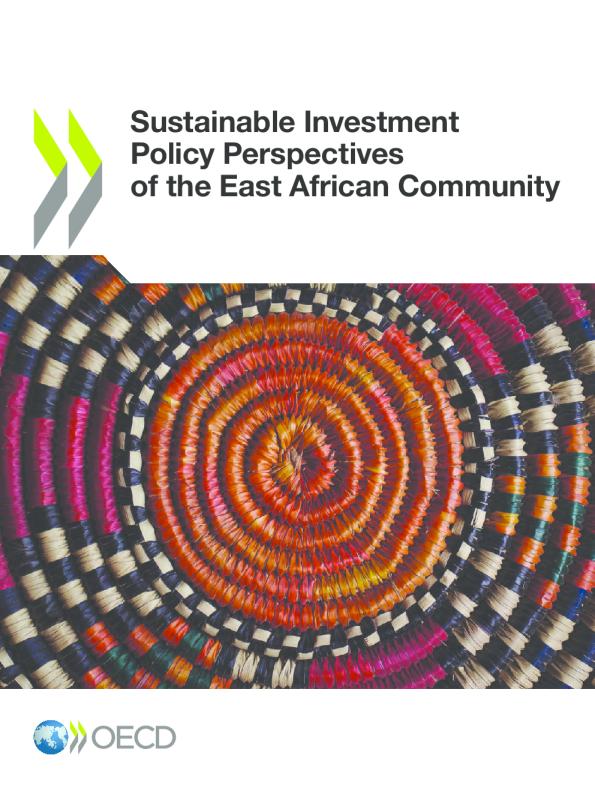
Sustainable InvestmentPolicy Perspectivesof the East AfricanCommunity This document, as well as any data and map included herein, are without prejudice to the status of or sovereignty overany territory, to the delimitation of international frontiers and boundaries and to the name of any territory, city or area. Photo credits:Cover © Irfan Quader/GettyImages. Corrigenda to OECD publications may be found at: https://www.oecd.org/en/publications/support/corrigenda.html.© OECD 2024 Attribution 4.0 International (CC BY 4.0)This work is made available under the Creative Commons Attribution 4.0 International licence. By using this work, you accept to be bound by the terms of this licence(https://creativecommons.org/licenses/by/4.0/).Attribution– you must cite the work.Translations– you must cite the original work, identify changes to the original and add the following text:In the event of any discrepancy between the original work and thetranslation, only the text of original work should be considered valid.Adaptations– you must cite the original work and add the following text:This is an adaptation of an original work by the OECD. The opinions expressed and arguments employed inthis adaptation should not be reported as representing the official views of the OECD or of its Member countries.Third-party material– the licence does not apply to third-party material in the work. If using such material, you are responsible for obtaining permission from the third party and forany claims of infringement.You must not use the OECD logo, visual identity or cover image without express permission or suggest the OECD endorses your use of the work.Any dispute arising under this licence shall be settled by arbitration in accordance with the Permanent Court of Arbitration (PCA) Arbitration Rules 2012. The seat of arbitration shallbe Paris (France). The number of arbitrators shall be one. Foreword This report introduces OECD tools and analysis to the East African Community (EAC). It is designed as abaseline diagnostic to explore ways to support investment climate reforms in the EAC while providing agreater focus on how to improve sustainable outcomes from investment. The reportis also intended toprovide insights to the EAC on the preparation of the EAC Investment Strategy, building on the existingEAC Investment Policy (2019). It also aims to support the revision of the EAC Model Investment Code(2006), which the EAC is currently undertaking to align it with the African Continental Free TradeAgreement (AfCFTA), and to provide an analysis of the EAC Model Investment Treaty (2016). The report starts with an analysis of the impact of foreign direct investment (FDI) on selected areas ofsustainable development in EAC Partner States based on the OECD FDI Qualities Indicators. The policyareas covered in this study include the legal framework for investment, including aspects related toprotection and non-discrimination of investment, measures to promote and facilitate investment, the useand design of investment incentives, and the promotion of responsible business conduct. The selectionofareas builds on the OECD Policy Framework for Investment (PFI) and highlights essential elements of aconducive investment climate, which promotes not only FDI but also sustainable development. The aim isnot to provide a ready-made reform agenda for Partner States in the region but rather to explore policyareas that influence investment and its impact. It provides a solid basis for developing a long-termprogramme of collaboration with the EAC. Under the overall guidance of Stephen Thomsen,Deputy Head of the Investment Division, the report hasbeen prepared by a team led by Alexandre de Crombrugghe, which included Katharina Böhm, TaufeeqKhan Marcos, Fernando Mistura, Yasmina Najem, Zoé Ryan and Ana Laura Sobalbarro Herrera, from theOECD InvestmentDivision, and Sebastian Weber from the OECD Centre for Responsible BusinessConduct. It benefitted from inputs and comments from Fares Al-Hussami, Kiara Blome, Marie Bouchard,Laura Kuusela and Juan Felipe Rodrigo. The report benefitted from editorial assistance and was preparedfor publication by Meral Gedik and Lucinda Pearson. The report was prepared in close collaboration withthe Secretariat of the EAC and benefitted from comments from Charles Omusana, Principal Economist onInvestment and Private Sector Promotion. The report has been financially supported by the Governmentof Finland. The report was submitted to the OECD Investment Committee for comments on 6September2024 andthen declassified by the Investment Committee on 11October2024. Tableof contents Foreword3 Executive summary 6 1 Overview of investment trends and impacts9 1.1. Introduction: Towards the development of an EAC Investment Strategy101.2. FDI trends and contribution to sustainable development in the EAC10References19Notes20 2 Aligning the legal framework for investment to sustainable development objectives21 2.1. International regime fo