学生数据隐私法案采纳最佳实践
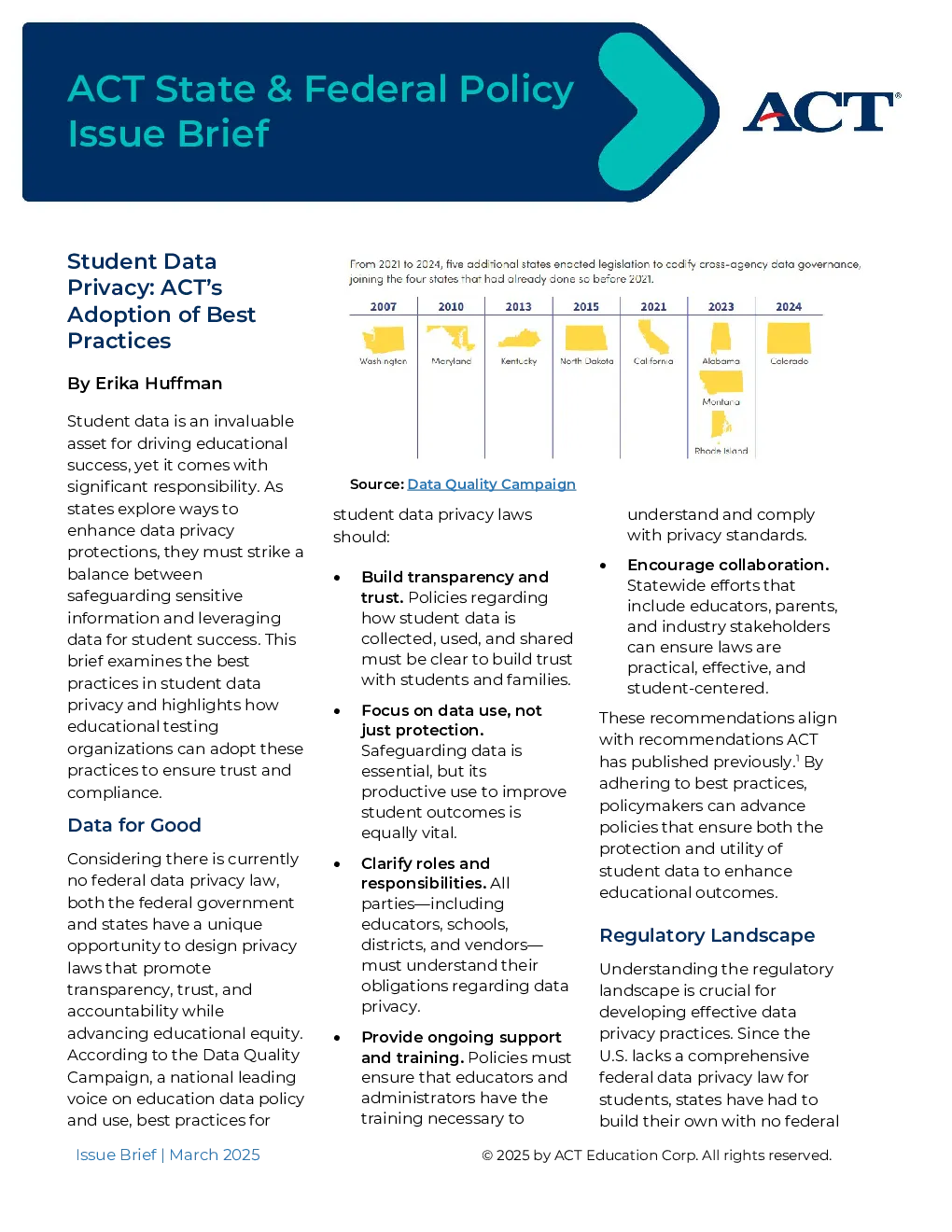
ACT State & Federal PolicyIssue Brief Student DataPrivacy: ACT’sAdoption of BestPractices By Erika Huffman Student data is an invaluableasset for driving educationalsuccess, yet it comes withsignificant responsibility. Asstates explore ways toenhance data privacyprotections, they must strike abalance betweensafeguarding sensitiveinformation and leveragingdata for student success. Thisbrief examines the bestpractices in student dataprivacy and highlights howeducational testingorganizations can adopt thesepractices to ensure trust andcompliance. Source:Data Quality Campaign understand and complywith privacy standards. student data privacy lawsshould: •Encourage collaboration.Statewide efforts thatinclude educators, parents,and industry stakeholderscan ensure laws arepractical, effective, andstudent-centered. •Build transparency andtrust.Policies regardinghow student data iscollected, used, and sharedmust be clear to build trustwith students and families. •Focus on data use, notjust protection.Safeguarding data isessential, but itsproductive use to improvestudent outcomes isequally vital. These recommendations alignwith recommendations ACThas published previously.1Byadhering to best practices,policymakers can advancepolicies that ensure both theprotection and utility ofstudent data to enhanceeducational outcomes. Data for Good Considering there is currentlyno federal data privacy law,both the federal governmentand states have a uniqueopportunity to design privacylaws that promotetransparency, trust, andaccountability whileadvancing educational equity.According to the Data QualityCampaign, a national leadingvoice on education data policyand use, best practices for •Clarify roles andresponsibilities.Allparties—includingeducators, schools,districts, and vendors—must understand theirobligations regarding dataprivacy. Regulatory Landscape Understanding the regulatorylandscape is crucial fordeveloping effective dataprivacy practices. Since theU.S. lacks a comprehensivefederal data privacy law forstudents, states have had tobuild their own with no federal •Provide ongoing supportand training.Policies mustensure that educators andadministrators have thetraining necessary to policies ensure transparencyby providing clear, accessibleprivacy policies and obtainingany needed consents beforesharing personal data. ACTfirmly believes in theprotection of student datawhile also supportingstudents’ ability to benefiteducationally. An ACT score isa better predictor of collegesuccess than high school GPAalone, so even in the face oftest-optional policies inuniversity admissions, an ACTscore may be the gateway toeducational opportunity formany students who otherwisemight not consider college.2Additionally, it is importantand consistent with ACT’smission to share informationwith those who can provideeducational or careeropportunities to our studentusers. ACT Recruit Me(formerly the EducationalOpportunity Service, “EOS”) isan optional program thatprovides users whoaffirmatively opt in withinformation from participatingorganizations like colleges,universities, financial aid andscholarship agencies,government agencies, andorganizations that offereducational, communityinvolvement, extracurricular,and career opportunities andservices. guidance. For example, onlynine states have statutescodifying their datagovernance bodies, whileothers have establishedstructures through executiveorders, policies, or operatingpractices. technology solutions thatcombine research, datascience and strategicenrollment services to servemore than 2,000 highereducation institutions. After astudent opts in to ACT RecruitMe, Encoura may licensepersonal information toparticipating organizationswho are required to use it forthe sole purpose of sharinginformation about theirprograms. Personalinformation shared mayinclude contact information,educational information, andACT test score range (notspecific scores but a rangethey fall within) to helpparticipating organizationsidentify candidates foropportunities. The Children’s Online PrivacyProtection Act (COPPA),enacted in 2013, is a federallaw that sets foundationalstandards for protectingchildren's data. However, theevolving political landscapehas heightened attention onchildren’s data privacy,spurred by high-profilebreaches and increased onlineactivity among youth. Recentlegislation like the AmericanPrivacy Rights Act (APRA) andthe revision of COPPA, theChildren and Teens’ OnlinePrivacy Protection Act(CTOPPA), reflects growingfederal interest. While APRAprovides a broad frameworkfor all individuals, CTOPPAfocuses on enhancingprotections for minors.Together, these laws aim toreshape how personal data ismanaged online, emphasizingsecurity and productivity. It is also important to notethat students who opt intoACT’s Recruit Me programenroll in college at higherrates.3 Recommendations Student data privacy is criticalfor ensuring trust, equity, andsuccess in education. Byadhering to best practices,a