您的浏览器禁用了JavaScript(一种计算机语言,用以实现您与网页的交互),请解除该禁用,或者联系我们。 [世界银行]:Lessons Learned Exercise User Guide - 发现报告

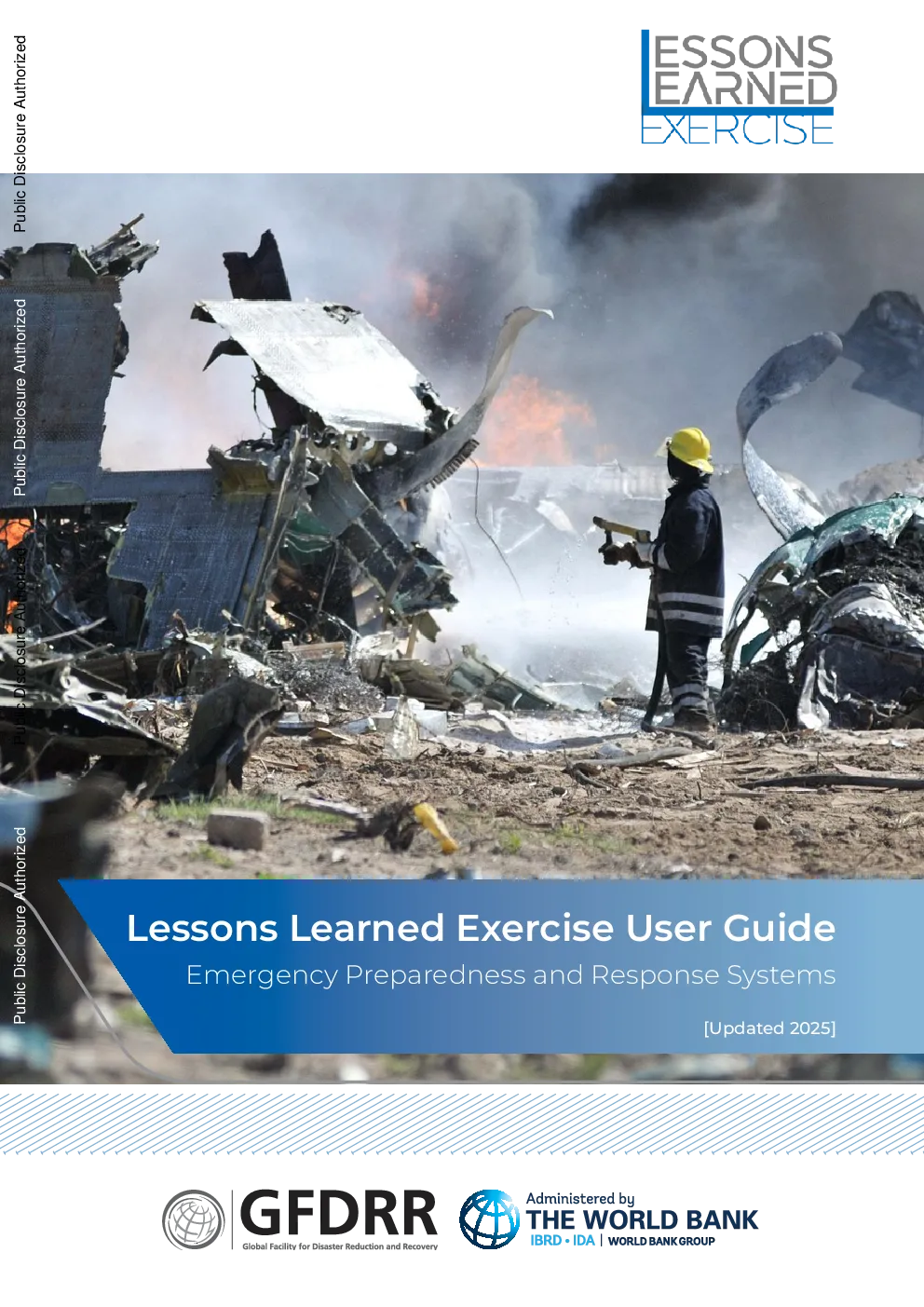
Lessons Learned Exercise User Guide

信息技术 2025-03-17 世界银行 silence @^^@💗
报告封面

Emergency Preparedness and Response Systems [Updated 2025] Disclaimer 2025 International Bank for Reconstruction and Development / The World Bank1818 H Street NW, Washington, DC 20433Telephone: +1-202-473-1000; Internet: www.worldbank.org Some rights reserved. This work is a product of the staff of The World Bank and the Global Facility for Disaster Reduction andRecovery (GFDRR). The findings, interpretations, and conclusions expressed in this work do not necessarilyreflect the views of The World Bank, its Board of Executive Directors, or the governments they represent. TheWorld Bank does not guarantee the accuracy, completeness, or currency of the data included in this work anddoes not assume responsibility for any errors, omissions, or discrepancies in the information, or liability withrespect to the use of or failure to use the information, methods, processes, or conclusions set forth. Theboundaries, colors, denominations, and other information shown on any map in this work do not imply anyjudgment on the part of The World Bank concerning the legal status of any territory or the endorsement oracceptance of such boundaries. Nothing herein shall constitute or be construed or considered to be a limitation upon or waiver of the privilegesand immunities of The World Bank, all of which are specifically reserved. Rights and Permissions.This work is subject to copyright. Because The World Bank encourages disseminationof its knowledge, this work may be reproduced, in whole or in part, for noncommercial purposes as long as fullattribution to this work is given. Attribution.Please cite this work as follows: World Bank.Lessons Learned Exercise User Guide: EmergencyPreparedness and Response Systems. Updated 2025. Washington, D.C.: World Bank Group. Credits: The WorldBank Group. Translations.If you create a translation of this work, please add the following disclaimer along with theattribution: This translation was not created by The World Bank and should not be considered an official WorldBank translation. The World Bank shall not be liable for any content or error in this translation. Adaptations.If you create an adaptation of this work, please add the following disclaimer along with theattribution: This is an adaptation of an original work by The World Bank. Views and opinions expressed in theadaptation are the sole responsibility of the author or authors of the adaptation and are not endorsed by TheWorld Bank. Third-party content.The World Bank does not necessarily own each component of the content containedwithin the work. The World Bank therefore does not warrant that the use of any third-party-owned individualcomponent or part contained in the work will not infringe on the rights of those third parties. The risk of claimsresulting from such infringements rests solely with you. If you wish to reuse a component of the work, it is yourresponsibility to determine whether permission is needed for that reuse and to obtain permission from thecopyright owner. Examples of components can include, but are not limited to, tables, figures, or images. All queries on rights and licenses, including subsidiary rights, should be addressed to World Bank Publications,The World Bank Group, 1818 H Street NW, Washington, DC 20433, USA; e-mail: pubrights@worldbank.org Graphic design: Blue Robin Designs, LLCCover Photo: Debris image by pexels of pixabay Publication updated in 2025.For additional information, please contact:Mary Boyer: Program Lead, Emergency Preparedness & Response Thematic AreaUrban, Disaster Risk Management, Resilience and Landmboyer@worldbank.org CONTENTS ACKNOWLEDGEMENTS�����������������������������������������������5LIST OF ACRONYMS�������������������������������������������������61�INTRODUCTION��������������������������������������������������82�EMERGENCY PREPAREDNESS AND RESPONSE FRAMEWORK OVERVIEW��������������������103�LESSONS LEARNED EXERCISE�������������������������������������������11OVERVIEW����������������������������������������������������������������������������������������11LLE METHODOLOGY�������������������������������������������������������������������������������12OBJECTIVES OF THE LLE���������������������������������������������������������������������������13GOOD PRACTICES WHEN IMPLEMENTING AN LLE�����������������������������������������������������134�CROSS-CUTTING ISSUES���������������������������������������������18INCLUSIVE DISASTER RISK MANAGEMENT AND GENDER EQUALITY��������������������������������������18ENHANCING EP&R IN FCV SETTINGS�����������������������������������������������������������������19LESSONS LEARNED FROM THE COVID-19 PANDEMIC��������������������������������������������������20COMMUNITY-BASED DRM��������������������������������������������������������������������������225�ENGAGEMENT PROCESS���������������������������������������������23LLE VERSUS R2R����������������������������������������������������������������������������������23METHODOLOGICAL FRAMEWORK AN