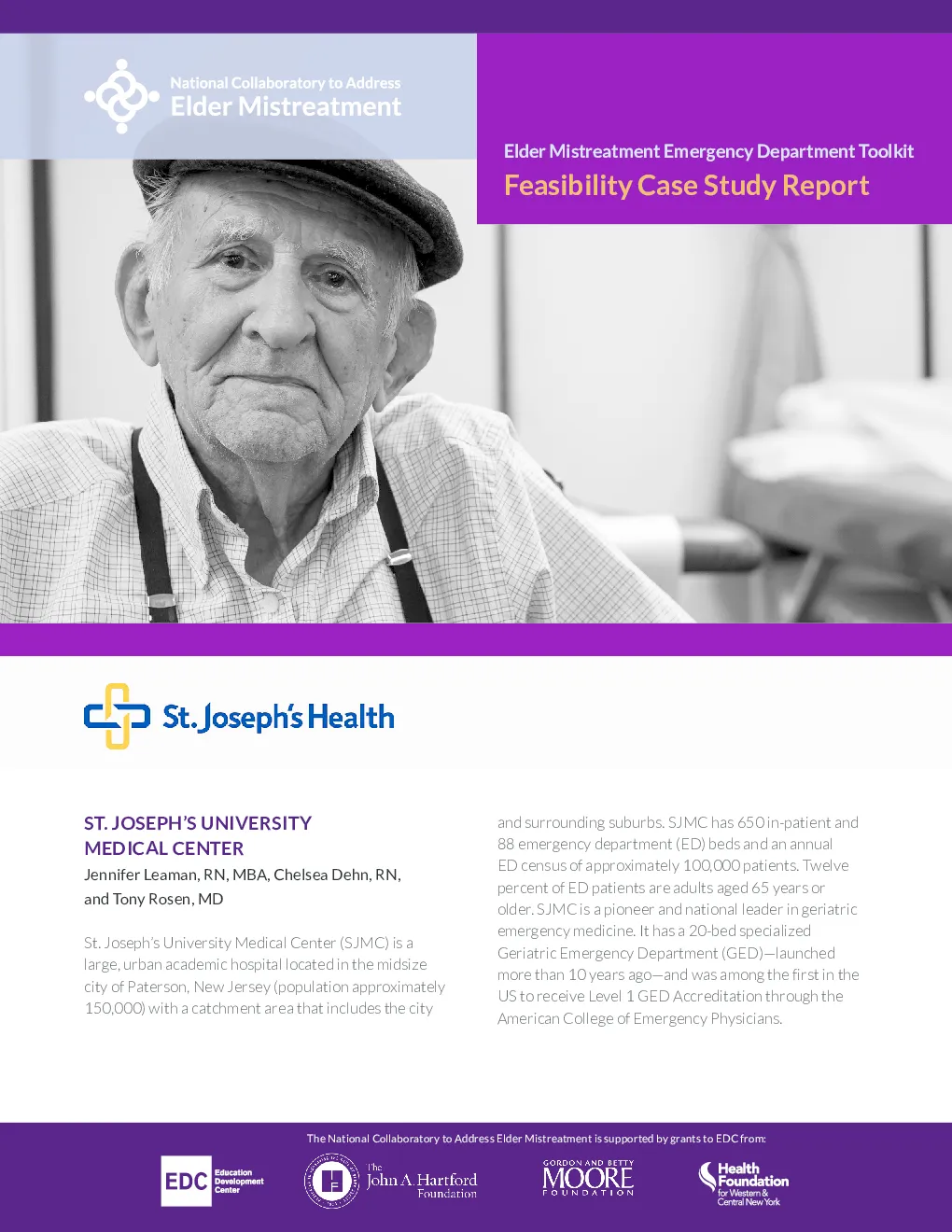
St. Joseph’s University Medical Center (SJMC) implemented the Elder Mistreatment Emergency Department (EMED) Toolkit in its Geriatric Emergency Department (GED) to improve elder mistreatment identification and response. Prior to implementation, elder mistreatment screening was not routine, and staff reported barriers such as lack of time, reliance on family members for information, and communication difficulties.
Implementation Process:
- Toolkit Adoption: The EMED Toolkit included a two-step screening process: a brief screen administered by nurses and a full screen conducted by geriatric nurse navigators.
- Training: Bedside nurses received 30-minute training on the brief screen, while geriatric nurse navigators underwent a four-hour training. Knowledge improved post-training.
- Workflow Integration: The brief screen was integrated into the electronic medical record (EMR), but initial data entry was not required, leading to low adherence. This was later modified to improve screening rates.
- Community Partnerships: SJMC engaged with Adult Protective Services (APS), Aging and Disability Resource Connection, and local law enforcement to address identified cases.
Key Findings:
- Screening Rates: The brief screen was administered to 59% of eligible older adult patients, with a 1.5% positivity rate. Screening rates increased significantly after requiring EMR data entry.
- Case Identification: Geriatric nurse navigators identified 11 cases of elder mistreatment, with 10 referred to APS or law enforcement.
- Staff Knowledge and Attitudes: Staff reported improved awareness and confidence in identifying elder mistreatment, though baseline knowledge was already strong.
- ED Operations: Implementation did not disrupt ED functions, with no significant changes in length of stay, admissions, or 30-day returns to the ED.
Challenges and Lessons:
- EMR Integration: While helpful, integrating the screening tool into the EMR was challenging and required IT support.
- Data Standardization: Nurses did not consistently enter data in a standardized fashion, complicating analysis.
- Screening Protocol Adherence: The two-step screening protocol was not always followed, with missed opportunities for full screening.
Future Directions:
- EMR Enhancements: Building the full screen into the EMR could improve protocol adherence.
- Training and Support: Additional training on data entry practices is needed.
- Dissemination Strategies: Strategies for ensuring protocol adherence and comprehensive screening should be developed for future implementations.