您的浏览器禁用了JavaScript(一种计算机语言,用以实现您与网页的交互),请解除该禁用,或者联系我们。[世界卫生组织]:Global status report on drowning prevention 2024 - 发现报告

Global status report on drowning prevention 2024

2024-12-13世界卫生组织叶***
AI智能总结
查看更多
Global status report on drowning prevention 2024

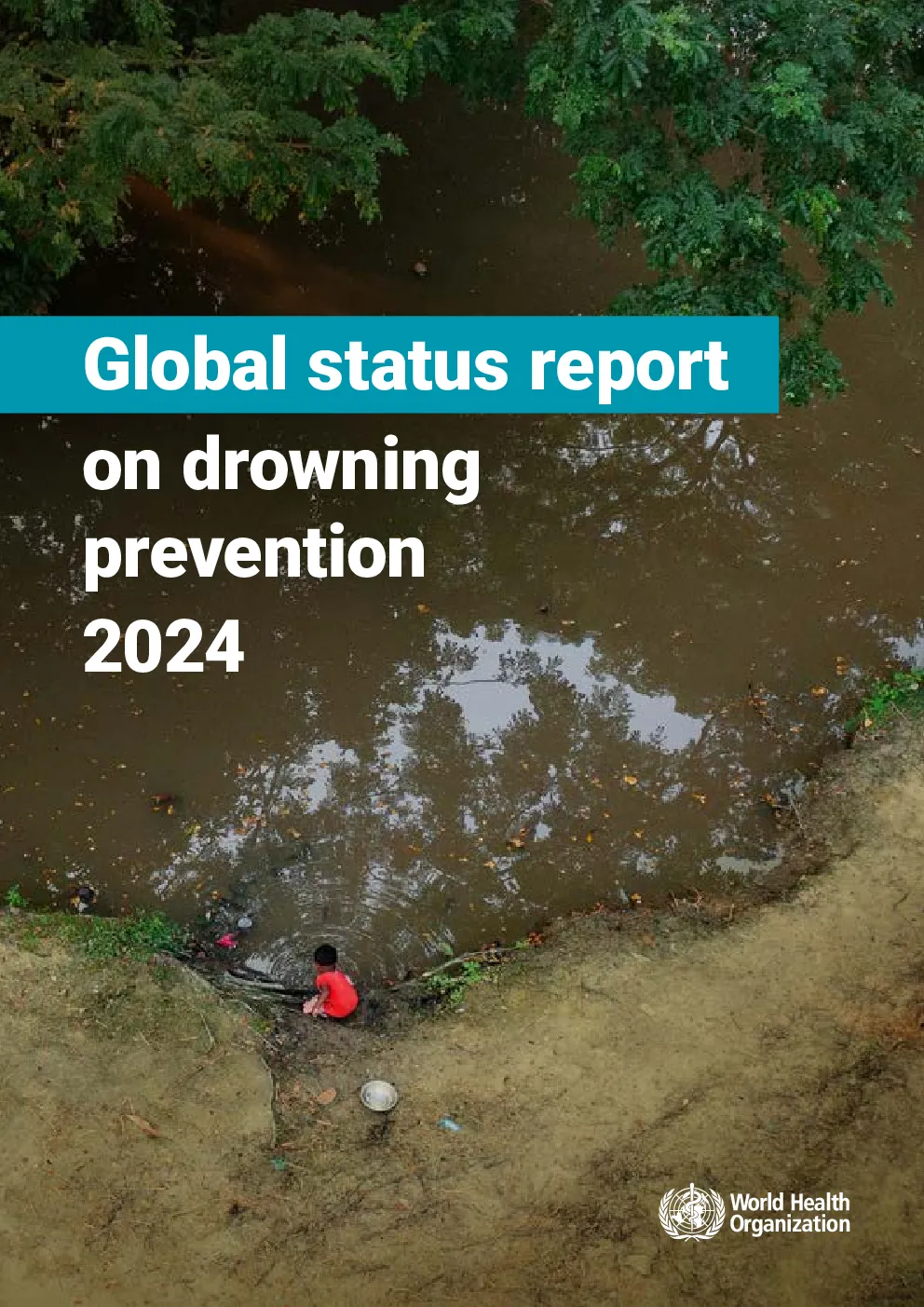
on drowningprevention2024 Global status report on drowningprevention2024 Global status report on drowning prevention 2024 ISBN 978-92-4-010396-2 (electronic version)ISBN 978-92-4-010397-9 (print version) © World Health Organization 2024 Some rights reserved. This work is available under the Creative Commons Attribution-NonCommercial-ShareAlike 3.0IGO licence (CC BY-NC-SA 3.0 IGO;https://creativecommons.org/licenses/by-nc-sa/3.0/igo). Under the terms of this licence, you may copy, redistribute and adapt the work for non-commercial purposes, providedthe work is appropriately cited, as indicated below. In any use of this work, there should be no suggestion that WHOendorses any specific organization, products or services. The use of the WHO logo is not permitted. If you adaptthe work, then you must license your work under the same or equivalent Creative Commons licence. If you create atranslation of this work, you should add the following disclaimer along with the suggested citation: “This translationwas not created by the World Health Organization (WHO). WHO is not responsible for the content or accuracy of thistranslation. The original English edition shall be the binding and authentic edition”. Any mediation relating to disputes arising under the licence shall be conducted in accordance with the mediation rulesof the World Intellectual Property Organization (http://www.wipo.int/amc/en/mediation/rules/). Suggested citation.Global status report on drowning prevention 2024. Geneva: World Health Organization; 2024.Licence:CC BY-NC-SA 3.0 IGO. Cataloguing-in-Publication (CIP) data.CIP data are available athttps://iris.who.int/. Sales, rights and licensing.To purchase WHO publications, seehttps://www.who.int/publications/book-orders.To submit requests for commercial use and queries on rights and licensing, seehttps://www.who.int/copyright. Third-party materials.If you wish to reuse material from this work that is attributed to a third party, such as tables,figures or images, it is your responsibility to determine whether permission is needed for that reuse and to obtainpermission from the copyright holder. The risk of claims resulting from infringement of any third-party-ownedcomponent in the work rests solely with the user. General disclaimers.The designations employed and the presentation of the material in this publication do not implythe expression of any opinion whatsoever on the part of WHO concerning the legal status of any country, territory, cityor area or of its authorities, or concerning the delimitation of its frontiers or boundaries. Dotted and dashed lines onmaps represent approximate border lines for which there may not yet be full agreement. The mention of specific companies or of certain manufacturers’ products does not imply that they are endorsedor recommended by WHO in preference to others of a similar nature that are not mentioned. Errors and omissionsexcepted, the names of proprietary products are distinguished by initial capital letters. All reasonable precautions have been taken by WHO to verify the information contained in this publication. However, thepublished material is being distributed without warranty of any kind, either expressed or implied. The responsibility for theinterpretation and use of the material lies with the reader. In no event shall WHO be liable for damages arising from its use. This document has been produced with a grant from Bloomberg Philanthropies. The contents of this document arethe sole responsibility of the World Health Organization and can under no circumstances be regarded as reflecting thepositions of Bloomberg Philanthropies. Cover photo: Child collecting water in rural Bangladesh. © RNLI / Nihab Rahman Design and layout by Lushomo. Contents ForewordvAcknowledgementsviiAbbreviationsviiiExecutive summaryixIntroduction1About this report4A note on methodology7 Section 1:Current global drowning burden11 Drowning remains a major killer of children and young people12Drowning disproportionately affects low-income countries14Drowning deaths and rates are declining but the pace is too slow17 Age19Sex21Poverty and inequality23Occupational exposure23Climate-related risks24Transport on water25Migration and refuge-seeking25Intentional drowning deaths25 Section 2:Governance and coordination31 National focal points32National drowning prevention strategies33National coordination mechanisms36Sectoral engagement in drowning prevention38 National disaster risk management policies42Legislation for safety of passenger water-transport vessels44Legislation mandating lifejacket use46Legislation for swimming pool fencing47Alcohol regulations49 Section 4:Community level interventions51Installation of barriers near water53Swimming and water safety training54Day care services for pre-school children57Search and rescue services58Lifeguard services59First-responder training60Disaster warning systems61Freely available weather alerts62Building community disaste