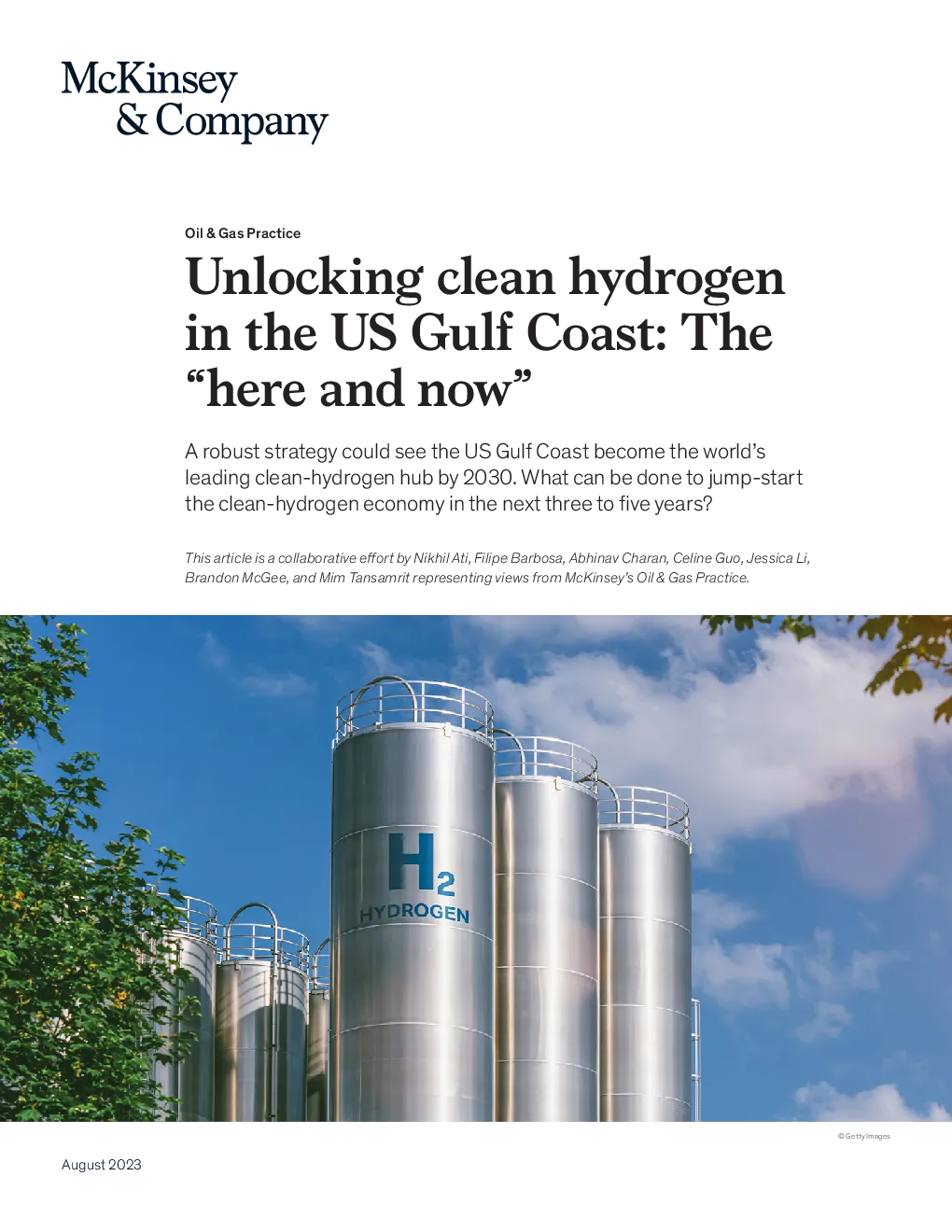
"Unlocking Clean Hydrogen in the US Gulf Coast: The 'Here and Now'"
Introduction: The US Gulf Coast (USGC) is poised to become a leading global hub for clean hydrogen production by 2030 through a robust strategy, supported by a recent report from the Center for Houston's Future. The region's potential to significantly reduce global CO2 emissions and create substantial economic benefits highlights the importance of immediate actions.
Global Context and Recent Developments: Global efforts towards net-zero emissions, highlighted by the need to limit global warming to below 1.5°C, and the energy crisis exacerbated by the COVID-19 pandemic and the invasion of Ukraine, have accelerated the push for clean hydrogen. Key policies such as the 2021 US Bipartisan Infrastructure Law and the 2022 Inflation Reduction Act have provided significant incentives for clean hydrogen production.
Potential Impact in Texas: In Texas alone, the demand for clean hydrogen could reach up to 21 million tons per annum (MTPA), potentially reducing global CO2 emissions by 220 million tons by 2050. The sector could also generate approximately 180,000 jobs across various sectors and contribute significantly to the state's GDP.
Current State of Clean Hydrogen in the USGC: The USGC is recognized as a prime location for clean hydrogen production due to its existing infrastructure, natural resources, and strategic location. The HyVelocity Hub initiative, comprising industry leaders, universities, and energy companies, has received encouragement from the US Department of Energy to advance clean hydrogen production in the region.
Focus Areas for Immediate Action: To jump-start the clean hydrogen economy within the next three to five years, four key sectors have been identified for focused demand creation:
-
Ammonia: Domestic use and exports are prioritized given the potential for high demand and export opportunities. The USGC's location and resources offer a competitive advantage in both blue and green ammonia production.
-
Petrochemicals and Refining: Utilizing hydrogen as a decarbonization tool for operations in the refining and petrochemical industries could unlock significant demand. Fuel switching from natural gas to clean hydrogen for heating is particularly promising.
-
Ground Transportation: Leveraging the region's extensive port and highway infrastructure, clean hydrogen could significantly reduce CO2 emissions in the ground transportation sector, especially in heavy-duty trucks, port drayage vehicles, and forklifts.
-
Power and Utilities: With Texas being a major electricity generator, there is a significant opportunity to integrate clean hydrogen into the grid and utilize it for load balancing and energy storage.
Strategies for Acceleration:
- Creating Demand: Focus on developing applications in these sectors, emphasizing cost-effective solutions and leveraging existing infrastructure.
- Leveraging the Inflation Reduction Act: Utilize the new provisions to set up and scale climate-friendly technologies, enhancing the economics of clean hydrogen production.
- Consortium Approach: Foster collaboration among stakeholders to share resources, optimize production, and facilitate the transition to cleaner energy solutions.
Conclusion: The US Gulf Coast has a unique opportunity to lead in clean hydrogen production. By focusing on these key areas and implementing strategic policies, the region can not only meet its environmental goals but also drive economic growth and innovation in the energy sector.