"The Power of Soil: Building a Regenerative Agriculture Business"
Overview:
Agreena, a Danish startup founded in 2018, is pioneering a farmer-centric ecosystem aimed at promoting regenerative agriculture practices worldwide. This approach seeks to mitigate greenhouse gas emissions from agriculture, which account for nearly one-third of global emissions, by enhancing soil health and sequestering carbon.
Challenges and Progress:
- Initial Challenge: Lack of established methods and standards for soil carbon programs. Since then, regulatory landscapes have evolved, but complexities have increased.
- Key Challenge: Mobilizing farmers to adopt regenerative practices, especially given the fragmented nature of agriculture and its low margins.
- Scaling Issues: Long sales cycles and difficulties in scaling due to the aforementioned challenges.
Agreena's Journey:
- Funding and Growth: Supported by investors like Giant Ventures, Agreena develops fintech and agtech solutions, expanding its soil carbon program.
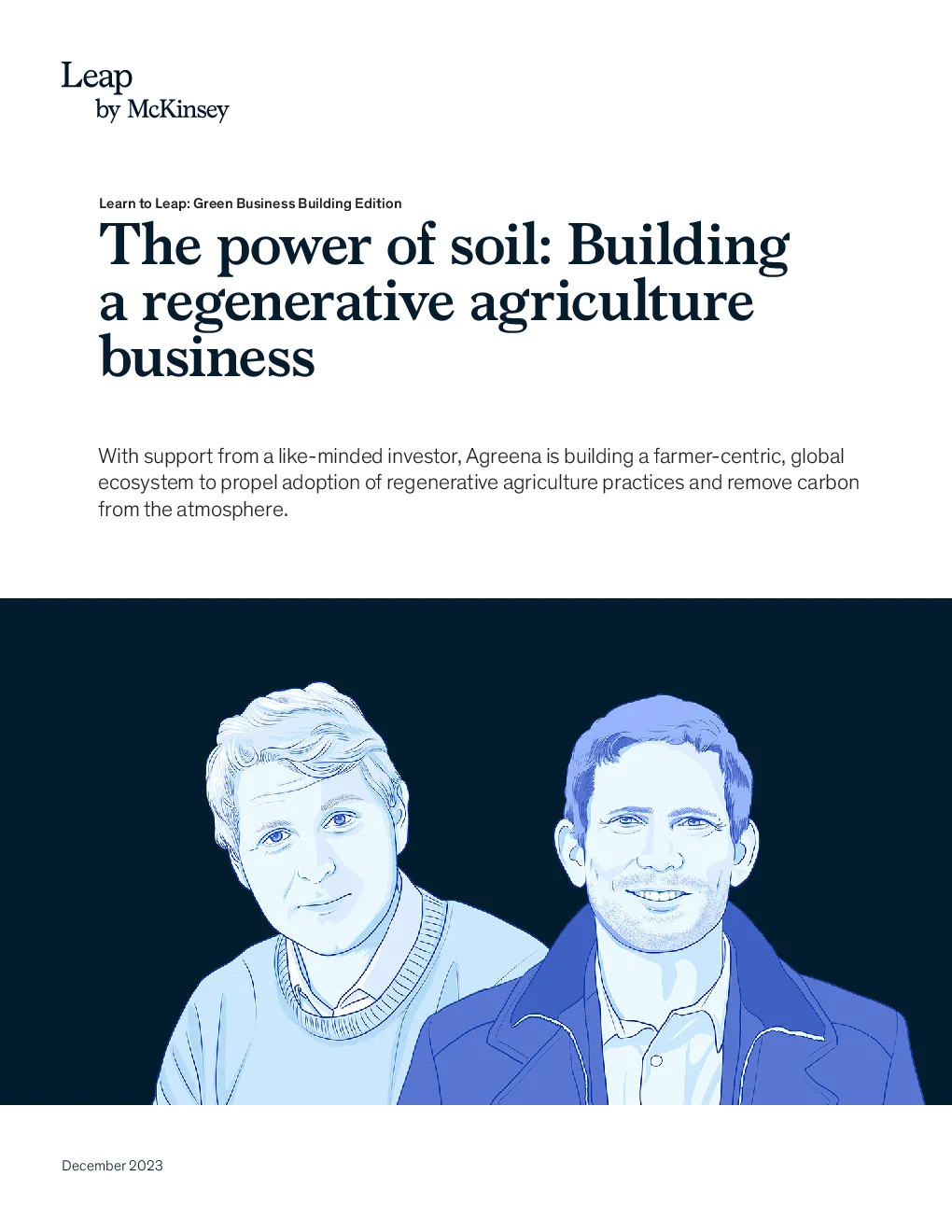
- Leadership: Simon Haldrup, CEO and cofounder, and Cameron McLain, cofounder and managing partner of Giant Ventures, discuss strategies for navigating the transition from start-up to scale-up, emphasizing the importance of strategic planning and capability building.
Industry Insights:
- Market Dynamics: The climate crisis presents significant challenges and opportunities, with a surge in sustainable business building.
- Investor Perspective: Venture capitalists like Giant Ventures see the reset in valuations as an opportunity, especially for companies that have maintained discipline and are focused on sustainable outcomes.
- Regulatory Environment: The need for international standards and robust verification techniques is highlighted as essential for the growth of voluntary carbon markets.
Agreena's Role:
- Trust Building: Agreena emphasizes the importance of trust in carbon sequestration and certification, focusing on technology integration and adherence to best practices for measurement and standards.
- Scaling Strategy: Early assembly of a senior leadership team facilitates rapid scaling while freeing up the founder team to address challenges effectively.
Future Outlook:
- Market Expansion: With a growing demand for high-quality carbon sequestration credits and a forecasted expansion in the voluntary carbon market, there is potential for significant growth in regenerative agriculture practices.
- Technological Innovation: Advances in satellite monitoring and other verification techniques are expected to facilitate scalability and trust in the carbon offset market.
Conclusion:
Agreena represents a significant step forward in addressing the environmental and economic challenges posed by traditional agricultural practices. By fostering a global ecosystem centered around regenerative agriculture, the company aims to mitigate climate change impacts while promoting sustainable and resilient farming practices.