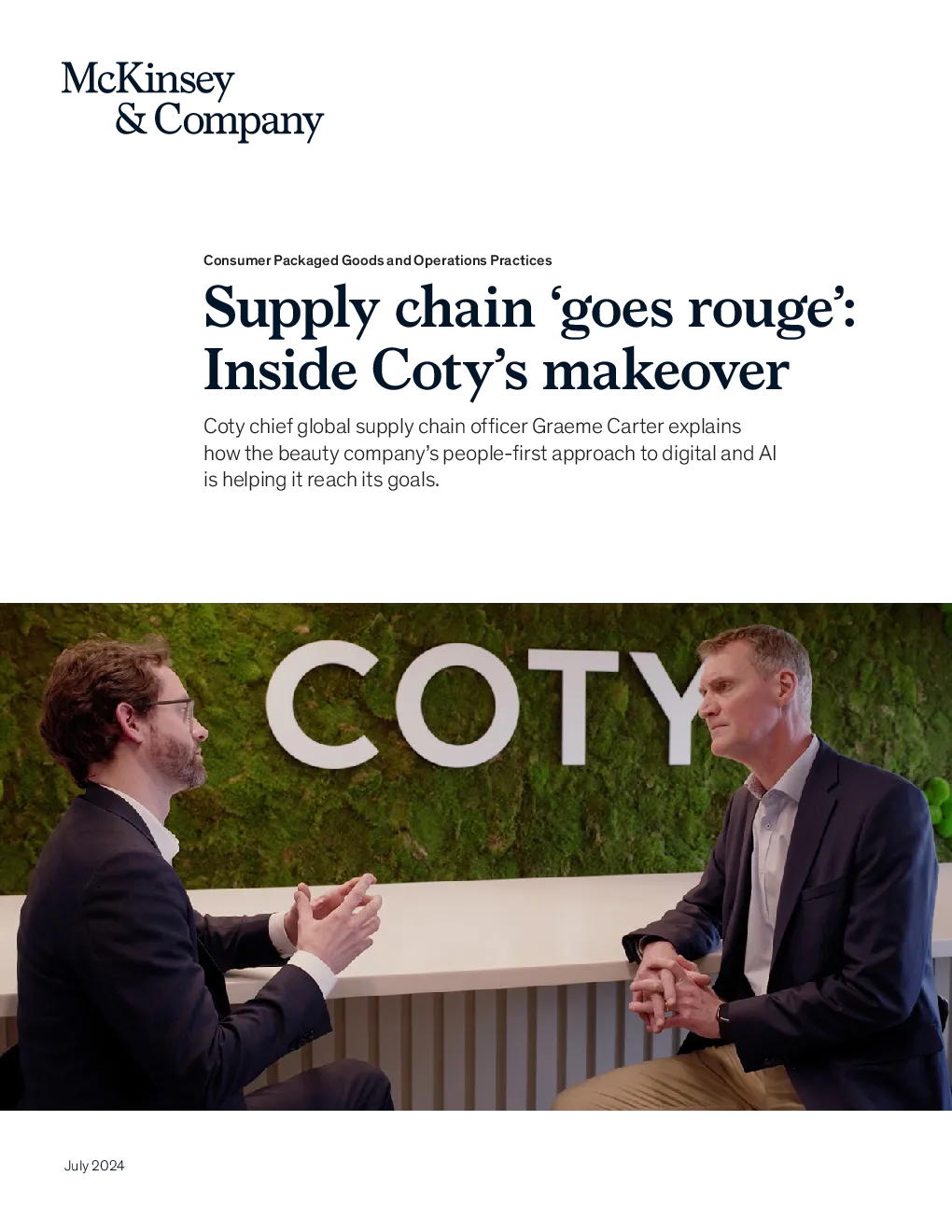
Coty's Financial and Supply Chain Transformation
Coty, an international beauty company owning and licensing prestigious brands like Burberry, Chloé, and Covergirl, underwent a significant financial and supply chain transformation. The company faced challenges in stagnating revenues, inefficiencies, and high costs before initiating a turnaround plan in 2019. Key aspects of this transformation include:
Financial Recovery: Under CEO Sue Nabi's leadership, Coty improved its connection with consumers, showcasing the passion and emotion behind its products, leading to increased revenue and growth.
Supply Chain Transformation: Recognizing the need for improvement in service delivery and inventory management, Coty introduced cross-functional teams to tackle key areas like long-term forecasting, short-term inventory allocation, and innovation sizing. The company also utilized "swat teams" to expedite order and supply processes. This approach highlighted the challenges of diverse systems and standards across the organization, leading to a digital transformation strategy focused on modernizing the operating model and incorporating advanced capabilities like machine learning and AI. Coty aimed to elevate its supply chain's efficiency, sustainability, and cost-effectiveness.
Digital and AI Integration: The integration of digital and AI tools is pivotal for Coty. These tools aid in managing complex consumer demands, tracking and tracing product origins, measuring carbon footprints, and forecasting demand. By digitizing data, Coty seeks to transform from relying on 'tribal knowledge' to leveraging digital insights for better decision-making and enhancing consumer service standards.
Future Vision: Coty's goal is to simplify, standardize, and centralize its supply chain to achieve scalability and develop cutting-edge digital solutions for future challenges. This vision emphasizes the critical role of the supply chain in driving value across the business ecosystem and fostering collaboration with partners for improved transparency and operational efficiency.
In summary, Coty's transformation involves strategic improvements in financial management, supply chain optimization, and the adoption of digital technologies to meet evolving consumer expectations and drive sustainable growth.