Eight characteristics of successful AI integration efforts
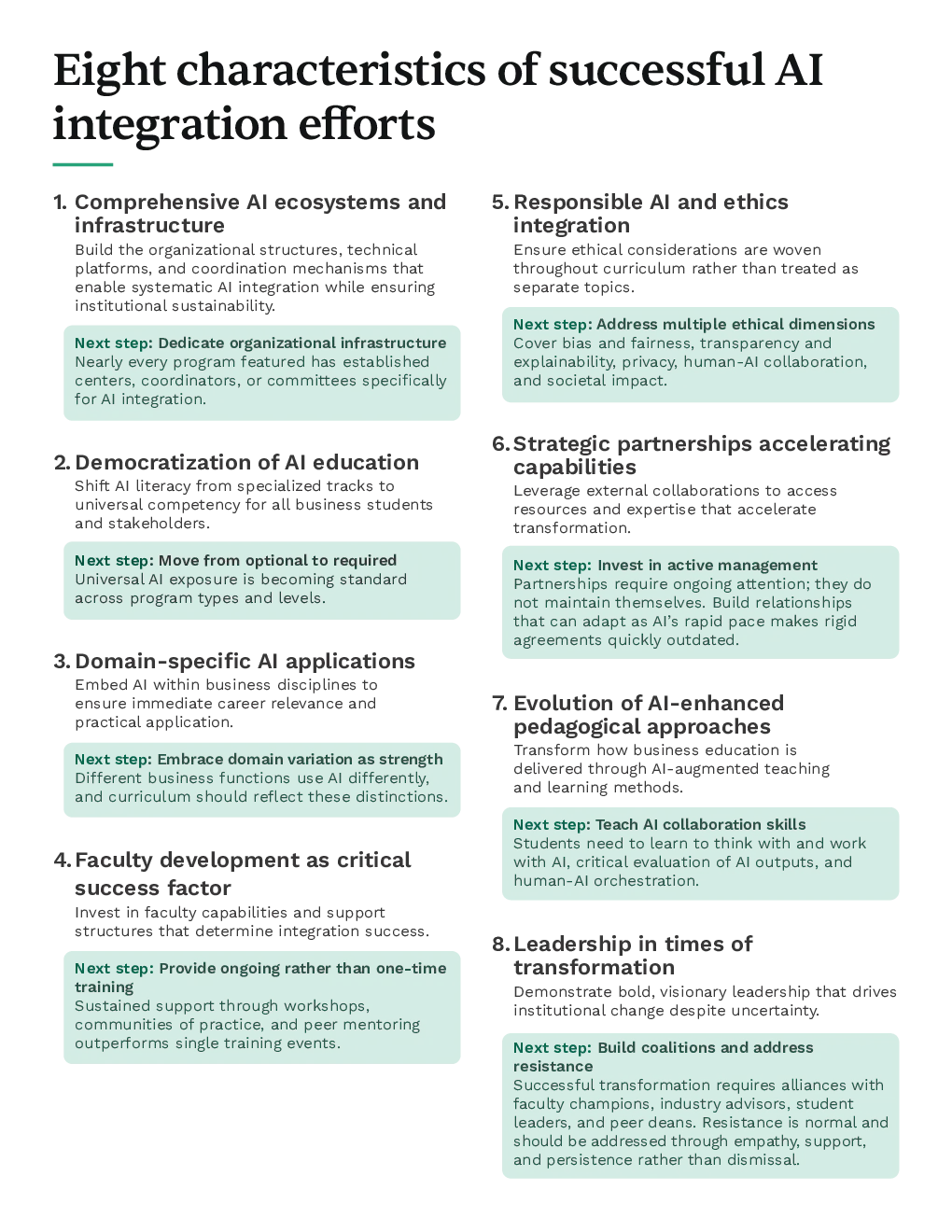
Next step: Address multiple ethical dimensionsCover bias and fairness, transparency andexplainability, privacy, human-AI collaboration, Next step: Dedicate organizational infrastructureNearly every program featured has established centers, coordinators, or committees specifically Next step: Move from optional to requiredUniversal AI exposure is becoming standard Next step:Invest in active managementPartnerships require ongoing attention; they do not maintain themselves. Build relationships Next step: Embrace domain variation as strengthDifferent business functions use AI differently,and curriculum should reflect these distinctions. Next step: Teach AI collaboration skillsStudents need to learn to think with and work with AI, critical evaluation of AI outputs, and Next step:Provide ongoing rather than one-timetraining Sustained support through workshops,communities of practice, and peer mentoringoutperforms single training events. Next step:Build coalitions and addressresistance Successful transformation requires alliances withfaculty champions, industry advisors, studentleaders, and peer deans. Resistance is normal and What this means for admissions,marketing, recruitment, and program AI is the first point of contact for many prospective candidates. Ethics and clarity are now part of brand trust. AI literacy is now a baseline expectation for every businessgraduate, not a specialization. AI is reshaping how programs are positioned within a school’sbroader portfolio. Next steps About the framework The 48 schools represent a snapshot of AI integration efforts at a moment in time, January 2026, andspan significant variation across multiple dimensions: •Research intensity:From R1 universities with billion-dollar research portfolios to regional institutionsfocused primarily on teaching.•Scale:From systems enrolling 88,000+ students to specialized schools with fewer than 4,000.•Funding models:The U.S. subset is public-leaning (25 public, 15 private), plus eight non-U.S. This diversity suggests that the themes, challenges, and effective practices identified in this report haverelevance beyond any single institutional type. Though the AI domain continues to move quickly, thestrategic principles, organizational approaches, and leadership lessons transcend specific technologies.