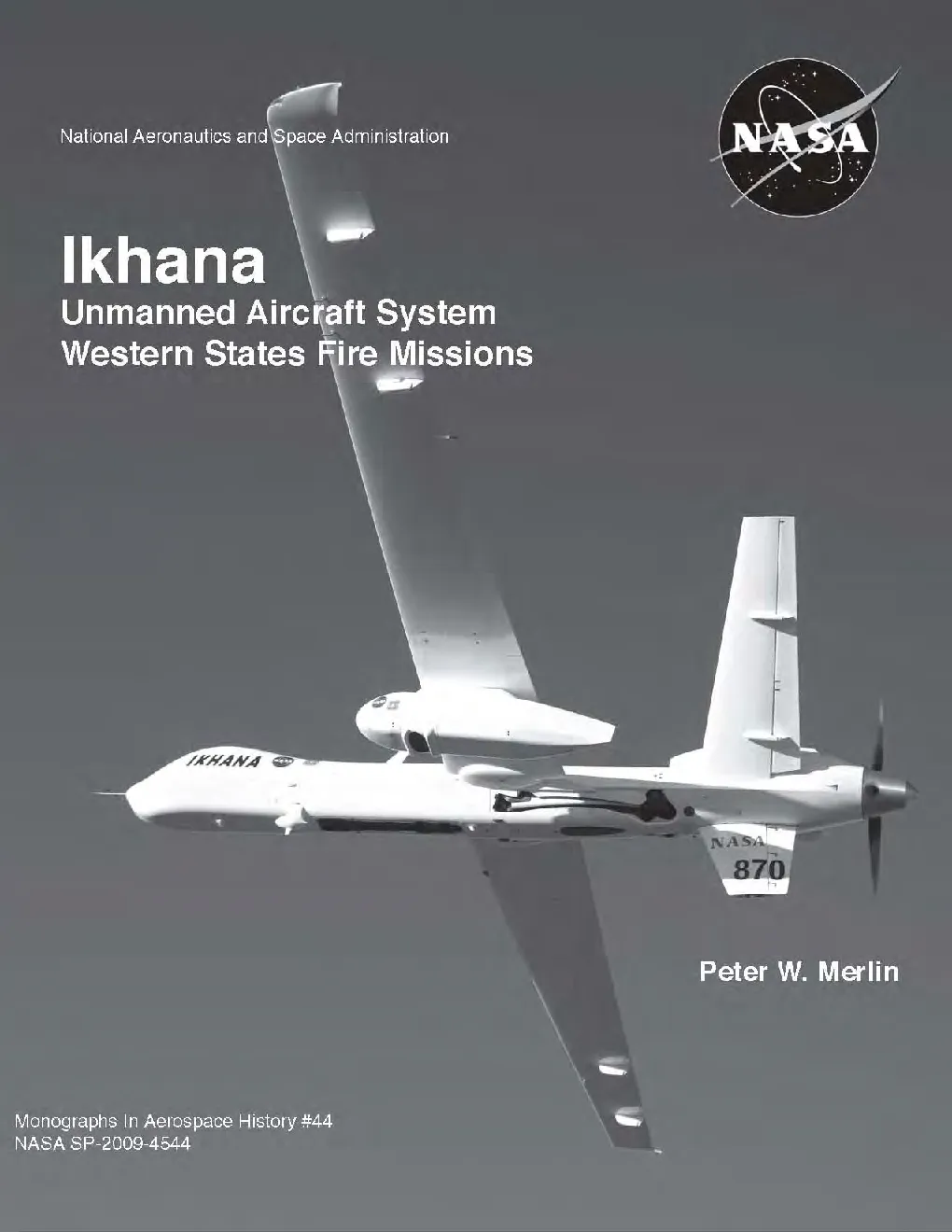
Ikhana Unmanned Aircraft SystemWestern States Fire Missions Peter W. Merlin National Aeronautics and Space AdministrationNASA History OfficeWashington, D.C.2009 Library of Congress Cataloging-in-Publication Data Contents Acknowledgements............................................................................................................................. IVPreface...................................................................................................................................................VIntroduction....................................................................................................................................... VIIChapter One...........................................................................................................................................1Don’t Fear the ReaperChapter Two.........................................................................................................................................19Chariots of FireChapter Three.......................................................................................................................................39The Fire Down BelowChapter Four........................................................................................................................................63After the FireAppendices...........................................................................................................................................73Bibliography........................................................................................................................................83Index...................................................................................................................................................92NASA History Publications.................................................................................................................94 Acknowledgments A great many people helped make this book pos-sible. I am especially indebted to Tony Springer of theAeronautics Research Mission Directorate at NASAHeadquarters for sponsoring this project. Ikhanaproject manager Thomas K. Rigney, lead operationsengineer Gregory P. Buoni, project engineer KathleenHowell, and project pilots Mark Pestana and HermanPosada provided support and made numerous help-ful comments. Vincent G. Ambrosia, senior researchscientist, California State University, Monterey Bay;Dr. Steven S. Wegener, senior research scientist, BayArea Environmental Research Institute; and Dr. SusanSchoenung, project scientist, NASA Ames ResearchCenter, made sure my descriptions of the sensor sys-tems and their development were accurate. Thanksto Sarah Merlin for copy editing of the manuscript.I am also grateful to Carla Thomas of the NASADryden Photo Branch for providing scanned imagesand to Steve Lighthill for layout and graphic design.Thanks also to Christian Gelzer for looking over themanuscript and for other technical assistance. Spe-cial thanks to the Ikhana team and to the firefighterswho put the technological resources described in thismonograph to good use combating wildfires in thewestern United States. Preface In 2006, NASA Dryden Flight Research Center,Edwards, Calif., obtained a civil version of the Gen-eral Atomics MQ-9 unmanned aircraft system andmodified it for research purposes. Proposed missionsincluded support of Earth science research, devel-opment of advanced aeronautical technology, andimproving the utility of unmanned aerial systems ingeneral. The project team named the aircraft Ikhana – aNative American Choctaw word meaning intelligent,conscious, or aware – in order to best represent NASAresearch goals.Researchers at Dryden have a long history of It was flown to validate theoretical predictions underactual flight conditions in a joint project with LangleyResearch Center.From 1979 to 1983 the HiMAT (Highly Maneuver- able Aircraft Technology) aircraft was flown, one oftwo subscale research vehicles meant to demonstrateadvanced fighter technologies that have since beenused in development of many modern high-perfor-mance military aircraft. About one-half the size of astandard manned fighter, and powered by a GeneralElectric J85-21 jet engine, the HiMAT vehicles werelaunched from NASA’s B-52 carrier aircraft at analtitude of about 45,000 feet. The aircraft were flownremotely by a NASA research pilot from a groundstation, with the aid of a television camera mountedin the HiMAT cockpit that gave the pilot a forwardfield of view.In 1984 Dryden moved from small-scale vehicles using remotely piloted research vehicles to expandthe frontiers of knowledge. Among the first was theHyper III, a Langley-designed lifting body. In supportof the M2 lifting-body program of the early 1960s, R.Dale Reed had built a number of small lifting-bodyshapes and drop-tested them from a radio-controlledmothership. Reed and pilot Milton O. “Milt” Thomp-son wanted to try the remote flying con