2026软件工程基准报告:人工智能生产力版
‘26 SOFTWAREENGINEERING Table of 38 3 12 Introduction We’re thrilled to be publishing the fifth annual edition ofour Software Engineering Benchmarks Report. The 2026report is the most comprehensive analysis of its kind, builtfrom over 8.1 million pull requests across 4,800 development Artificial intelligence has rapidly become embedded inthe tools and workflows that engineers rely on every day.AI-assisted coding has increased output across the industry, At LinearB, we view AI Productivity as the next evolutionof Software Engineering Intelligence. Measuring traditionaloutputs such as Cycle Time or PR Throughput remains essential,but leaders must now also understand how AI influences these DATA SOURCED FROM 4,800 teams 8.1+ million pull requests 42 countries That’s why for 2026, we have introduced a new qualitativedimension to complement our quantitative data. In additionto the metrics pulled from across the software developmentlifecycle, this year’s report includes insights from our2026 [IN THIS REPORT] You’ll find all metrics organized by the followingcriteria: 1) All Organizations, 2) by Size band, 3)by Geography. It’s important to note that all data hasbeen anonymized and normalized. For aggregation, We hope that you enjoy these fascinating new insightsinto how AI is reshaping the craft and culture of softwareengineering. Above all, the 2026 Software Engineering [TOOLTIP] WE’VE ORGANIZED THE DATA INTO THE FOLLOWING Elite Top 10% the included Organizations Top 30% the included Organizations Fair Yishai Beeri[CTO, LINEARB] Bottom 40% the included Organizations Metrics definitionsMetrics definitions DELIVERY Coding Time Merge Time Approve Time Pickup Time The time it takes from the firstcommit until a pull request ispublished. Short Coding Time The time from the first approvalto merge. This metric, along withApprove Time, is a more granular The time from first commentto the first approval. This metric,along with Merge Time, is a more The time a pull requestwaits for someone to startreviewing it. Low Pickup Time Review Time Deploy Time Merge Frequency Cycle Time The time from when a branchis merged to when the code The time it takes to completea code review and get a pullrequest merged. Low Review The total number of pull requestsor merge requests merged The time it takes for a singleengineering task to go throughthe different phases of the delivery Deploy Frequency PR Maturity PR Size A measurement of how often codeis released. Elite Deploy Frequencyrepresents a stable and healthy The number of code lines modified ina pull request. Smaller pull requestsare easier to review, safer to merge The ratio between the totalchanges added to a PR branch Metrics definitions PREDICTABILITY Refactor Rate Change Failure Rate (CFR) Rework Rate Refactored work represents changesto legacy code. LinearB considerscode “legacy” if it has been in The amount of changes madeto code that is less than 21 daysold. High Rework Rates signal The percentage of deployscausing a failure in production. Planning Accuracy Capacity Accuracy The ratio of planned work vs. whatis actually delivered during a sprintor iteration. High Planning Accuracy Measures all completed(planned and unplanned) workas a ratio of planned work. PROJECTMANAGEMENT In Progress Issueswith Assignees In Progress Issues Issues Linked to Parents Branches Linked to Issues The percentage of issues ortickets within your PM instancethat are linked to a parent issue, The percentage of code branchesthat contain a reference to specificPM issues, providing visibility The percentage of active PM tasksthat have a designated team member The proportion of ongoingPM tasks that have time or Metrics definitions Agentic AI PRs Acceptance Rate Pull requests created by AI agents,running advanced agentic flows (e.g.agents that are given a high-leveltask), and perform a full process forgenerating the code, committing it, The percentage of PRs that getmerged within X=30 days of being Note: We have standardized on amerge threshold of 30 days, but ourinsights hold for thresholds of 7d, Examples of such agents includeDevin, Copilot Coding Agent, New this year: Acceptance The Acceptance Rate metric and benchmark are particularlyrelevant to AI-generated code, where ownership patterns andacceptance flows are being challenged. And indeed, early This year, we’re excited to add a new benchmark to our study: Acceptance Rate Acceptance Rate is the percentage of PRs that get mergedwithin X=30 days of being created (or moved out of draft). While teams qualify as Elite only when they exceed a 95%Acceptance Rate for manual PRs, AI PRs reach the same What engineering leaders are saying Our survey responses make it clear that context (notjust correctness) is the single biggest barrier to mergingAI-generated PRs. Leaders told us that AI often produceschanges that look reasonable on the surface but lack thedeeper rationale, inte
你可能感兴趣
2026软件工程基准报告——人工智能生产力版
Capgemini-配备Gen AI的涡轮增压软件-组织如何充分发挥生成性人工智能在软件工程中的潜力(英)-2024
Capgemini 配备 Gen AI 的船只激增软件组组织如何精简发展成就性人工智能能在软件工程中的吸引力 ( 汉 ) 2024
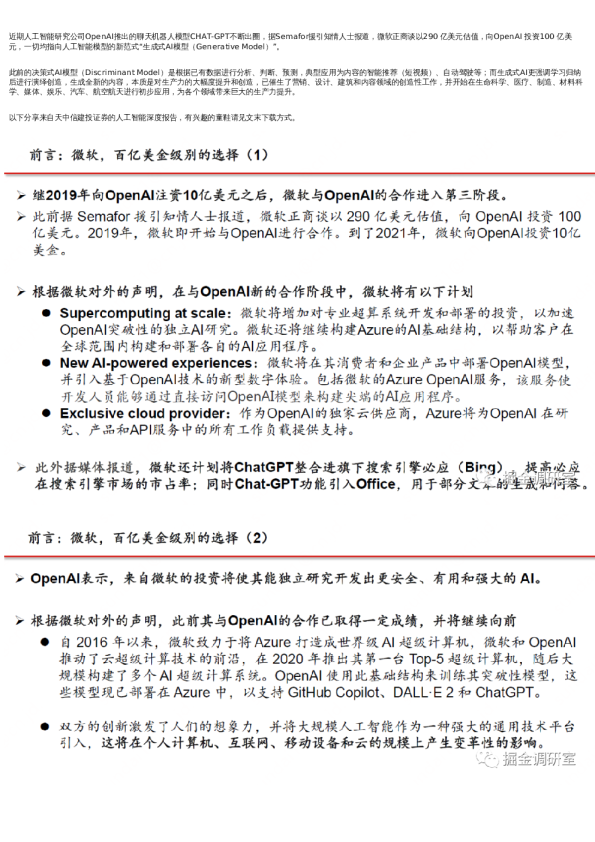
【研报收藏】人工智能深度报告:从CHAT-GPT到生成式AI—人工智能新范式,重新定义生产力