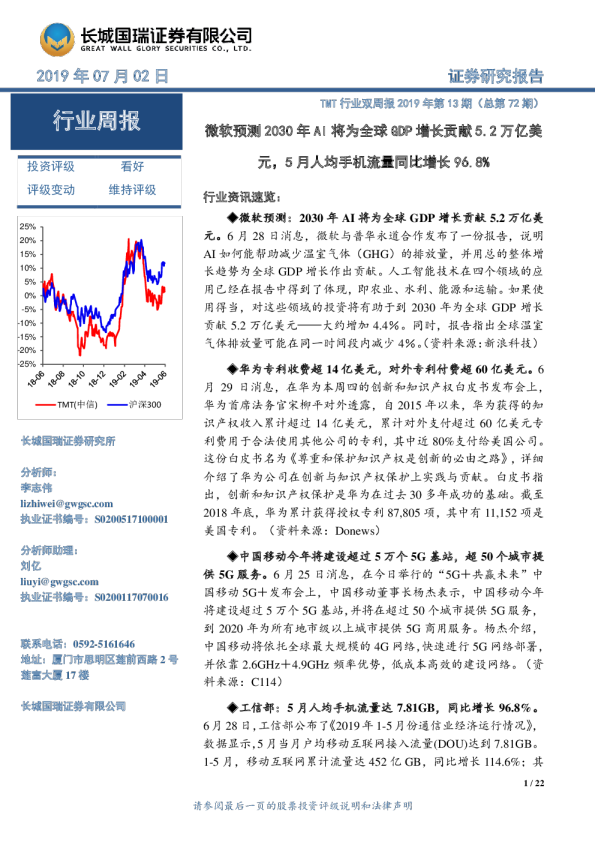
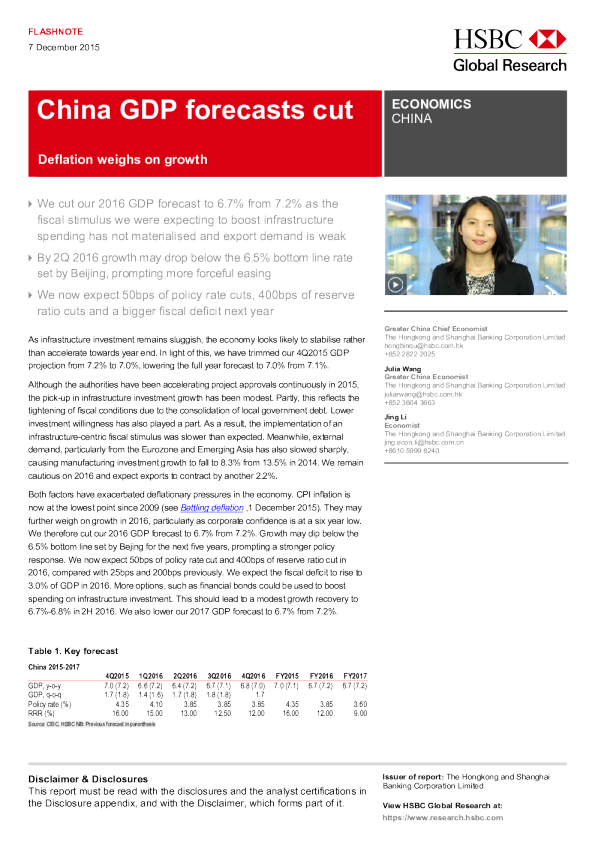
肯尼亚GDP增长预测
Nowcasting GDP Growthfor Kenya Nikolay Danov, Domenico Giannone, Alain Kabundi, Cedric Okou, andAntonio Spilimbergo WP/26/32 IMF Working Papersdescribe research inprogress by the author(s) and are published toelicit comments and to encourage debate.The views expressed in IMF Working Papers arethose of the author(s) and do not necessarilyrepresent the views of the IMF, its Executive Board,or IMF management. 2026FEB IMF Working PaperResearch Department Nowcasting GDP Growth for KenyaPrepared by Nikolay Danov, Domenico Giannone, Alain Kabundi, Cedric Okou, and AntonioSpilimbergo* Authorized for distribution by Antonio SpilimbergoFebruary2026 IMF Working Papersdescribe research in progress by the author(s) and are published to elicitcomments and to encourage debate.The views expressed in IMF Working Papers are those of theauthor(s) and do not necessarily represent the views of the IMF, its Executive Board, or IMF management. ABSTRACT:This paper develops a nowcasting model to produce timely estimates of quarterly GDP growth forKenya. Nowcasting combines official monthly indicators with digital transaction data. Exploiting strong co-movement of macroeconomic time series, a few latent factors summarize aggregate dynamics and enhanceforecasts. The model is updated with each data release, decomposing revisions into predictable and newscomponents. Results demonstrate robust performance of the nowcasting model in data-constrainedenvironments and show that nowcasting is applicable to low-income countries. RECOMMENDED CITATION:Danov et al. (2026) Nowcasting GDP Growth for Kenya∗ Nikolay DanovDomenico GiannoneAlain KabundiCedric OkouAntonio Spilimbergo February 14, 2026 Abstract This paper develops a nowcasting model to produce timely estimates of quar-terly GDP growth for Kenya. Nowcasting combines official monthly indicators withdigital transaction data. Exploiting strong co-movement of macroeconomic time se-ries, a few latent factors summarize aggregate dynamics and enhance forecasts. Themodel is updated with each data release, decomposing revisions into predictableand news components. Results demonstrate robust performance of the nowcastingmodel in data-constrained environments and show that nowcasting is applicable tolow-income countries. Keywords:Nowcasting, Dynamic factor models, Forecasting. JEL Classification:C33, C53, E37, E52. 1Introduction Monitoring a country’s current economic performance is challenging because comprehen-sive indicators, such as GDP, are released infrequently and with significant delay. Thischallenge is particularly severe in low-income countries (LICs), where GDP is often avail-able only at annual frequency and published several months after the end of the year.As a result, policymakers must rely on outdated information, sometimes more than ayear old, to assess recent economic developments. In many LICs, quarterly GDP dataare not available at all, further complicating efforts to monitor short-term fluctuationsand respond to shocks in a timely manner. Kenya stands out among LICs for the relatively high quality of its macroeconomicstatistics, having published quarterly GDP since 2009. However, the publication delayremains substantial:GDP is released more than three months after the end of thequarter, hindering the implementation of timely stabilization measures and the designof growth-friendly development policies.This delay is longer than in major emergingmarkets such as Brazil and India, where GDP is typically published within two months,and significantly longer than in advanced economies (AEs) such as the United States orthe Euro Area, where the lag is about one month. To address this challenge, nowcasting uses higher-frequency and more timely data topredict economic conditions in real time (Giannone et al., 2008). While this approachhas been widely adopted in advanced and large emerging economies, little effort has beendevoted to LICs—despite a greater need for timely assessment of economic activity dueto data scarcity and even longer reporting lags. In this paper, we develop a dynamic factor nowcasting model for Kenya, leveragingofficial data, including monthly traditional indicators and non-traditional data such asdigital payments to produce real-time estimates of quarterly GDP growth. The model ex-ploits the fact that business cycle fluctuations exhibit strong comovement across sectorsand indicators, allowing a small number of latent factors to summarize the informationcontained in a broad set of time series (for recent surveys, see Stock and Watson, 2016;Luciani, 2017; Doz and Fuleky, 2020). We model jointly all macroeconomic indicators,including GDP, using a dynamic factor model.Inference is conducted using Kalmanfiltering techniques and quasi-maximum likelihood, following Doz et al. (2012), Ba´nburaand Modugno (2014), and Barigozzi and Luciani (2024).Predictions are continuouslyupdated in real time as new macroeconomic indicators are released.The model de-comp