XPLANE视觉工艺创新电子书
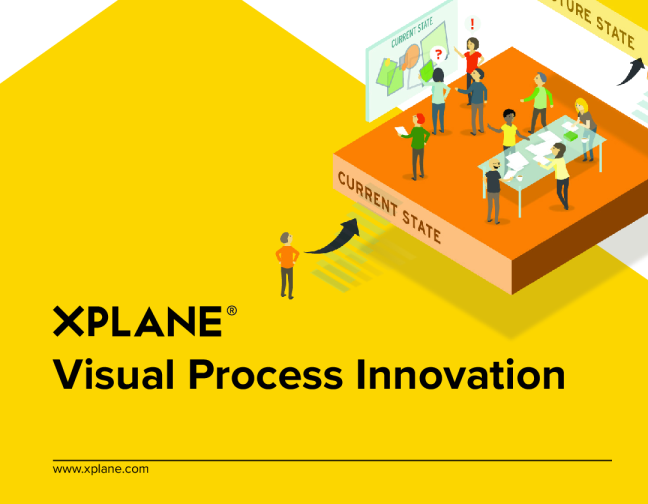
Written byCynthia OwensSenior Consultant, XPLANEcowens@xplane.com Dave KingGeneral ManagerEurope, XPLANEdking@xplane.com Illustrated byRyan BrownSenior Designer, XPLANErbrown@xplane.com XPLANE.com@XPLANElinkedin.com/company/xplane A healthy process is thelifeblood of any organization. It impacts everything from efficiency and quality to customer satisfaction andemployee happiness. Yet despite its importance, nearly all organizations Oregon. We help large organizations clarify their strategies andalign their workforce for maximum impact. Unlike traditionalconsulting firms, we leverage visual thinking, people-centered design, Our approach is unique in that it has grown out of more than 20years of visualizing thousands of complex processes for clientsin industries including technology, retail, finance, entertainment,military, manufacturing, food, energy, and pharmaceuticals. As such, We call our approach Visual Process Innovation, and it uses aframework and toolbox approach rather than a strict playbook, Five Core Principlesof Add + Eliminate Visual Thinking Co-Creation Improving a process is not just aboutcutting costs. To improve results, youneed to add steps that contribute tosuccess as well as eliminate the steps Pages of detailed documentswith boxes and arrows are usuallyconfusing. If you want people tounderstand a new process, show it to Imposing a new process top-downrarely produces the desired results.People who execute the process know Methodology Agnostic Holistic Process doesn’t exist in a vacuum.Changing one process has rippleeffects across your organization. Don’t One process improvement methoddoes not fit all. Just as your companyis unique, you are more likely todesign the right process if you can Our Process Our process follows five phases as listed below. Current StateVisual mapping of the current state of an1 existing process Future State2 Ideation, prototyping, and visual mapping of the plannedfuture state Validate3 Socializing and stress testing a process prior to activationfor improvement ActivateDeploying the process into the organization or system4 EmbedEnsuring the process takes hold and improving it5 Process ImprovementLandscape There is no shortage of process improvement practices. Six Sigma and Lean are powerful tools for their purposes, but whatthese tools don’t always solve is the people side of process. Visual Process Innovation is process improvement for teams. Itcan help to break down silos to make teams more collaborative, agile, and innovative. People-centered design and co-creation Current State Treatment without diagnosis ismalpractice. This is especially true Mapping the current state of a process can bethe start and end of a project. Sometimes simplyarticulating how a process works today is all thatis needed. However, more frequently mapping the Current State mapping is just whatit sounds like–mapping out how a Taking the time to map the current stateof a process is important for several First,it enables a thoroughexamination and documentation of theprocess, as it exists today. This alwaysreveals exceptions and variations in theprocess where people are compensating We do this by bringing together stakeholders andsubject matter experts to visualize the current process,working together on the walls in a co-creative, workshop This is far more effectivethan the commonly usedbusiness analyst approach,which then requires theanalyst to piece togethertheir own understandingof the process followedby socializing, validating, Second,doing the current statelegwork acts as a primer for thestakeholders and subject matter experts–they become engaged in the overall And finally,having a visual map–aphysical artifact–provides a commonbuilding point for the team, enabling themto maintain alignment as they work across TOOLS AND TECHNIQUES Scope & AltitudeMapping a process with a group first requires getting alignment on the scope and altitude, sothey are all focused on the same things. Scopeis simply the start and end points, and altitude isthe level of detail to which we need to describe Process BlockingWith the scope and altitude clear, we break down a process into phases and possibly sub-phasesand steps in an exercise called Process Blocking.This creates a simpler framework for the group to Walk the ProcessUsing the current state map, the stakeholders “walk” the actual process to validate the map,updating it with workarounds, extra steps, or shortcuts that take place in most mature processes. Future State Designing a better process requireseveryoneto see roles, activities, outputs,and hand-offswith 20-20 vision. The bestway to do that is tovisualize your process, The Future State phase visually maps the new processfrom beginning to end. That sounds simple enough, but One of the reasons Lean is so successful isthat it intensively maps the value streamfrom end-to-end. We’ve developed a similar Most processes gethung up on the human side of