随着生活成本不断攀升,分析人士称,美国人正在“硬撑着”度过这场负担能力危机
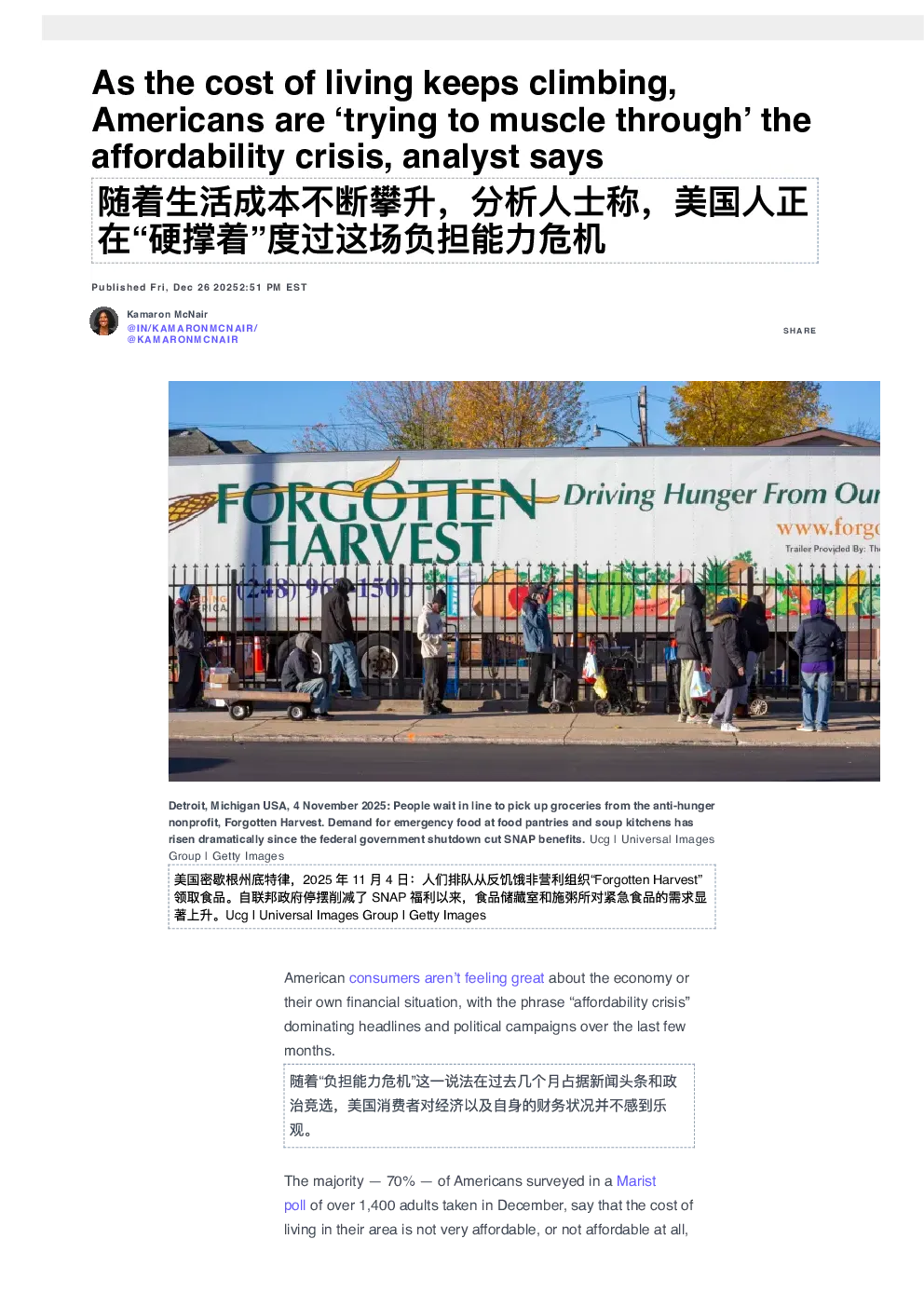
随着⽣活成本不断攀升,分析⼈⼠称,美国⼈正在“硬撑着”度过这场负担能⼒危机 Published Fri, Dec 26 20252:51 PM EST Detroit, Michigan USA, 4 November 2025: People wait in line to pick up groceries from the anti-hungernonprofit, Forgotten Harvest. Demand for emergency food at food pantries and soup kitchens hasrisen dramatically since the federal government shutdown cut SNAP benefits.Ucg | Universal ImagesGroup | Getty Images 美国密歇根州底特律,2025年11⽉4⽇:⼈们排队从反饥饿⾮营利组织“Forgotten Harvest”领取⻝品。⾃联邦政府停摆削减了SNAP福利以来,⻝品储藏室和施粥所对紧急⻝品的需求显著上升。Ucg | Universal Images Group | Getty Images Americanconsumers aren’t feeling greatabout the economy ortheir ownfinancial situation, with the phrase “affordability crisis”dominating headlines and political campaigns over the last fewmonths. 随着“负担能⼒危机”这⼀说法在过去⼏个⽉占据新闻头条和政治竞选,美国消费者对经济以及⾃身的财务状况并不感到乐观。 The majority — 70% — of Americans surveyed in aMaristpollof over 1,400 adults taken in December, say that the cost ofliving in their area is not very affordable, or not affordable at all, for the average family. 在12⽉对1400多名成年⼈进⾏的⼀项⻢⾥斯特⺠调中,70%的受访美国⼈表示,他们所在地区的⽣活成本对普通家庭来说不太负担得起,甚⾄完全负担不起。 While President Donald Trump called the word “affordability” a“con job by the Democrats,” in aspeech in early December,other politicians have insisted it’s an issue for their constituents. 尽管唐纳德·特朗普总统在12⽉初的⼀次演讲中称“affordability(负担能⼒)”这个词是“⺠主党的骗局”,但其他政客坚称,这对他们的选⺠来说是⼀个现实问题。 “The affordability crisis is not a hoax, it is a reality felt byAmericans everywhere.” Rep. Sarah McBride, D-Del. said inanewsletter. “负担能⼒危机”并⾮骗局,⽽是美国各地⺠众切身感受到的现实。特拉华州⺠主党众议员萨拉·⻨克布赖德在⼀份新闻通讯中表示。 Nearly half of Americans say theirfinancial situation is worsethan a year ago, a recentCredit Karma surveyfound. Andconsumer sentiment in December sank 29% from 2024according to theUniversity of Michigan’s monthly survey. 最近的⼀项Credit Karma调查发现,近⼀半的美国⼈表示他们的财务状况⽐⼀年前更糟。根据密歇根⼤学的⽉度调查,12⽉的消费者信⼼较2024年下降了29%。 While annual inflation is down from thehistoric highsthe U.S.saw in 2022, prices for everyday essentials remain elevated,and in some categories continue to rise. In November 2025,coffee prices were up nearly 19% from the previous year andthe cost of beef was up around 15%, according to Bureau ofLabor Statistics data. 尽管年度通胀率已从美国在2022年经历的历史⾼位回落,但⽇常必需品的价格仍然居⾼不下,并且在某些类别中仍在持续上涨。根据美国劳⼯统计局的数据,2025年11⽉,咖啡价格⽐上⼀年上涨了近19%,⽜⾁价格上涨了约15%。 Housing costsrose over 14% between September 2023 andSeptember 2025, per Bureau of Labor Statistics data.Medicalcostsare up nearly 7% over the same period, andcosts forservicesare up over 8%. While some of those price increasesare related to supply issues, Trump’s tariff agenda hasalsopushed priceson essentials like bananas and coffee and discretionary items like toys and electronics. 根据美国劳⼯统计局的数据,从2023年9⽉到2025年9⽉,住房成本上涨了逾14%。同期,医疗成本上涨了近7%,服务类成本上涨了8%以上。虽然这些价格上涨有⼀部分与供应问题有关,但特朗普的关税议程也推⾼了⾹蕉、咖啡等⽣活必需品以及玩具、电⼦产品等⾮必需消费品的价格。 “It’s not like people are overspending,” Joey Khoury, partnerand senior wealth advisor at Mission Wealth, says. Middle andlower-earners especially aren’t “spending lavishly,” he adds, butas living costs have risen it’s become harder for them to staywithin their normal budgets. “并不是⼈们在过度消费,”Mission Wealth的合伙⼈兼⾼级财富顾问Joey Khoury表示。他补充说,中低收⼊群体尤其没有“铺张花钱”,但随着⽣活成本上涨,他们越来越难以维持原有的预算。 Consumers are ‘trying to musclethrough’消费者正在“努⼒硬撑” Consumer spending has increased with each subsequentquarter, according to theBureau of Economic Analysis, despiteworsening sentiment and weakening consumer confidence, perThe Conference Board’smonthly survey. 根据经济分析局的数据,消费者⽀出在随后的每个季度都有所增加,尽管会议委员会⽉度调查显示,消费者情绪持续恶化,信⼼不断减弱。 “What we’re seeing is there is still inflation pressure across thesystem, particularly in the retail environment, and consumers,through our research tell us that they are effectively trying tomuscle through this,” Will Auchincloss, Americas retail sectorleader at EY-Parthenon, says. “They’re trying to buy whatthey’ve always bought or want to buy, but in the face of higherprices.” EY-Parthenon美洲零售⾏业负责⼈Will Auchincloss表示:“我们看到,整个系统仍然存在通胀压⼒,尤其是在零售环境中,⽽消费者通过我们的研究告诉我们,他们实际上正在努⼒硬扛过去。他们在⾯对更⾼价格的情况下,仍试图购买他们⼀直购买或想要购买的东⻄。” Higher earners may be cutting back on some nonessentials,including vitamins and supplements, he says, or trading down to lower-cost alternatives. 他表示,⾼收⼊者可能正在削减⼀些⾮必需品的⽀出,包括维⽣素和补充剂,或者转⽽选择成本更低的替代品。 However, lower earners are “not just talking about pulling back,”he says. “They are actively pulling back and having a hard timemaking ends meet.” 然⽽,他说,低收⼊者“并不只是说要缩减开⽀”。“他们正在真正缩减开⽀,⽽且在维持收⽀平衡⽅⾯遇到困难。” “Consumers are balancing many pressures,” including tariffs,sticky inflation and a softening labor market, says LeannaHaakons, a business development and marketing expert, andpresident of Black Hawk Financial. “消费者正在平衡多重压⼒,”包括关税、黏性通胀以及⾛软的劳动⼒市场,商业发展和营销专家、Black Hawk Financial总裁Leanna Haakons表示。 At the same time, “they’re still seeking a sense of normalcy andvalue in their purchases,” Haakons says. For some households,she says, that means being more selective about what they dobuy. 与此同时,“他们仍然在消费中寻求⼀种正常感和性价⽐,”哈康森表示。她说,对⼀些家庭来说,这意味着在购买什么⽅⾯变得更加挑剔。 “Consumers ar